
Alison Hinckley, lead of Epidemiology and Surveillance in CDC's Division of Vector-Borne Diseases, explains this season's increase in tick data and simple prevention steps to reduce Tick-borne diseases. Then, Latoya Sahadeo, ASTHO’s director of the Developing Executives Leading in Public Health (DELPH) Program, shares about the DELPH program and the call for applications.

 Spotify
 Apple Podcasts
 Amazon Music
 Summer brings an increased risk of tick bites, and this year that risk may be arriving earlier than expected. Alison Hinckley, lead of Epidemiology and Surveillance in CDC's Division of Vector-Borne Diseases, explains what the latest surveillance data show, why emergency department visits for tick bites are rising sooner than usual, and the simple prevention steps health agencies can promote to help reduce Tick-borne diseases. Then, Latoya Sahadeo, ASTHO’s director of the Developing Executives Leading in Public Health (DELPH) Program, discusses how leadership development goes beyond preparing for the next promotion. She shares how DELPH helps public health professionals strengthen their leadership identity, build resilience through coaching and peer networks, and gain the confidence to lead.

JOHN SHEEHAN:
This is Public Health Review Morning Edition for Thursday, July 2, 2026 I'm John Sheehan, with news from the Association of State and Territorial Health Officials.
Summer brings an increased risk of tick bites, and this year that risk may be arriving earlier than expected. Today, Alison Hinckley, lead of the Epidemiology and Surveillance Team in CDC's Division of Vector Borne Diseases explains what the best surveillance data show, why emergency department visits for tick bites are rising sooner than usual, and the simple prevention steps state health agencies can promote to help reduce Tick-borne diseases.
Later, Latoya Sahadeo, ASTHO's director of Developing Executives Leading in Public Health, or DELPH program discusses how leadership development goes beyond preparing for the next promotion. First, here's Alison Hinckley.
ALISON HINCKLEY:
This year, the tick bites tracker shows data that tell us that emergency room visits for tick bites are happening earlier than we expected and may be occurring at a higher rate than we expected.
SHEEHAN:
And how does how does CDC collect this data?
HINCKLEY:
So, we use this tick byte data tracker system. Its information provided to us through the National Syndromic Surveillance Program, or NSSP. The NSSP receives information from 85% of all emergency rooms in the United States, they have a great map on their website, NSSP website run by CDC, and it tells you all the areas that are covered in terms of emergency rooms transmitting data.
SHEEHAN:
Do we have any idea why this could be happening earlier?
HINCKLEY:
We don't exactly know, and we won't truly know if this is maybe a big year until the end of the season, and we can compare it to the past years of data, but we have a couple of explanations that are possible, and certainly in early spring is one of them, bringing ticks out earlier than we normally would have expected. Another possibility is normal year-to-year variation in tick survival and abundance, there's always the possibility of continued expansion into new geographic areas, and the last idea that we have is that it is always possible we are capturing changes in individuals' health care visits in response to tick bites.
SHEEHAN:
Right, it's kind of, it's a moving target for sure, and it's only with the benefit of hindsight and comparing to baseline data that you can actually start to put together some real cogent ideas.
HINCKLEY:
Yeah, that's right. And what's really interesting is, of course, although these data rely on people visiting emergency rooms, in nearly all instances, we actually recommend that people manage their tick bites at home. So, the important thing is really, once you find a tick on you, to get that tick off as quickly as possible. Delaying removal of a biting tick can increase the risk of exposure to some of the diseases it may carry.
SHEEHAN:
Right, don't bother to go to the emergency room, just get that tick off you.
HINCKLEY:
Exactly
SHEEHAN:
Same with pets and smaller family members.
HINCKLEY:
Exactly, it's important to protect yourself, your family members, and your pets from tick bites as much as you can. Certainly, we recommend avoiding tick habitat, so if you live in an area where you have grassy, brushy habitat, that's usually where ticks like to live. If you like to go hiking, we really recommend people stay in the center of a path, so that they can avoid some of these grasses on the side where ticks like to go. So, avoiding tick habitat is important. Using repellent is very important. We recommend EPA-registered repellents like DEET, Picaridin, Oil of Lemon Eucalyptus. There are a number of others, and you can find info on that on EPA webpage. Another good possibility is wearing long sleeves, like long sleeves on your shirts and long pants. It's really helpful if you treat those with 0.5 percent permethrin, you can do that and get coverage throughout the whole season by wearing maybe your outside clothes commonly, and the third thing we like to recommend, you know, it's really absolutely important, is to find and remove ticks, no matter how hard you work at prevention, avoiding tick habitat. It is still possible to get ticks, even with the best of intentions. Being able to find and remove ticks means doing a tick check. One of the ways I love to do that is to take a shower as soon as you come inside from being outside. You get yourself out of the clothes that may have ticks still crawling on them, and then you get yourself into the shower, you can wash off ticks that may still be crawling. And, of course, it's a great opportunity to find ticks that may have attached themselves to you in places that were covered by your clothes. For ticks that may still be on your clothes, you can throw those in the dryer, heat them up high heat for 10 minutes, and you never have to worry about those ticks again.
SHEEHAN:
Do you have recommendations for how state agencies can sort of spread the word?
HINCKLEY:
State agencies are fantastic at being able to get the word out using their website. I know a lot of times that they go to public locations like fairs to get the website out, and it's important, of course, to tell people the best way to prevent tick-borne diseases is to prevent tick bites. They can work with the local health departments to get the word out, really amplifies the message. If we have consistent messaging across all levels, we also have, you know, at CDC, we have some tools that could be really useful for state health departments. Several new resources for communications are on our website that people at state health departments can adopt. Some of those are CDC branded, some have no branding, so they can be adopted for their own purposes. Another really great tool is called our Tick Bite Guide. It's actually an interactive decision tool. It helps individuals who log into it make decisions about how best to remove ticks safely, but also when it's appropriate to seek health care. This can be easily adopted. It's a customizable widget on our webpage that people can put state health departments, local health departments can also add to their websites, so we can really get that information to people at all levels.
SHEEHAN:
That sounds like a really nice way for state agencies and for CDC to sort of tag team this. What other partners need to get brought in?
HINCKLEY:
Yeah, I mean, working with community partners can really get that word out. Health care providers, of course, university extensions, even schools, school nurses can help really get the word out, veterinarians, and even outdoor industries and employers like those of landscaping and construction, so a number of different groups that could really be interested in this data and meet the people who are at the highest risk.
SHEEHAN:
Yeah, and lastly, do you have any recommendations for a state health official that might be seeing a spike in cases in their jurisdiction?
HINCKLEY:
Most cases of Lyme disease actually occur before July 4. One of the things that is really underlying all this is you can take a lot of steps and still miss a tick bite, because they're just so small, and they may be, you know, all over wherever you live. So, if you've been in an area where there are ticks, or you've had a tick bite, and you, and days or weeks later, you experience symptoms like fever or rash, it's important to talk to your health care provider. Some people who pull off a tick can put it in a bag, if they want to bring that to their health care provider, you know, it could be an important tool when considering the possibility of a Tick-borne disease.
SHEEHAN:
Alison Hinkley is lead of the Epidemiology and Surveillance Team in CDC's Division of Vector Borne Diseases.
Now, let's hear from ASTHO's Latoya Sahadeo, director of the Developing Executives Leading in Public Health, or DELPH program, about how the program helps public health professionals strengthen their leadership identity, build resilience through coaching and peer networks, and gain the confidence to lead.
LATOYA SAHADEO:
In DELPH, we truly believe in creating leaders and allowing them to take away from the position-based growth to personal leadership growth. Our leaders only grow in specific roles, but we want them to think about how they can expand their growth over time and really think about their own sense of identity, their purpose, and their clarity. So public health leaders are experiencing so much, and we truly want to build their confidence, their adaptability, their executive presence, so that they can sustain themselves in uncertain environments.
SHEEHAN:
And one of the resources of the program is the provision of accountability partners, or executive coaches. How do those personal relationships, you know, grow a leader?
SAHADEO:
When we think about accountability partners and executive coaching, they're so vital in the transformation for their own leadership identity. Our accountability partners are developed within the first month of the program, and that's allowed. It allows our scholars to process what they're learning with someone that understands this particular journey. Our executive coaches that we partner with Centers for Creative Leadership help our scholars identify patterns, test new behaviors, and truly translate what those leadership concepts are into practical strategies. Our scholars generally tell me meeting with their executive coach allows them to kind of just wake up, find their new purpose, recenter themselves, and truly that's where we see the growth happening.
SHEEHAN:
And in talking about purpose, the program puts an emphasis on an individual's finding their why, why, why they're doing this, you know, their purpose within the field, why, why is that so important.
SAHADEO:
Leaders of public health, rediscovering your why helps you reconnect to the reason why you chose this profession, and for. Place just allowing yourself to have that renewed focus, courage, and intention that purpose then becomes your anchor. So, what we've seen with our scholars is they're able to make decisions with clarity, they're able to communicate with more conviction, and they're able to lead their teams with a deeper sense of meaning. We don't ever want to remove their why from who they are, so allowing them to have that presence, that voice, and remember that leadership still matters.
SHEEHAN:
and some, some, you know, members of the program, some participants find that they have to lead, but don't necessarily have official authority. I think a lot of people can relate to that, you know, having responsibilities without necessarily having authority spelled out, what kind of tools does the program offer to help people in those situations navigate that sort of spongy responsibility?
SAHADEO:
Oh, that's quite interesting. I think many of us feel that way, where we are leading without formal authority, but we recognize that we have influence. I often share with our scholars that whether or not they are the person giving the speech, they may be actually just speech writers, but we give them tools such as the disassessment, the influence style indicator, among many others, that allows them to understand their own leadership style and how their style is perceived by others, so it's giving them the tools to think about their communication preferences, their conflict tendencies, and overall team dynamics. We bring in subject matter experts to explore each of those opportunities with our scholars and help them build on their approach, allow them to build trust, and also let them know how they are fluids in their teams, their departments, and systems.
SHEEHAN:
And you know, I think related to the tools of the accountability coaches or accountability partners and coaches. The program also stresses peer to peer networks and having, you know, colleagues across the system that can sort of bounce ideas off of share, share input. So, how does a, how does a network like that improve someone's resilience? Or, or does it improve someone's resilience?
SAHADEO:
Well, with over 100 DELPH alumni within our program, our pure network system, or is truly just building leaders, they're able to lean upon one another when they're having similar pressures, when they're able to look at context just a little bit different. So, having someone from different states, and they're not feeling like they're in a silo, they're not feeling like they're carrying everything along, truly builds up that resiliency and pushes them through what some would be just that overall burnout, so when we think about resiliency, having that support, that perspective, having the tools to help them recover, adapt, and keep leading with purpose. Our peer networks truly strengthen that resilience and create that connection is often missing in other leadership programs,
SHEEHAN:
And for someone who's considering the program, and who you know, sort of wants to be at the next level, but maybe isn't sure. What would you say is the most confidence-building moment in this 10-month exercise?
SAHADEO:
I think, in the beginning of the program, a lot of scholars are, they suffer from imposter syndrome, syndrome, they suffer from, am I ready for this leadership challenge? Am I ready? Am I fully prepared to step into what's next for me? I think the program helps them shift that mindset into something more powerful, something that gives them that understanding of why I'm here, but also it kind of is an awakening spirit for many of our scholars. It reminds them that I have all the tools that I needed, but this program helped me reinforce that and truly make me understand that I have this, I got everything that I need, and we create that supportive environment for them to be able to lead in that executive level.
SHEEHAN:
And as we mentioned, the program applications are open, and there's an open house coming up on July 7. What are some tips for applicants?
SAHADEO:
Oh, wow, we look forward for people to join us on July 7 for our open house. It's truly a formal slash informal conversation with applicants, so that they can access any of their questions that they may have about the application process. It allows us to share with them, go through their entire application process with them, help them to understand what, what is needed for that next level leader that we're looking for, but we ask them to bring their, their impressive resumes, we ask them to bring their letters of support, we ask them to make sure they're answering their questions, you know, clearly and articulating their why, why they're ready for this program, and be able to share that self-awareness in their clear desire to grow.
SHEEHAN:
Latoya Sahadeo is ASTHO's director of the Developing Executives Leading in Public Health, or DELPH program. Earlier, we heard from Alison Hinkley, lead of the Epidemiology and Surveillance Team and CDC Division of Vector Borne Diseases.
ASTHO, and the Satcher Health Leadership Institute at Morehouse School of Medicine, with support from CDC, invites qualified professionals to apply to the next cohort of the Developing Executive Leaders in Public Health program. Qualified public health professionals must be currently employed at a local island, territory, tribal, or state public health department federal employees are not eligible to participate in the DELPH program. The application window for the 2027 DELPH program closes on July 31. Learn more at the link in the show notes. And as we mentioned earlier, to support applicants in the submission process, join ASTHO on July 7 for the DELPH Open House, hosted by one of today's guests, director of Leadership Development Programs at ASTHO, Latoya Sahadeo. This interactive session is designed for prospective applicants to ask questions and hear best practices before the deadline. Find a link to register in the show notes.
This has been Public Health Review Morning Edition. I'm John Sheehan for the Association of State and Territorial Health Officials.

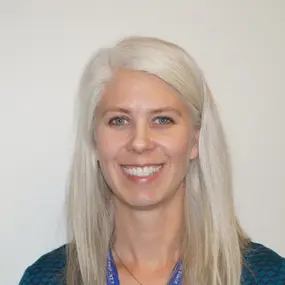
Lead, Epidemiology and Surveillance Team, Division of Vector-Borne Diseases, Centers for Disease Control and Prevention (CDC)


