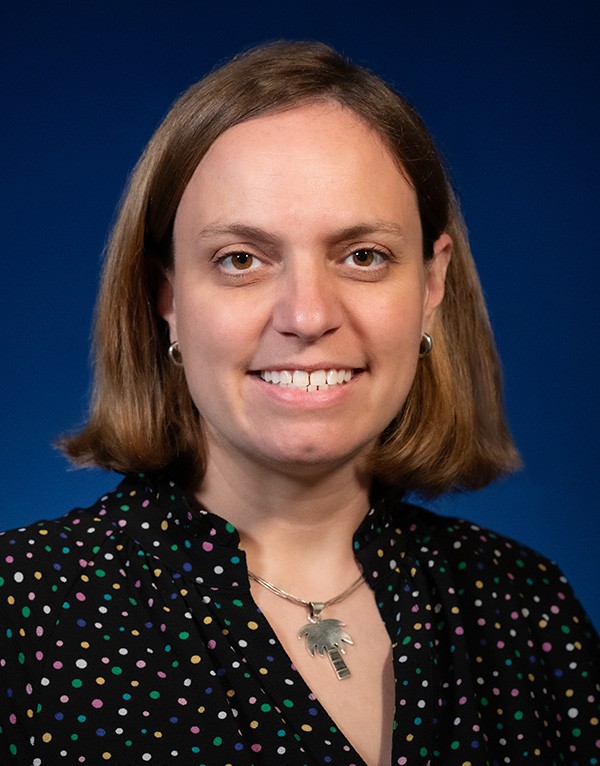
On today's PHIG Impact Report, Karla Buru from the South Carolina Department of Public Health discusses the agency’s Supplemental Tuition Assistance Program (STAP), an innovative workforce development initiative designed to support employee development, retention, and leadership.

 Spotify
 Apple Podcasts
 Amazon Music
 What happens when a health department invests directly in the education and professional growth of its workforce? On today's PHIG Impact Report, Karla Buru, deputy director of health strategy and external affairs and chief of staff for the South Carolina Department of Public Health, discusses the agency’s Supplemental Tuition Assistance Program (STAP), an innovative workforce development initiative that helps employees pursue nursing and public health degrees while strengthening the department’s long-term capacity. Since launching as a small pilot in 2022, the program has grown into a major investment in employee development, retention, and leadership. Buru shares how tuition assistance, leadership training programs, and professional certifications are helping staff advance their careers while bringing new skills and expertise back to the agency.
This work is supported by funds made available from the Centers for Disease Control and Prevention (CDC) of the U.S. Department of Health and Human Services (HHS), National Center for STLT Public Health Infrastructure and Workforce, through OE22-2203: Strengthening U.S. Public Health Infrastructure, Workforce, and Data Systems grant. The contents are those of the author(s) and do not necessarily represent the official views of, nor an endorsement, by CDC/HHS, or the U.S. Government.
Public Health Infrastructure Grant: Resources & Impact - PHIG

JOHN SHEEHAN:
This is Public Health Review Morning Edition for Tuesday, June 16, 2026. I'm John Sheehan, with news from the Association of State and Territorial Health Officials.
On today's PHIG Impact Report: how South Carolina is building a stronger workforce. Karla Buru, deputy director of health strategy and external affairs and chief of staff for the South Carolina Department of Public Health, discusses the agency's Supplemental Tuition Assistance Program, or STAP, an innovative workforce development initiative that helps employees pursue nursing and public health degrees while strengthening the department's long-term capacity.
Karla Buru, welcome to the show.
KARLA BURU:
Thank you for having me.
SHEEHAN:
So, Karla, the Supplemental Tuition Assistance program, or STAP; how has PHIG supported it, and how has it evolved as an investment?
BURU:
Yeah, so STAP began at South Carolina Department of Public Health in 2022 with just two participants. And really, in four years, it's transformed from a small trial program into a much more robust agency-wide pillar for professional development. So, we've had more than 28 staff members participate in the program. The goals were really to expand access to professional development and educational advancement opportunities for our current staff, reduce financial burden and stress associated with pursuing higher education, promote retention by supporting career development and cultivating a workplace culture of value, inclusion, and enhance agency expertise, so that our staff are gaining new knowledge and skills that directly benefit their current role and support the agency's workforce. So, it specifically targets nursing and public health degrees, bachelor's through doctoral levels, ensuring that DPH has the specialized expertise that we need for modern health challenges. We provide financial assistance for eligible employees in return for a time commitment back to the agency. So, for each credit hour reimbursed, the participant incurs a two-month service application, and over the course of those years, we've actually improved the program based on feedback that we've gotten. So, we expanded access to staff by lowering eligibility to include temporary and grant-funded and time-limited employees. So, it was including those folks. Originally, it was just for FTEs, but we broadened it because we got feedback that those staff could also benefit from it. So, after they've had service with us for six months, they're now included in the program.
SHEEHAN:
Do you have a sense of the scale of impact from the program, either for retention or how it's been hitting staff development?
BURU:
We do. So, from a financial perspective, DPH has invested a little more than 278,000 into our workforce. And so, the win-win for us on that is that's 429 credit hours, which means 858 months of service, that is 71 years of guaranteed service back to our agency, and that is a lot. We're really excited about having those staff, they've been able to grow themselves in their education, but then they can apply that within our agency, it's also academically driven. Those 28 staff members who've taken those courses mostly are earning A's, so we are also seeing that they are getting a high quality education from accredited institutions. But we recognize that working and going to school can be really hard, and so, we implemented sort of the six and 18 rule. So, participants can receive reimbursement for up to six credit hours per semester and 18 per year. This really allows them a steady pace towards degree completion without burnout, because we know that they're still working at our agency.
SHEEHAN:
Yeah, and as you mentioned, you have that time commitment on the back end, that's a lot of time.
BURU:
Yeah, we are very excited about that, and I think it's just good because it also allows continuity of service, because we know that folks will be able to grow within our agency, and then we'll retain that institutional knowledge that they have.
SHEEHAN:
And from the feedback you've been getting, have you seen an impact on morale?
BURU:
We certainly have. I think folks see it not just as us investing in kind of getting that time service commitment, but really investing in their professional development. So, from participants, we've heard back that really the cost of graduate school can be very expensive, so sometimes that can be $500 or $600 a credit hour. So, without staff, it would be cost-prohibitive for a lot of our employees. And so, we've been able to kind of remove that financial ceiling for them. It's also opened up their perspectives, so, because online doctoral programs are allowable, it's allowed staff to learn from professionals nationwide and even internationally, and bringing back those big picture strategies to South Carolina. We also find that it's really beyond that service commitment, right, they're really just genuinely happier, there's that boost in morale, they feel valued and really seen, because we as an agency are choosing to invest in their long-term future.
SHEEHAN:
So, the STAP program is one piece of your larger overall workforce strategy. Um, can you talk about other lessons learned through the process?
BURU:
So, we have used our PHIG funds to invest in professional development, both through the STAP program, but also through our internal leadership program, like Leading the Way. And so, we find that we are contributing to a more skilled workforce and helping with retention by having programs where they can learn either internal programs or external programs, like staff. It allows a lot of flexibility for folks who want to grow professionally. And so, we even have kind of examples of staff that participated in our Leading the Way program, and then they took on larger leadership roles and moved up within our organization because they were more qualified and better prepared based on what they learned in that program. We also used our PH WINS data to help update our Leading the Way curriculum to ensure that we're meeting the needs of our workforce. So, we made a couple of tweaks, and what classes we were teaching, and we've got great feedback on that so far. Another piece of that is we've been able to expand the number of our staff that we provide the opportunity to get their associate public manager certification. There's a, there's a program that is done through the Department of Administration in our state, and we are limited based on the population of our agency on how many we can send through that program. But, through PHIG, we've been able to increase the number of staff who are participating in that by having a DPH-only cohort. And so, we've been able to really exponentially increase the number of our staff who become associate public managers, and that's a certification that they can take with them wherever they go. So, we hope that they stay at DPH forever, but we know that sometimes people change jobs or move. And so, we want to make sure that they're also getting something that continues to help them develop as professionals. This has really helped us to, you know, have a lot of opportunities to recruit and really retain our workforce.
SHEEHAN:
That's so nice, and I gotta say, I love these stories that validate that. Yeah, it turns out that investing in your workforce makes everyone happier and everything better.
BURU:
That's absolutely how it works.
SHEEHAN:
And could you also sort of connect the dots between this, the improvements to your workforce, and the level of service being brought to the community?
BURU:
So, because STAP specifically targets nursing and public health degrees, the information that the participants are learning can directly be applied to the work that they do. So, I have a couple of examples on that. So, we had one participant who got a master's degree in human nutrition, and so, that individual is able to apply advanced knowledge specifically to the women, infants, and children's program to better serve South Carolinians. We had another program participant who they were able to finish their doctoral degree, and so that is a requirement for some certified lab director positions. And so, this person now is able to have that credential that allows them more flexibility in the future. One participant noted that through their degree program, they've been able to immediately apply public health concepts, especially in the areas of program planning, evaluation, and stakeholder engagement, directly strengthening their work with the sexual violence services program, supporting the implementation of evidence-informed strategies to better serve our communities. Another participant told us that their coursework in health sciences has significantly enhanced their effectiveness as a supervisor by equipping them with a deep understanding of population health principles, research, and data methods and techniques. So, those are just a couple of examples of where we see that through us helping them to achieve educational degrees, they are then able to directly apply it, both within DPH and then the communities that they're serving, and so, really we're just making South Carolina better.
SHEEHAN:
That's so great. So, looking ahead, how are you thinking about sustaining the program?
BURU:
It's a great question. We are really just planning to continue identifying ways to invest in our workforce. So, we are figuring out how can we find funding to sustain our Leading the Way program and our STAP program, because we've seen so much success and demand on those programs. We're also looking at are there ways that we can use internal experts to help train and reduce the cost of these programs, not stop, but leading the way in certain topics, or lean on our other agencies. We know that funding is always a challenge, but we're hoping by being able to have the data and tell the stories and show the impact, that we can invest funding in these in the future.
SHEEHAN:
Karla Buru, thanks so much.
BURU:
Yeah, absolutely.
SHEEHAN:
Carla Buru is deputy director of health strategy and external affairs and chief of staff for the South Carolina Department of Public Health.
This has been another PHIG Impact Report, part of Public Health Review Morning Edition. I'm John Sheehan for the Association of State and Territorial Health Officials.