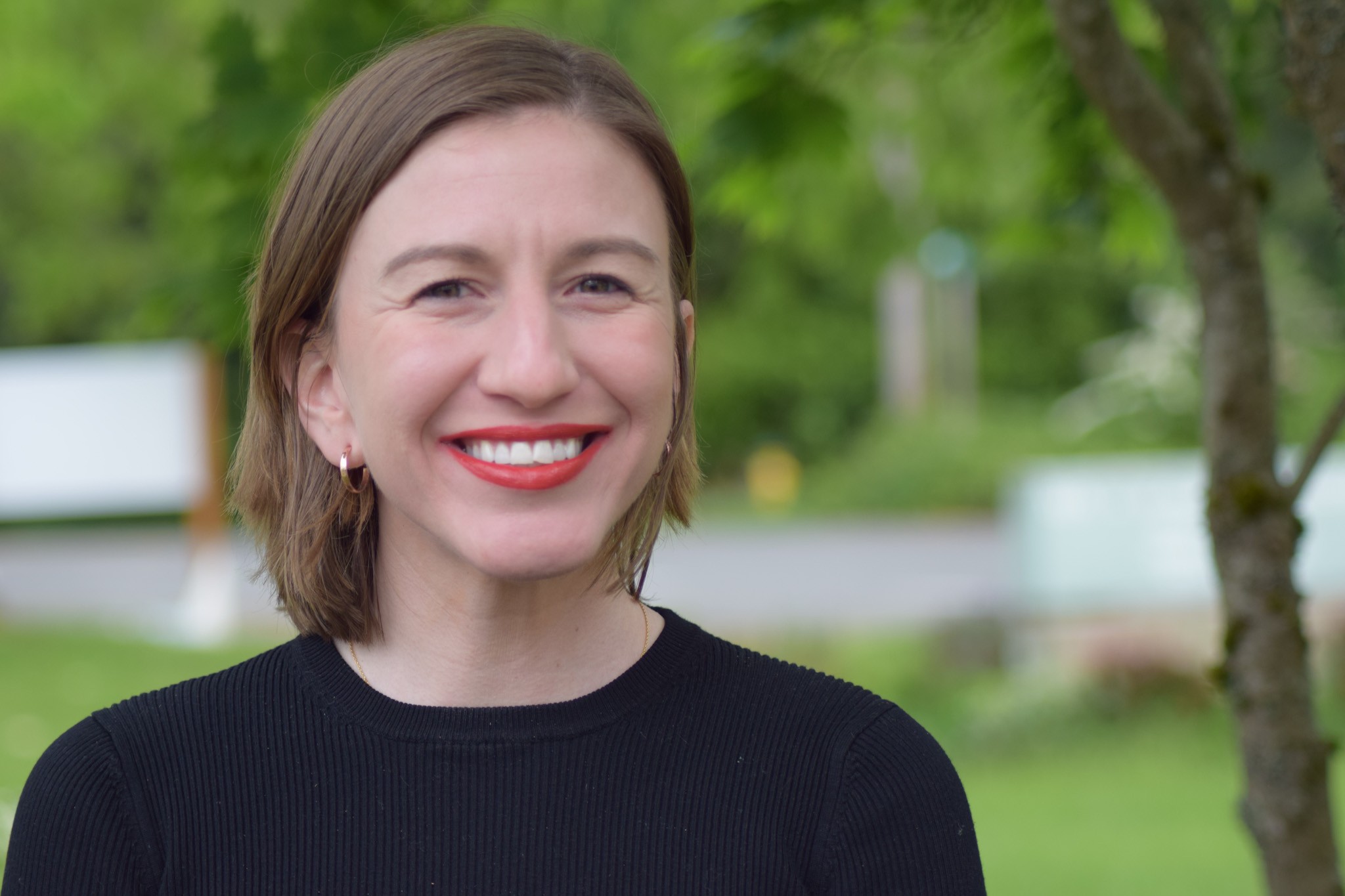
Epidemiologist and Program Manager for Washington State's Wastewater-based Epidemiology Program Breanna McArdle,sits down with ASTHO and discusses how wastewater surveillance offers important data that fills in public health gaps. She also touches on the ethical and privacy concerns that come with wastewater surveillance, and the importance of collaboration in creating healthier futures.

 Spotify
 Apple Podcasts
 Amazon Music
 Wastewater surveillance has emerged as one of public health's most innovative tools, offering early warning signs of disease outbreaks and filling critical gaps left by traditional surveillance systems. Breanna McArdle, epidemiologist and program manager for Washington State's Wastewater-based Epidemiology Program, explains how public health agencies decide which pathogens to monitor, why wastewater data must be interpreted alongside other surveillance sources, and how the field is evolving beyond its origins in the COVID-19 pandemic. McArdle also explores the ethical and privacy considerations of wastewater surveillance, the challenges of communicating findings to communities and policymakers, and the importance of partnerships with local health departments, treatment plant operators, laboratories, and academic researchers. She discusses how investments in data infrastructure, laboratory science, and cross-sector collaboration are helping transform wastewater surveillance into a versatile tool for tracking a wide range of public health threats.
Wastewater Testing for Arboviruses: Arizona’s Surveillance Approach | ASTHO
Strengthening Public Health Response to Infectious Diseases Through Wastewater Surveillance | ASTHO
Shared Strategies that Promote Well-Being and Resilience

JOHN SHEEHAN:
This is Public Health Review Morning Edition for Wednesday, July 1, 2026. I'm John Sheehan, with news from the Association of State and Territorial Health Officials.
Wastewater surveillance has emerged as one of Public Health's most innovative tools, offering early warning signs of disease outbreaks and filling critical gaps left by traditional surveillance systems. Today, Breanna McArdle, epidemiologist and program manager for Washington State's Wastewater-based Epidemiology Program, explains how public health agencies decide which pathogens to monitor, why wastewater data must be interpreted alongside other surveillance sources, and how the field is evolving beyond its origins in the COVID-19 pandemic.
BREANNA MCARDLE:
I think the starting point should always be thinking about whether the wastewater data can fill a genuine gap in the existing surveillance. It's a complementary tool, so we need to be mindful about and think about what other sources are available for our pathogen. How high priority is it for a jurisdiction? Are the methods validated from a laboratory perspective? Is it emerging? Is it endemic? And again, what the other surveillance sources are that are available to measure that pathogen, and are there any gaps in those surveillance sources? So I'm thinking about norovirus, is a good example, it's not notifiable, so we have to gather a lot of different data sources indirectly to try to measure what's happening with norovirus, but with wastewater we could actually get direct measures of activity, but that's going to look different across different pathogens. What type of surveillance gaps are there?
SHEEHAN:
So, Breanna, are there ethical concerns when you're testing wastewater? It never occurred to me that there could be, but I suppose it is something of a privacy issue.
MCARDLE:
Yeah, it's really interesting because we're building out a whole new surveillance system, right? So when you're thinking about case-based surveillance, you had a lot of ethical and regulatory conversations around what we can measure, what we can't measure, how sensitive is the data, all those conversations are going to have to happen again, and continue to happen again with wastewater. Whether or not we should be measuring a certain pathogen, especially if it's carrying social stigma, medical stigma, the scale at which we are sampling, so when we're talking about smaller sewer sheds, that can have a particularly like ethical concern, because you know you may be indirectly identifying somebody in the community with a specific pathogen, and also the smaller sewer sheds are serving smaller rural areas that have different values, privacy considerations, and that's also why UC CDC actually does not post data. I believe it's for 3000 sewer sheds serving 3000 people or fewer, because that is something we need to talk through as a field as we build it out.
SHEEHAN:
I see that makes a lot of sense, because if you're collecting this data that is sort of by design public information, you could be inadvertently outing someone for something in the community that's that's not right,
MCARDLE:
Yeah, yeah. And I don't think we know yet the implications of how wastewater data could be used, right? When we're talking about clinical data, you have HIPAA, which was developed and adjusted over time. We don't have similar community-based surveillance rights, at least that I know of. I mean, there could be frameworks out there, and I think that's why ASTHO is building out an ethics framework for wastewater surveillance, specifically because we don't have the same robust and somewhat clear regulation and ethical guidelines for environmental community-based surveillance as we do for something like I said, clinical surveillance that comes with HIPAA and other notifiable conditions regulation, so we have to think through a lot of questions real time with wastewater and smaller sewer shed scales, is definitely one of those questions.
SHEEHAN:
Yeah, and relatedly, you know, you have the ability to work at sort of like community and large community scale, and also like down to like the building to a facility level. What are some other considerations that go into deciding like how what scale at which you're going to measure?
MCARDLE:
Yeah, I think it all goes back again to what is the intention and purpose of trying to collect wastewater data. When I'm sampling at a sewer shed service servicing like half a million people, the goal there is obviously going to be community transition or potentially early warning of an emerging pathogen, but we are seeing more and more hospital-specific surveillance, so you're sampling wastewater at the hospital, that is obviously going to be a very different purpose and scope than sampling at a half a million population sewer shed, and the goal with that one is outbreak early outbreak intervention, early outbreak identification, which inherently is going to tie you back to some individual in a facility, facilities often have a couple 100 people, and the goal there is actually to find that person versus when I'm sampling at a sewer shed with half a million people, I don't - I'm not using it because I want to find the sick person, I want to get a general sense of what's happening with a specific pathogen in the community.
SHEEHAN:
So, because wastewater data is most useful when it's paired with other surveillance techniques, how do states set thresholds for responsibly integrating it into real-time public health decision making?
MCARDLE:
Yeah, I think that wastewater is, like you said, always going to be interpreted alongside other surveillance sources like case data or syndromic data, and I think the whenever you get some type of signal or even meet a threshold in wastewater, your immediate next step is going to be what are the other surveillance sources saying, and if they're diverging, that itself is informative, right, and worth investigating, and so if I'm seeing a detection of measles in the wastewater, but I have no cases, that's extremely meaningful, and potentially revealing an out early identification of outbreak situation or transient travel from a case within your sewer shed, which itself again is still valuable information, but the most responsible thing with wastewater is to never create action plans that don't involve comparing the activity that you're seeing in wastewater to the activity that you're seeing in other, other surveillance sources, are more traditional and, again, more vetted surveillance sources.
SHEEHAN:
Gotcha, you can't base a decision solely on what you're seeing in the wastewater.
MCARDLE:
Yeah, and a lot of the work with looking into other surveillance sources involves working with pathogen-specific subject matter experts. So, for example, we work with the vaccine-preventable disease team when we're talking about measles detections in wastewater, because they know the other surveillance sources much better than the wastewater epis do too, and each pathogen is going to have a different suite of surveillance tools and sources and measures available to them that the subject matter experts are going to be able to interpret sometimes better when we get them wastewater results,
SHEEHAN:
So another challenge to just screening wastewater is communicating those results out once you have something worth reporting on. So, how do you, how do you sort of translate what you're seeing and its importance to potentially a lot of different audiences, from the public to other public health officials to state leadership?
MCARDLE:
Yeah, we joke a lot that our program is one that is like a glue program, which means that we, our work is connecting the dots across all of these different partners, which again mirrors kind of wastewater, is not data is not informative alone, it needs to be interpreted in context of all these different signals and expertise, too, right? So, it's not just the subject matter experts that we want to get the data to, the wastewater treatment plants, the operators there may have some information that'll help us better interpret the data, so I would say before we consider the data final, there's a lot of data sharing with our subject matter experts, whether that be pathogen surveillance or wastewater subject matter experts, to make sure that we are interpreting the data correctly, and then when we actually are ready to share the data, Washington is a home rule state, which means that local health jurisdictions carry regulatory authority and primary accountability with public health, and we rely on them heavily and are regulatory required to look to them to support dissemination of data and deciding how and when to disseminate our data, and in which ways to communicate it, and particularly when we're talking about public communication, working with the local health jurisdictions is crucial, because they're the ones who know the community best, they know how they'll interpret the data, what they need from the data, what is the best way to visualize the data, so every step of the way, when we're thinking through how to disseminate and share and communicate results, we are always bringing in the local health jurisdictions into those conversations, and honestly letting them drive those conversations, because how we communicate results and data is going to look different depending on who our audience is, and if the audience is the public, the local health jurisdictions are going to know the best about how we should be communicating it,
SHEEHAN:
And similarly, you just mentioned, like, all the different partners that are involved internally in analyzing results and collecting samples from treatment plants to labs that are doing, you know, doing the analysis, how important is it to communicate effectively between those partners, because you've got to get everyone kind of rowing in the same direction.
MCARDLE:
Yeah, I think that what's been really interesting, at least about how we've built out our program, is that we've set it up so we're learning alongside a lot of our partners. I think more traditionally in older programs will the state is looked to as subject matter experts, but you know we all joined the field at the same time, so to speak. So I think the communication to other partners is actually also a lot of training our partners and involving them in training and involving them in understanding the science. We had, for example, international wastewater surveillance conference at the University of Puget Sound last year that we helped coordinate, and we made sure to get sponsorship for our not only our local health jurisdictions, but our wastewater treatment plant operators. We need to involve them in the growing field of the science and learn alongside a lot of these partners, and that's the best communication strategy is connecting them with resources, because the field is growing so fast, and the science is advancing so fast, and it's quite complicated. Wastewater is a very technically complicated public health tool, so it's important that, especially with local health jurisdictions being our main partners, and wastewater treatment plant operators being our main partners that we bring them alongside the learning and training and growing of expertise.
SHEEHAN:
And I want to, I want you to talk a little bit more about that, actually sort of the complicated nature of the field and potentially what that means for furthering it, like what are the opportunities involved, or what are the opportunities in growing the field with tools like more modern data infrastructure?
MCARDLE:
Yeah, a lot of jurisdictions are building out their own data systems infrastructure in their own corners, and I see data systems as a way to also standardize the way we collect data, so I think in the future it would be my dream to see, you know, you have case-based data systems. Could we have environmental or wastewater surveillance-based data systems, where you know, instead of the unit being the case, the unit is your sewer shed or your sampling spatial granularity? Yeah, I think that there's a lot of advancements also in the laboratory space. We work a lot with our public health lab partners because they do a lot of complex stuff, and I think it's also constantly advancing the laboratory methods and then the analytical methods of what is the right way to analyze the data. What type of statistical approaches are valid, or who needs to validate them too? Right, but in terms of opportunities, I would say wastewater surveillance. In the beginning, we thought this was just a COVID tool. This is just going to be something that we used to respond to the COVID-19 pandemic, and then it's continued to improve its versatility. I think a lot of people in the beginning talked about it as a shiny new object, but what I think it's showed itself to be is a very versatile, flexible tool that can be applied to many different pathogens, many different public health issues, and I think that's the opportunity in the coming years is continuing to identify and refine the ways that we're using wastewater surveillance to improve public health and the health of our communities.
SHEEHAN:
And Breanna, can you talk a little bit more about the importance of of working with treatment plants and within with academic labs? Because you've got to get the samples from somewhere.
MCARDLE:
Yeah, again, this is a new area of surveillance, and wastewater treatment plant partners were not traditionally seen as one of our main core public health partners. We often thought about hospitals or local health jurisdictions or community-based organizations, and the wastewater treatment plants. I like to think of them as the original public health professionals. Like, if you think about the founding of epidemiology, you have John Snow, who connected dirty water with disease outcomes, so wastewater treatment plants, working with them, has been very fun, and also they're crucial partners to making sure that we build out robust and long-term surveillance systems that are connected to the community, right? These wastewater treatment plant partners are often living in the community that they're serving, their participation is often voluntary and not actually regulatory, and sometimes not even financial, like some people. Sometimes programs will pay for the sample, sometimes they don't. But the wastewater treatment plant participation, a lot of them are are eager to contribute because. Is they think that they're helping their community, and they are helping their community, and so there is an importance about not only recognizing the wastewater treatment plant contribution, but engaging them in the building of the process. So, we include them in our quarterly stakeholder meetings. We send out a monthly newsletter that highlights different wastewater treatment plant partners, we call it the WABI dump, pun intended, and we are constantly working with them to talk through how our program should be built out and how the field should be built out, because they are the wastewater experts, and then academic partners, because we're such a technically heavy field and area academic partners are crucial for us to build out scientifically sound wastewater infrastructure, wastewater surveillance infrastructure, and we have to rely on academic partners a lot to help us sort through all of the research that has been done over the last five years, all of the different method approaches that have been applied and tested, especially when we're talking about wastewater systems, because they are so different across different jurisdictions. So, we work with academic partners as collaborators, not as contractors, to help us understand how to implement scientifically sound wastewater surveillance projects and efforts.
SHEEHAN:
Breanna McArdle, thanks so much.
MCARDLE:
Thank you. Always love to talk about wastewater.
SHEEHAN:
Breanna McArdle is epidemiologist and program manager for Washington State's Wastewater-Based Epidemiology Program.