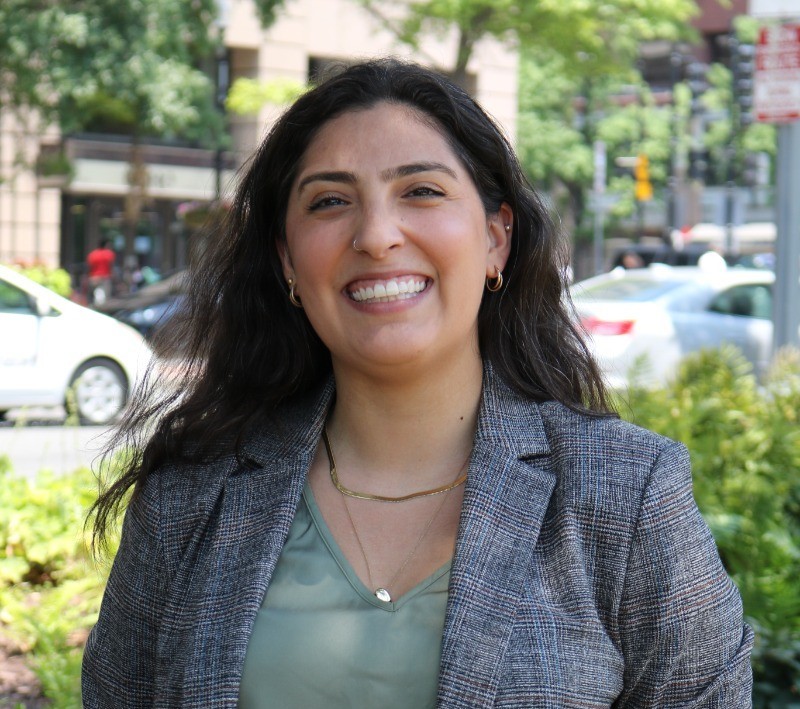
On today's episode, Mayela Arana from the Public Health Foundation discusses academic health department partnerships, which are designed to strengthen the current workforce and train the next generation of public health professionals.

 Spotify
 Apple Podcasts
 Amazon Music
 What happens when health departments and universities move beyond informal collaborations and build lasting partnerships? Mayela Arana, senior program manager of workforce development at the Public Health Foundation, joins us to discuss academic health department partnerships, formal collaborations between public health agencies and academic institutions designed to strengthen both the current workforce and the next generation of public health professionals. She explains how these partnerships create meaningful opportunities for students through internships, practicums, and mentorship while helping health departments build a pipeline of future talent.
How Public Health Can Support Modern Administrative Readiness in a Dynamic World | ASTHO
From Plan to Action: Tools to Support Public Health Implementation | ASTHO

JOHN SHEEHAN:
This is Public Health Review Morning Edition for Wednesday, June 17, 2026. I'm John Sheehan with news from the Association of State and Territorial Health Officials.
Today, we hear what happens when health departments and universities move beyond informal collaborations and build lasting partnerships. Mayela Arana, senior program manager of workforce development at the Public Health Foundation, joins us to discuss academic health department partnerships, formal collaborations between public health agencies and academic institutions designed to strengthen both the current workforce and the next generation of public health professionals.
MAYELA ARANA:
So, at their core, academic health department partnerships are exactly what they sound like. They are formal relationships between a health department and an academic institution, but what makes them really special is that they are built to be mutually beneficial for everyone. So, a lot of times, public health collaborations between agencies and universities kind of happen by accident. Two people who know each other decide that they want to work together on a particular project, for example, and then when one of them leaves, that relationship might fade away. Academic health department partnerships are designed to move beyond that. So, they help to formalize the collaboration, so it's a more regular part of how the organizations operate, not just something that happens when the right people are in the room. So, what that actually looks like can vary a bit from partnership to partnership. Some of these partnerships can choose to focus on research, others might focus on delivering public health services together, and many of them involve education and training for both students and the existing workforce, so that education piece is where a lot of the exciting work is happening now. So, we're talking specifically about internship programs and practicums, these examples of where we're giving students real hands-on experience in a health department, but going even further than that, and thinking about how health department staff can be brought into the classroom, can contribute their real-world expertise to the academic curriculum. So, ideally, it becomes this really great two-way exchange where both sides are learning from one another.
SHEEHAN:
Yeah, and students hopefully will, you know, there could be a pathway there towards a career in public health, so again, both sides are benefiting from this possible career pipeline. Can you tell us a little bit more about why those structured, formalized relationships, and those pathways are so important to public health?
ARANA:
Yeah, absolutely. So, it is such a timely question. Over the last few years, there's been a real spotlight on workforce development in public health, so both supporting people already working in the field and building that next generation of public health professionals. A lot of that energy has been driven by investments like the CDC's Public Health Infrastructure Grant program, which has really pushed agencies to think about their workforce a little bit more intentionally. So, this has been like a great opportunity for academic health department partnerships to flourish; these relationships are uniquely positioned to tackle both of those challenges at once. They're really focused on strengthening the current workforce, building capacity within health departments, and within academic institutions. And on the other hand, they are investing in the future by helping students get genuinely prepared for what it's like to work in a governmental public health setting, and that last part is really important, because there can sometimes be a gap between what students learn in the classroom and what the day-to-day reality of a health department job actually looks like. So, these structured pathways hopefully will help to close that gap. So, that when students graduate, they're not starting from scratch, they've already got real experience, real connections, and a much clearer sense of where they fit into the field, and on the flip side, for the health department, they get to build relationships with emerging talent before they even hit the job market, so it ends up being a win-win on both ends.
SHEEHAN:
Yeah, and pulling back to look at the partnerships more broadly, you mentioned that there are, you know, different flavors of what that can look like. What are the key ingredients or the necessities to make sure that those partnerships last and that they're beneficial?
ARANA:
Yeah, definitely, and I think you know we always say no AHD partnerships are alike, right? They're all so different, there's so many different ways to partner together, but I think the foundation really comes down to relationships and mindset. What we've consistently heard from both health department staff and academics is that communication, mutual trust, and respect, and clearly shared goals are what separates the partnerships that thrive from the ones that fizzle out. So, both sides come to the table genuinely invested in each other's success, it stops feeling like a transaction and starts feeling like real collaboration, so beyond that, like basic foundation coordination, like the day to day logistics is huge. So, having a dedicated person or even a small team of people whose job it is to keep communication flowing and handle the administrative side of things can make an enormous difference. Not just for the staff that are working together in the partnerships, but also for the students themselves, who, when they're in their practicums and their internships, they need really clear, consistent communication to better understand not just their expectations, but the opportunities that exist within the health department. And then there's this curriculum piece, which is often underutilized in a lot of programs. So, when health department practitioners actually have a seat at the table and shaping what students are learning, you end up with graduates who are genuinely ready to hit the ground running. And so, that alignment between what's taught in the classroom and what's needed on the job is something both sides are really looking for.
SHEEHAN:
Yeah, and conversely, when you seen these partnerships fizzle out, what is lacking there? What is happening that you've seen go wrong as these things have evolved?
ARANA:
Yeah, so there's a couple of things that have come up pretty universally. One that comes up a lot is the burden on staff who are mentoring students, taking on a student placement or serving as a practicum advisor is genuinely extra work, and for staff who are already stretched thin, that can be a real challenge. And it's not just the time that it takes, it's also making sure that staff feel equipped and trained to actually mentor students well. So, recognizing that contribution, whether through providing formal training, protected time for mentorship, or some kind of acknowledgement of that extra effort, can go a long way, and then the other one that I don't think anyone will be surprised by is bureaucracy. So, navigating large institutional systems on both the university and the health department side can be slow and can be frustrating. So, the programs that we have seen that handle this really well tend to have people involved who really know how those systems work, and also are genuinely passionate about making the partnership work. So, the combination of that institutional knowledge and the personal commitment is honestly irreplaceable.
SHEEHAN:
It gets back to that role you mentioned of the dedicated person whose job it is to make sure that things go well.
ARANA:
Absolutely, yeah.
SHEEHAN:
A partnership. Any other advice for agencies that are thinking of setting up their own partnership?
ARANA:
Yeah, absolutely. Great question. And one of my favorites to talk about, because the Public Health Foundation has been working in this space for a long time, and we have some really tangible resources that we love to point people to. So, the first is I would start by telling anyone who is curious to come join the Academic Health Department Learning Community. We launched this community back in 2011 as kind of a home base for all of this work, and it's grown into something really special. We are now over 1,400 members strong, from folks in health departments to academic institutions and others from across the country. Everyone just connected around the idea of building stronger academic practice partnerships, and the best part is that it is completely free and open to anyone who wants to join. So, whether you're just starting to explore the idea of an academic practice partnership, or if you're further along and you're looking to connect with peers, it's just really a great place to land. So, through the Learning Community, we share stories, we host webinars, develop resources, and really just try to create a space for dialogue and learning from each other, which brings me to my second resource that I want to highlight. So, working alongside with ASTHO, we recently launched the Academic Health Department Partnerships Toolkit, which is really designed to be a one-stop shop for this work. What I love about it is that it is not theoretical, so almost everything in there is grounded in real-world examples shared by actual members of the Learning Community. So, nothing in there is meant to be prescriptive. There's just a bunch of tools and examples to help you build the partnership that makes sense for you, your organization, and your goals. It's not meant to be a one size fits all kind of blueprint. And then, for those of you who are looking to go a little bit deeper, we do have a book on academic health department partnerships. It is a practical how-to guide for developing and maintaining these partnerships, and that's available for purchase on Amazon. But beyond kind of all of these self-serve resources, I want folks to know that we do offer more hands-on technical assistance as well. So, if you're working through something specific, and you want a more personalized conversation, please feel free to reach out to me via email. We'll figure out together what kind of support makes the most sense for where you are and where you're trying to go.
SHEEHAN:
And okay, that's very generous. How else can listeners learn more? How can they sign up? What can they expect?
ARANA:
Yeah, so we have a couple of webinars coming up in the next few weeks, we're really excited about these. They are really great examples, really, of just what we've been talking about today. So, the first one will be on June 18 from 3-4 p.m. Eastern, and it is focused on a workforce pathway in California, specifically the California Academic Health Department project, which built a really structured system for connecting public health graduates with local health departments and creating clearer pathways into public health careers. We think it's a really great example of what a well-developed student pathway can look like at scale. Then, on June 30, from 2-3 p.m. Eastern, we have a webinar focused on graduate assistantships built through a partnership between the North Dakota Health and Human Services and the North Dakota State University. What's really compelling, I think, about this one is that they're going to talk about how the program has evolved since its launch, the lessons learned, the improvements that they've made. So, it's not just a success story, it's an honest look at how the program has grown and has gotten better over time. Both of the webinars are free and are hosted through ASTHO, so you'll just need to log in or create a free ASTHO account to register. We'll make sure the links are easy to find, and if you have any questions or want more information, you're always welcome to reach out to me via email. We think it's a really great opportunity to hear directly from people doing this work, so I hope folks will join us.
SHEEHAN:
Mayela Arana, thanks so much.
ARANA:
Thank you.
SHEEHAN:
Mayela Arana is senior program manager of workforce development at the Public Health Foundation.
Public health agencies must be administratively ready to fulfill core functions, respond capably to public health emergencies, and utilize funds efficiently and effectively to improve health outcomes. Administrative readiness also depends on an organization's ability to navigate challenges and ensure operational continuity in a complex and uncertain environment. When in place, these foundations support readiness to respond to any public health issue. Find the link to the full blog post about how public health can support modern administrative readiness in a dynamic world in the show notes.
Plans are only as powerful as their follow-through. Too often, implementation gets overlooked or delayed due to unclear roles, timelines, or next steps. ASTHO has a suite of resources designed to help public health teams bridge those gaps and turn strategies into action. Whether you're developing organizational plans, program strategies, or collaborative initiatives, if you're involved in setting goals and want to ensure effective implementation, these resources are for you. Your team can use them individually or together, depending on your specific needs. Each tool offers flexible guidance, practical templates, and coaching prompts to help your team. Find a link in the show notes.
This has been Public Health Review Morning Edition. I'm John Sheehan for the Association of State and Territorial Health Officials.