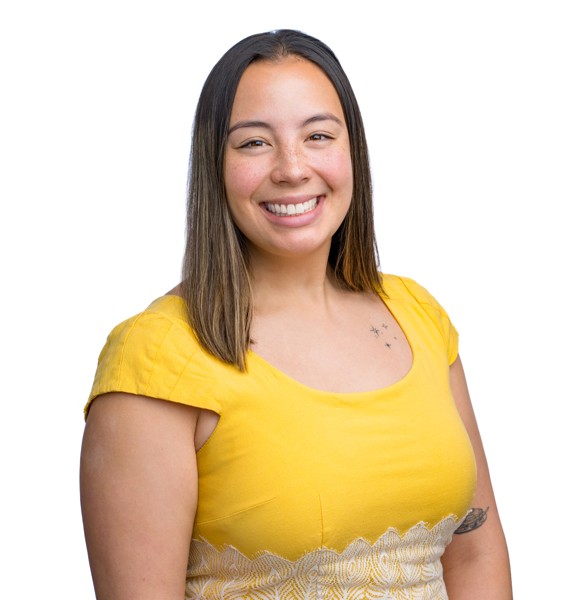
On today's episode, the de Beaumont Foundation's Amanda Kwong discusses why effective public health communications go far beyond public awareness campaigns. Later, ASTHO's Ashley Nanthavongsa-Mosley highlights innovative efforts to introduce public health education into K-12 schools.

 Spotify
 Apple Podcasts
 Amazon Music
 How do you strengthen public health for the future? Start with better communication. Amanda Kwong, director of the Public Health Communications Collaborative at the de Beaumont Foundation, discusses why effective public health communications go far beyond social media posts and public awareness campaigns. She explains how communications should function as a core part of public health infrastructure rooted in community engagement, strategic leadership, and proactive planning rather than reactive messaging. Later, Ashley Nanthavongsa-Mosley, a senior analyst for workforce at ASTHO, highlights innovative efforts to introduce public health education into K-12 schools. From disease detective competitions in Connecticut to curriculum partnerships in Montana and professional development programs for teachers in Washington, states are creating new pathways for students to explore public health careers earlier than ever before.
Public Health Communications for Impact: Approaches to Strengthening Infrastructure
Public Health Leadership Starts in the Classroom | ASTHO
ASTHO Learning Opportunity: ACEs Strategic Communications Training
Wastewater Testing for Arboviruses: Arizona’s Surveillance Approach | ASTHO
Strengthening Public Health Response to Infectious Diseases Through Wastewater Surveillance | ASTHO

JOHN SHEEHAN:
This is Public Health Review Morning Edition for Monday, May 18, 2026. I'm John Sheehan with news from the Association of State and Territorial Health Officials.
Today, strengthening public health through stronger communication. Amanda Kwong, director of the Public Health Communications Collaborative at the de Beaumont Foundation, discusses why effective public health communications go far beyond social media posts and public awareness campaigns. And later, ASTHO's Ashley Nanthavongsa-Mosley, a senior analyst for workforce, highlights innovative efforts to introduce public health education into K-12 schools. From disease detective competitions and professional development programs, new pathways are letting students explore public health careers earlier than before. First, here's Amanda Kwong.
Amanda Kwong, welcome to the show.
AMANDA KWONG:
Thank you. Thank you for having me.
SHEEHAN:
So, Amanda, when people hear public health communications, you could get the idea of just messaging or campaigns. But what does that leave out? And like, what's missing from that thought?
KWONG:
Sure. I think a lot of communications and when we think about it is the output, the final deliverable, whether it's a TV ad or radio ad or social graphic. I saw a lot of this work in my previous job working at the Ad Council, which is a national nonprofit focused on public service advertising development and implementation for government agencies and nonprofits. I think that campaigns can feel very technical. They can feel like, this is the TV ad, we're set. But so much of communications is bidirectional. It's not just a ‘spray and pray’ method. It's not just like delivering an ad and hoping it sticks. It's thinking about even before you deliver your campaign or your message, who are the people that we are most needing to reach this message with? How do we co-create and how do we work with them to craft this message where it's really going to resonate and inspire action and drive change? And so, when I think about effective public health communications, it's delivering communications for the community, not just at the community. So, I really want to emphasize here the role of community engagement. How can you bring your community members in to be part of the co-creation of a communications campaign, seeing that they have the lived experience of what you're trying to communicate and having them see themselves in this work. There's something about the personal touch of bringing the community in and also, public health is so community oriented. And so yes, it is. The campaigns are a TV ad, a radio spot, a social graphic, but it's also the very beginnings of designing a campaign and bring your community into the action so that they can play an active role in how the message is constructed.
SHEEHAN:
Yeah, I like that a lot. And that I think there can be almost a stigma around the word communications as almost like it's manipulative or trying to set the narrative or set the agenda. And I agree with you. It's not. It can be about education. So, talk more about how communications can be seen as a system and as infrastructure and why that's important.
KWONG:
So first, I think that there's this call to action that I really want to encourage the community that's listening here to recognize that communications is a role that all of us can be activating. If communications is in your role, obviously, but the idea that anyone can be a communicator. If you're working directly with the community, if you are helping populations advance their understanding of public health information, education, we all have a role to play when it comes to advancing communications, whether it's in your title or it's not. So, I think that communications as a system and not just as a skill set is really beneficial when we're thinking about communications because you're right. Communications can feel persuasive and manipulative. And that kind of exists within the private sector of communications. But really, the art of an effective public health communications message is getting someone to think differently about something to instill a difference in levels of awareness or behavior change. When I think about the role of communications within a health department, there are certainly people that are on the ground doing the communications work for their communities. So folks that are working in a health department that sit on the communications team, they can be the social media manager, they can be the communications director, they can be the PIO. But when I think about communications in a health department, it doesn't just sit within the department, but it's overall. So, from the latest research that PHCC conducted with our PHCC Action Guide, which was designed and developed by the Harvard Opinion Research Program, it's based on a year's worth of research with 50 plus qualitative interviews to really understand the experience of those that are working in the communications team of a health department to understand that there are many factors that play a role in the effectiveness and the success of their communications department. But those influences kind of sit outside of the communications team. Some of those factors are how close do you sit to your director? What is the strategic authority that a communications team has? What is your closeness or proximity to the community that you're serving? I think these are all factors that kind of exist outside of a communications team, but exist within the department and the broader community when thinking about the of communications.
SHEEHAN:
And successful communications aren't an end in and of themselves. They're there to advance the
success of the agency itself. Can you talk about how communications can be a tool in demonstrating impact?
KWONG:
Sure. So, communications sometimes in health departments comes at the very end of a program update or a content launch or something new, where the communications team is brought in at the end to provide a press release, a social graphic to announce and promote this new body of work that is coming from the health department. But what I really want to emphasize is that communications should play a role at the very beginning of that process. Have your communications folks be at the table at the very beginning. So, from this PHCC Action Guide, one of the biggest influences that you can control as a health communicator is thinking about strategic authority. Where do you want to position communications within the timeline of when a program is developing something or when there's a policy that's being changed? Thinking about the role of communication being at the table at the very beginning and providing strategic direction. Sometimes I see that communications can be seen as a reaction, but I really want to encourage people to think about communications as something that's proactive versus reactive when you're thinking about engaging leadership in the role of communications within your health department.
SHEEHAN:
Yeah. And let's talk a little bit more about this PHCC Guide. Part of it is pulling together resources for organizing communications work. What kind of challenges does the Guide help agencies navigate?
KWONG:
Sure. So, from the Guide, we heard in these interviews that there are both internal and external pressures that might be impacting the effectiveness of their health department. So, some of those challenges can be bureaucracy, how quickly or how slow can change happen? Who are the decision makers that are at the table? Thinking about political environment. This is a big external force that exists outside of your health department and thinking about where does your locus of control exist? Where can you move the needle when thinking about if you're working in a community that is politically charged, how do you ensure that your public health message lands in a way that isn't polarizing and is instead very reuniting of the community? So, I talk about the political environment. That's a big challenge that we've seen across different health departments. And through this Guide, there are effective strategies and ways you can be thinking about operating in a political environment. There's worksheets as well that you can kind of go through either as a team or as an individual. One of the ways you can kind of override this challenge is thinking about the values in your community. So, to move past the polarizing nature of public health, you can think about what are the common values that we believe in and what our community believes in and how can we kind of build that bridge that connects us. Morale is a big one, too. There's been a lot of shifts that have been happening to the federal public health workforce over the last year and a half. There's also been the reduction in the workforce. There's been cuts to the budget and the operations and kind of moving the communications work along. And so it's valid for people to be feeling not as motivated to do this work as they originally were. And so, as a leader, when you're looking at this Guide, thinking about your action plan to really mobilize your communications team, but also your department more broadly around morale, there's some suggestions and ways that you can think about morale building in this really significantly tricky time for public health leaders. So, some of the challenges that we saw coming up in the research, some themes, and then really giving people some actionable strategies to kind of move your teams forward under these circumstances.
SHEEHAN:
Yeah. And let's talk about the webinar, the ‘Public Health Communications for Impact’ webinar. It features panelists that talk about real world applications of communications professionals. What might surprise people from how these systems can actually function behind the scenes?
KWONG:
So, much of the spirit of this PHCC Action Guide is understanding that not all health departments look alike. I think that has sometimes become the narrative of how we think about public health departments. But really, there are so many specific nuances that a health department has that is unique to their own staff, to their community outreach. And so, when thinking about the things that people might find most surprising when they see how these communication systems operate behind the scenes, is that through this Guide, people are very honest about their experience in working with health departments. And so, when we've delivered this Action Guide to our audience members so far, it's been really compelling when people have gone back to me and have said, hey, Amanda, this new Guide that you shared is really digging at something that I've been feeling for so long, but I didn't know someone else also felt the same way. So, while there's nuances and differences against health departments, there's like the emotional aspects of moving communications work forward during this time, that there's this connection point that people can feel. They're not alone in this work. I think that's the biggest thing with communications right now is PHCC is trying to identify those needs that are most important for us to support this workforce during this time and to feel not alone. Because for some of the folks that are in our community, they might be doing communications for their entire health department. They might be a staff of one. They might be doing communications and something else. They're feeling stretched. So, I think the biggest surprise that people will be feeling from this is that, like, they're not alone in this work. There's other people that are experiencing the same kinds of things, even if you live in different parts of the country.
SHEEHAN:
And along those lines, Amanda, are there any takeaways or sort of shifts in thinking that someone would come away from the webinar with?
KWONG:
Yeah, we really designed this PHCC Action Guide to not be read from cover to cover. We really want people to be thinking of this guide as pick your own journey. So oftentimes, resources and training materials for the public health communications workforce can be many pages long. And we recognize that. There are a lot of pages to this new resource. Two-thirds of it is just the methodology and the survey instruments and just giving people like, this is the backing to help inform all of this great work. But I really encourage you to just dig into the first third. And instead of starting from the very beginning chapter, look at that list of like here's the 14 different influences that might be impacting the effectiveness of my communications team. And think about like, across these 14, what's the one that you want to zoom in on? And what's the one that you kind of want to be reading that chapter, understanding the takeaways, and then applying that afternoon in a meeting or in a group setting or even tomorrow. So, I think the takeaway from this webinar is that treat this resource like a pick your own adventure. There's really no pressure for you to be reading all the chapters. Really pick the chapters that are most relevant to you to dive in, either as an individual or with your group.
SHEEHAN:
Well, Amanda Kwong, thanks so much.
KWONG:
Thank you.
SHEEHAN:
Amanda Kwong is director of the Public Health Communications Collaborative at the DeBeaumont Foundation. Join ASTHO on May 21 for a webinar about the Public Health Communications Collaborative's newly published “Overcoming Challenges and Leveraging Strengths Action Guide
for Communicators at Public Health Agencies.” Find more information about registering by clicking
the link in the show notes.
Now, let's hear from ASTHO's Ashley Nanthavongsa-Mosley, a senior analyst for workforce about some new efforts to build the public health pipeline.
Ashley Nanthavongsa-Mosley, welcome to the show.
ASHLEY NANTHAVONGSA-MOSLEY:
Glad to be here.
SHEEHAN:
So, Ashley, the blog talks about a shift in how public health agencies are looking at K-12 education. Why now the emphasis on kids?
NANTHAVONGSA-MOSLEY:
Yeah, so we're focusing on really K-12, so, elementary, middle, and high school. And we're seeing this shift driven by both urgency and opportunity. The public health workforce has been under significant strain, especially since COVID. And really before COVID, most people didn't really know what public health was. So, now there's a growing recognition that we can't wait until college or graduate school to introduce it. And students are really already engaging in real-world issues like mental health, infectious disease, and environmental change. So, bringing public health into K-12 schools helps them make sense of these issues early. It reframes public health as tangible, community-centered, and impactful, not just something that happens in a lab or behind the scenes. So this is about building awareness, strengthening health literacy, and creating earlier interest. And it's also about creating more equitable pathways into public health careers.
SHEEHAN:
And agencies don't have to rely solely on making new programs from scratch. There are existing
public school programs.
NANTHAVONGSA-MOSLEY:
Yeah, it's exactly that. What's really cool is that they aren't starting from scratch. They're schools where the schools already are. So, like in Kentucky, for example, they're leveraging organizations like HOSA with strong student engagement and infrastructure. Instead of creating new programs, they have embedded public health into activities that students already enjoy. Like for an example, a conference that has simulations where students respond to disease outbreaks. And Montana is taking a similar approach, but from the classroom side. They've developed like ready-to-use curriculum materials, lesson plans, worksheets, answer keys, and teachers can plug these directly into schedules. And really, as a former teacher, I appreciate this because accessible resources are critical. Teachers don't have time to build something new from the ground up. So, in both cases, it's about integration, not addition. It's great that jurisdictions are making public health a natural extension of what schools are already doing.
SHEEHAN:
And another strategy some states have been using is using professional development and licensure credits to incentivize educators. And instead of just providing a syllabus, going ahead and making programs with the teachers. Can you tell us more about that?
NANTHAVONGSA-MOSLEY:
Yeah. So really, teachers know their students best, right? How they learn, what resonates with them. They're balancing standards, testing requirements, and limited instructional time. And when educators are involved early, materials are more practical and usable. The content aligns with curriculum standards and really fits into their classroom. Washington is a prime example because they connect their work with professional development and licensure requirements, which is really cool because teachers can earn clock hours or continuing education credits while learning how to use public health data in teaching. So, it really becomes a win-win. You're not just asking teachers to do more, but you're supporting their professional growth while equipping them to bring real-world public health concepts into their classrooms.
SHEEHAN:
And you also cite Connecticut as another example of a school system doing some cool things. The example being disease detectives for middle schoolers or even the possibility to earn college credits for high schoolers. That's a really enticing incentive for students.
NANTHAVONGSA-MOSLEY:
Yeah, definitely. Connecticut is really like our gold star. They aren't just introducing public health. They're creating a tangible pathway. So, students might start with that event called the Science Olympiad Disease Detectives, which helps them learn about outbreak investigations. Then they can move into college-level coursework during high school and even earn transferable credits. This signals that public health is a legitimate and accessible career path, and it also reduces barriers. Students gain credits and experience before entering college. And for workforce development, this is a game-changer. It creates a clear, more supported pipeline, and especially for students who may not have otherwise considered public health as an option.
SHEEHAN:
Lastly, maybe for educators or for public health officials that would like to engage their local school districts, how can they learn more?
NANTHAVONGSA-MOSLEY:
Yeah, so what we really talked about today was more of a snapshot and more high-level. So, by reading the full blog, it really goes much deeper into how jurisdictions can support public health in K-12 schools. It includes specific curriculum models, examples of student engagement strategies, and practical evaluation approaches that agencies are using right now. And it also highlights cross-cutting lessons that are applicable across agencies, whether folks are just getting started or looking to scale their efforts. Listeners can find the full blog on ASTHO's website. It's a great resource for anyone interested in building partnerships between public health and education, or really strengthening the future workforce pipeline. ASTHO is continuously learning from jurisdictions through our public health in K-12 ad hoc calls, so definitely more to come on this topic.
SHEEHAN:
Ashley Nanthavongsa-Mosley is a senior analyst for workforce at ASTHO. Find a link in the show
ASTHO, in collaboration with the Berkeley Media Studies Group, will host a virtual training designed to strengthen participants' ability to communicate adverse childhood experiences, ACEs, and other relevant public health issues in ways that resonate with target audiences and generate meaningful media coverage. The session on May 26 will also build skills in crafting compelling narratives by leveraging expert voices, translating data through social math, and delivering clear, impactful messages. Find a link to register in the show notes.
Wastewater surveillance, also known as wastewater-based epidemiology, has emerged as an innovative way to track community health by analyzing what goes down our sinks and flushes down our toilets. Read about new wastewater resources like testing for arbovirus in Arizona and strengthening knowledge of wastewater surveillance ethics at the links in the show notes.
This has been Public Health Review Morning Edition. I'm John Sheehan for the Association of State and Territorial Health Officials.