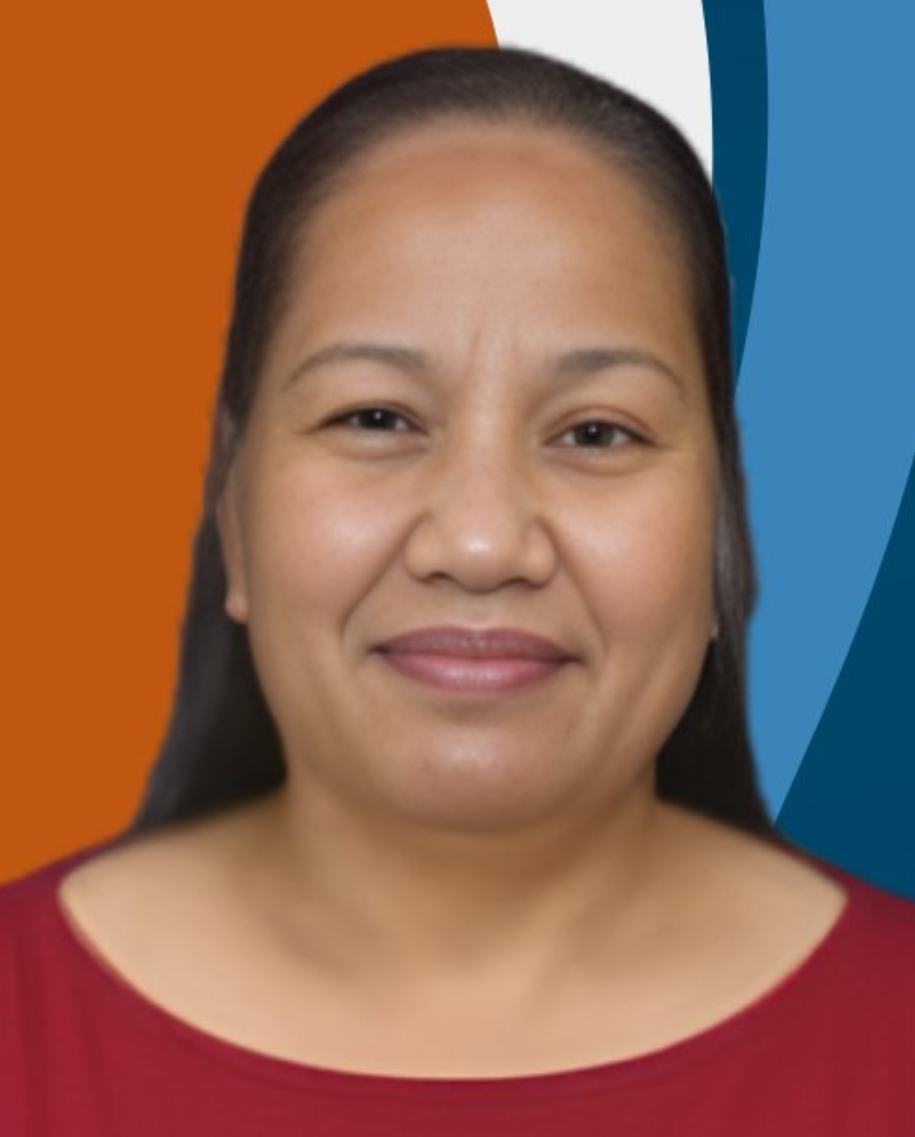
Today: bringing oral health into the public health conversation with Flora Nathan, assistant secretary for the Bureau of Oral Health in the Republic of the Marshall Islands. At her first ASTHO Spring Leadership Forum, Flora shares a candid look at the challenges and opportunities of delivering oral healthcare across a U.S. remote island nation. From severe workforce shortages and long clinic wait times to the ripple effects on families, schools, and local economies, she highlights how oral health is deeply connected to broader public health outcomes. She also discusses the importance of integrating oral health into maternal and child health programs, school-based care, and community outreach, as well as the realities of operating without consistent funding.

 Spotify
 Apple Podcasts
 Amazon Music
 Today: bringing oral health into the public health conversation with Flora Nathan, assistant secretary for the Bureau of Oral Health in the Republic of the Marshall Islands. At her first ASTHO Spring Leadership Forum, Flora shares a candid look at the challenges and opportunities of delivering oral healthcare across a U.S. remote island nation. From severe workforce shortages and long clinic wait times to the ripple effects on families, schools, and local economies, she highlights how oral health is deeply connected to broader public health outcomes. She also discusses the importance of integrating oral health into maternal and child health programs, school-based care, and community outreach, as well as the realities of operating without consistent funding.
ASTHO Leadership Institute | ASTHO
Storytelling in Public Health: Lessons from STI Prevention & Care

John Sheehan (0:00): This is Public Health Review Morning Edition for Monday, 04/13/2026. I'm John Sheehan with news from the Association of State and Territorial Health Officials. Today, bringing oral health into the public health conversation with lessons from the Republic Of The Marshall Islands, or RMI. Our guest, Flora Nathan, Assistant Secretary for the Bureau of Oral Health and the RMI, will tell us about the challenges and opportunities of delivering oral health care across a remote U. S.
John Sheehan (0:26): Island nation. I spoke with Flora at this year's Hill Day in Washington, DC. From severe workforce shortages and long clinic wait times to the ripple effects on families, schools, and local economies, she highlights how oral health is deeply connected to broader public health outcomes. So, Flora, this is your first year at the ASTHO Spring Leadership Forum. What were your expectations?
John Sheehan (0:51): What were you looking to gain from this?
Flora Nathan (0:52): Thank you for this opportunity. Yeah. It's my first time coming to ASTHO leadership, and everything is new to me as I'm new to the our ministry's leadership. And by coming here to learn as many things as I can, to take it home, and improve service in the martial arts, whatever I learned from here.
John Sheehan (1:14): What have you what have you experienced so far?
Flora Nathan (1:16): So far, I have learned everything, like things with the other territories and state, like their problem that is same as my problem, and then how they bring it up and bring their problem so we can also take it to marshal and how we improve our service in the marshal.
John Sheehan (1:36): And you're here in the context of oral health, which sometimes maybe can be kind of a secondary consideration in the broader scheme of things. How do you connect oral health to broader health, public health concerns?
Flora Nathan (1:51): As you know, in the Marshall Islands, dental caries is the most high rate in the Highland. As alone in the oral health, we cannot do it alone. We need other programs to help us to lessen the dental caries in the RMI. We have to integrate with other programs like MCAs, the maternal child for the antenatal woman, or the pregnant woman, the well baby clinics, the outreach committees that work outside, and the school program. With all this, we work together, we can bring oral health problem lesser to our system.
John Sheehan (2:29): You named a few of them, but what are some of the most pressing oral health conditions or issues you face out there?
Flora Nathan (2:38): Like, for every day in the clinic with short staff, especially when our staff go out to the Howder Island or school, we can only come up to like two dentists in the clinic. So with many people, long line in the clinic, it's really like people come and wait long line in the clinic. So like for the families, they got tired, go home. It's another like spending for them to come to the hospital. And then with their kids missing school because they need to bring them to the clinic, and the parents miss work because they need to come to the clinic to seek treatment.
Flora Nathan (3:16): But with the only short staff we have there, it is really like typical for the families, And that's why we really need help in bringing more staff so that the line can be smooth and everyone can be seen on the same day.
John Sheehan (3:32): Of course. And it's so distressing to hear that, you know, there are so few staff, especially when you start factoring in, yeah, kids, they have their share of dental issues, and if they have to start missing school, and it starts cascading the adult's day, and they can't get to work, it it ends up being quite a problem. Yeah. How have you been working with other organizations using partnerships to sort of help lighten the load?
Flora Nathan (4:00): I think at the moment we only work with, they call it OBIAS, the Association for the Pacific, that we work together to work on strategies to integrate oral health into other public health problems. And we're still in the streamline of working together. We haven't really gone out there and, like, partner and do things like this.
John Sheehan (4:25): Have have any initiatives been strengthened by the public health infrastructure grants? Have those funds been put towards better oral health programs?
Flora Nathan (4:35): Like, for the this year's funding, our budget was being disapproved from health development, so we didn't get any funding from the combat. And all our plans, work plans were affected, but we were happy that the ministry was able to help us in some of our priorities, like to go out there to the Hauter Island and all those school program with our supplies and appointments to seek people and help them out there.
John Sheehan (5:06): What kind of assistance or funding help or partnerships are you looking for? What would be helpful?
Flora Nathan (5:14): You know, gave the definition of the compact funding was really clear, So we can use the funding to help preserve our needs, so we can fully equip to treat people back home. Like, we wanted, like, dental chairs to be in the other island, the two two remote other island that we can that there is a school there, so we can see the school student there and the population there. Because we don't have dental chair in those places. So what we do is we only go there and extract it. But we have dental chairs that we can, like, do to other treatment, filling and stuff.
Flora Nathan (5:55): But at the moment, we're in the state of our primary prevention, like fluoride varnish, STF. I have someone coming to RMI to train us with other primary health care providers and all to apply fluoride varnish, not fluoride varnish, but sodium thiamine fluoride. So that thing is like stop progress of dental caries. So I think this will really help the people in the Hother Island. They really need it and it's really hard for them to come to the capital, the metro, for treatment, with the high fear of air ticket to come to the capital.
John Sheehan (6:36): Yeah, of course. If treatment is so kind of hard to access, prevention, I assume, prevention and education have got to try and fill the gap. Yeah. Well, Flora Nathan, thanks so much.
Unknown Speaker (6:49): You're welcome.
John Sheehan (6:51): Flora Nathan is Assistant Secretary for the Bureau of Oral Health in The Republic Of The Marshall Islands. The ASTHO Leadership Institute, or ALI, is a premier cohort based professional development program designed to support executive level governmental public health leaders in driving meaningful change in their organizations and communities. As ASSO's flagship leadership development program, ALI works with experts in executive leadership, nationally recognized public health professionals, and alumni to offer a curated learning program. Participants benefit by gaining access to a supportive learning environment, expert led training sessions, and opportunities to elevate their careers while advancing the mission of public health. Learn more at the link in the show notes.
John Sheehan (7:38): Effective public health communication depends not only on what we say, but how we share our message. In an upcoming webinar, join ASTHO as we explore how strong storytelling can transform complex or sensitive health topics into stories that engage diverse audiences, inspire action, and drive change. The session, Storytelling in Public Health, Lessons from STI Prevention and Care, will highlight how storytelling frameworks are being used in sexually transmitted infection campaigns and will provide actionable insights to craft stronger messages for different audiences. Find the link to register in the show notes. This has been Public Health Review Morning Edition.
John Sheehan (8:16): I'm John Sheehan for the Association of State and Territorial Health Officials.