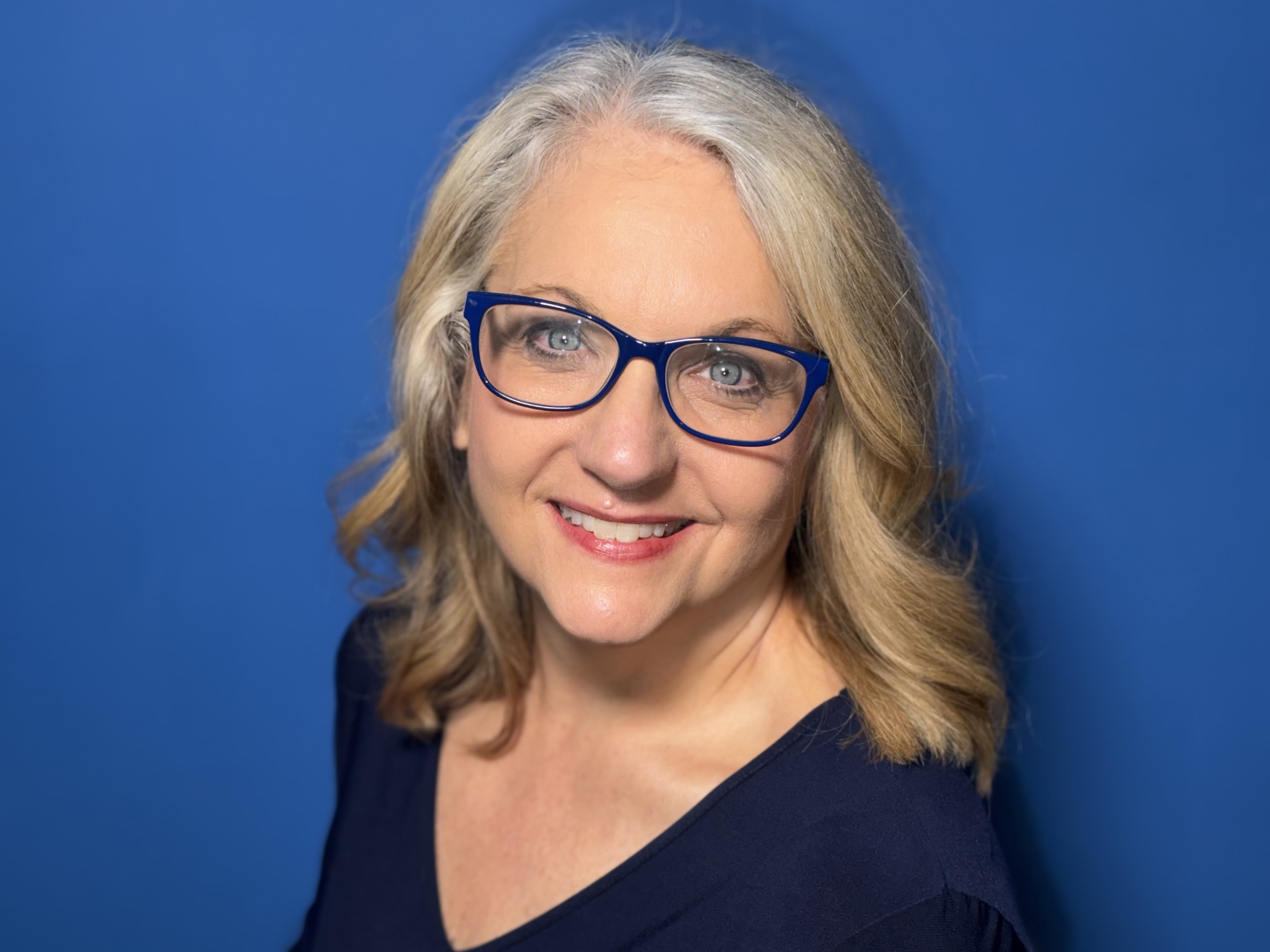
On today's episode, Dawn Morriston from the UNC School of Medicine highlights her upcoming webinar, part of ASTHO's Leadership Power Hour series, designed to help supervisors and managers strengthen their leadership skills through focused professional development sessions.

 Spotify
 Apple Podcasts
 Amazon Music
 Leadership in public health has never been more complex, and navigating conflict is a critical skill for today’s leaders. In this episode, Dawn Morriston, director of faculty advancement in the Office of Faculty Affairs and Leadership Development at UNC School of Medicine, introduces her March 26 session in the new Leadership Power Hour webinar series from ASTHO, designed to help supervisors and managers strengthen their leadership skills through focused, one-hour professional development sessions. The five-part series highlights key competencies that help leaders improve decision-making, build trust, and guide teams through organizational change. Morriston will explore why leading through conflict is essential in today’s rapidly changing public health environment. From competing priorities within teams to differing definitions of community needs, leaders often find themselves navigating complex conversations that require negotiation, reflection, and strategic thinking.
Leadership Power Hour: Session 2 – Leading Through Conflict
Living With Long COVID: Stories, Science, and Public Health
Weathering the Storm – Part 2: The Importance of Environmental Health Preparedness and Response

JOHN SHEEHAN:
This is Public Health Review Morning Edition for Monday, March 23, 2026. I'm John Sheehan for the Association of State and Territorial Health Officials.
Today: leading through conflict. It's the topic of a new ASTHO webinar, part of the Leadership Power Hour series, which is designed to help supervisors and managers strengthen their leadership skills through focused, one-hour professional development sessions. Dawn Morriston, director of faculty advancement in the Office of Faculty Affairs and Leadership Development at the UNC School of Medicine, introduces her session, which explores why leading through conflict is essential in today's rapidly changing public health environment, from competing priorities within teams to differing definitions of community needs, and how leaders often find themselves navigating complex conversations that require negotiation, reflection, and strategic thinking.
DAWN MORRISTON:
Public health is being challenged, changed, goal posts are being moved, and trust is being gained and lost. So, I've been in public health for over 30 years. So, I know that conflict arises when there is a disconnect between what is planned and what is executed, or what is expected and what is delivered, and what is communicated and what is understood, and with so much change comes so much disconnect. So, as leaders, we need to be comfortable, sort of wading into that sea of disconnect, be comfortable talking about the circumstances that brought that disconnection into existence, and then create connectivity where there is none.
SHEEHAN:
And I think hand in hand with that, when there is sort of this disconnect, and when there can be conflict that can lead to conversations that necessarily include negotiation. Can you talk about, like, what that looks like, and maybe a real-world scenario?
MORRISTON:
Yeah, absolutely. When I think of public health, the first thing I think of is teams. Team conversation simply is one where it engages everyone on the team to discuss or debate an issue, solve a problem, and design the solution. A real-world scenario would be if, for instance, let's say an organization received some funding to do a public safety campaign for their community. It sounds simple, but what if different team members define public safety differently? One may think it's about bike safety, another gun safety, and still a third person may think it's environmental dangers. Take it a step further, they may define community differently. One may think they're talking about the county, one may think the state, others think in terms of populations, like children or the workforce, right? So, having all this disagreement or disconnect about the 'how' and the 'who' this campaign should affect is going to lead to conflict and negotiation. So, the negotiation is going to entail introducing some data about who in their geographic catchment area is most at-risk and therefore needs the campaign the most, then the best channels and venues to reach that at-risk population. So, that's going to require some data mining, and some brainstorming, and exploration. So, being able to navigate through that is critical. It will also need to be grounded in the financial realities of what can they realistically do with the money being provided in the time allotment given. So, talking about creative action planning and maybe some strategic partnering discussion, maybe they'll need to reflect back on other initiatives that they've had, things that worked, things that didn't work. What can they recycle to that would move this initiative forward? So, you can see how it would be critical to help the leader navigate these conversations, being able to weave in and out of the exploration, the brainstorming, the disconnect, and the negotiation parts, reflection, moving into action planning, and strategic partnering. All of that matters as to how they move into this project. So, it helps move the focus of the disconnect from being in-between the people, the individual people, and their individual notions of how that money should be spent, and it helps move it outside of the individuals and go to this third space. Think about the basic tenet of negotiation: there's my position, there's your position. Yeah, and then there's the third space, which is the community, the best interest of the community. So, instead of wasting time and energy trying to pull people into your way of thinking, leaders who navigate these conversations skillfully can facilitate the team to create that third space together.
SHEEHAN:
Absolutely, and that sounds like a very rational way of approaching it, and certainly a great strategy for de-escalating a conflict. At the same time, at times tensions can run high, we're all people. Are there strategies for easing maybe hurt feelings, or just when temperatures run hot?
MORRISTON:
Absolutely, absolutely. One practical technique that I'm going to talk about in the session is to interrogate reality, like public health. Reality is being challenged more than ever, and believe it or not, I'm going to advise leaders to lean into it. I have a magnet on my refrigerator that says, "Let's just assume I'm right and move on." Well, the world doesn't work that way, but in all seriousness, everyone comes into a conversation with their own perceived reality as a shield. And strategic conversations start when you remove your shield, you come out from behind it and you come out from behind whatever fear or hesitation is keeping you behind it, and instead saying, let's both assume we're wrong, let's assume we're both wrong, and find the reality together in the third space. There's a book called Fierce Conversations by Susan Scott. She even says, in fierce conversations or in strategic conversations, you are more likely to get your answers questioned than your questions answered. And I just love that quote, like lean into the messiness of it, and that's where you find that truth in the third space.
SHEEHAN:
Yeah, it's a lot of discussion, a lot of conversation. And can you give a preview of some, and I think you've done this already, some of the ways that this will lead to more credibility for leaders within their own teams?
MORRISTON:
Absolutely. Oh my gosh, you know, I often will say that leaders don't decide their leaders, their followers do, and relationships and credibility are what compel teams to follow a leader, and nothing kills relationships and credibility faster than avoiding these strategic conversations. And so, often we will avoid these tough conversations. Leaders, us, everyone avoids these tough conversations because we think, oh, I don't want to damage the relationship, but the conversation is the relationship; you do more damage not having the conversation than you do having it. So, this session is going to wade into that sea of disconnect, help us with our confidence level, being uncomfortable in those moments, and helping our teams navigate through these conversations, so that we can keep moving forward.
SHEEHAN:
Dawn Morriston is director of faculty advancement in the Office of Faculty Affairs and Leadership Development at the UNC School of Medicine. She is the featured speaker of ASTHO's Leadership Power Hour webinar, titled "Leading Through Conflict," which will take place on March 26. Find a link to register for the webinar in the show notes.
As Long COVID continues to affect millions, its impact often goes unseen. Join ASTHO for a timely conversation with featured speakers spanning the areas of state public health, healthcare providers, and those with lived experience. This discussion will explore the evolving reality of Long COVID, blending personal stories, public health data, and clinical insights. This session will examine emerging challenges, current responses, and persistent gaps in care. Together, speakers will identify opportunities to strengthen awareness, improve support systems, and advance solutions for those living with Long COVID. Find the registration link in the show notes.
In 2022, Hurricanes Fiona and Ian caused significant damage and loss of life across several states and Puerto Rico. The following year, CDC awarded funding to ASTHO to assist health agencies in North Carolina, South Carolina, Florida, and Puerto Rico in building their capacity to better prepare for, respond to, and recover from the environmental health impacts brought on by these hurricanes. To highlight this work, join ASTHO for part two of a webinar series featuring Florida's Department of Health. Find a registration link to "Weathering the Storm, Part Two: The Importance of Environmental Health Preparedness and Response" in the show notes.
This has been Public Health Review Morning Edition. I'm John Sheehan for the Association of State and Territorial Health Officials.