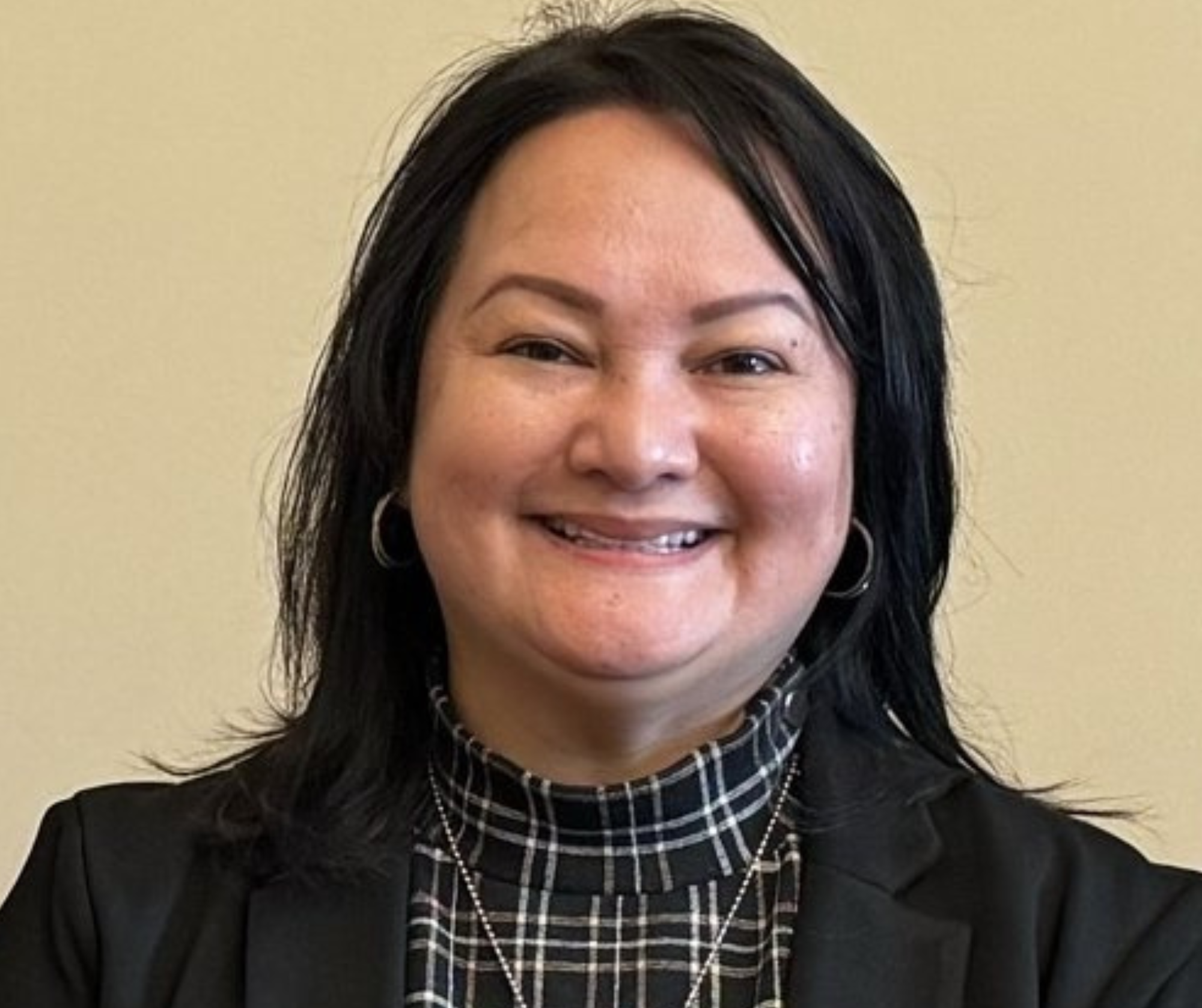
On today's episode, Eleanor Cabrera from the Commonwealth Healthcare Corporation in the Commonwealth of the Northern Mariana Islands shares how telehealth is helping transform care delivery in island jurisdictions.

 Spotify
 Apple Podcasts
 Amazon Music
 How do you deliver specialty health care across a 14-island chain spread across the Pacific? In this episode, we talk with Eleanor Cabrera, Chief Strategy Officer of the Commonwealth Healthcare Corporation in the Commonwealth of the Northern Mariana Islands. She’ll tell us how telehealth is helping transform care delivery in the Northern Mariana Islands and explain how virtual services from telepharmacy and teleradiology to remote specialty consultations are reducing costly off-island referrals and connecting patients on Saipan, Tinian, and Rota with the care they need. The conversation also explores the unique challenges territorial health systems face, including broadband gaps, workforce shortages, and capped Medicaid funding. Cabrera shares how strategic partnerships with mainland providers, potential collaborations with hospitals across the Asia-Pacific region, and new digital infrastructure investments could dramatically expand access to care.
ASTHO Policy Institute Lunch & Learn Series: Medicaid Policy & Implications for STI Prevention
Now, Next, and Beyond: Understanding the Rural Health Transformation Program | EY - US

JOHN SHEEHAN:
This is Public Health Review Morning Edition for Thursday, March 19, 2026. I'm John Sheehan with news from the Association of State and Territorial Health Officials.
Today: using telehealth to deliver specialty care across a 14-island chain in the Pacific Ocean, we talk with Eleanor Cabrera, chief strategy officer of the Commonwealth Health Care Corporation for the Commonwealth of the Northern Mariana Islands, the CNMI. She'll tell us how telehealth is helping transform care delivery in the Northern Mariana Islands, and explain how virtual services, from telepharmacy and teleradiology to remote specialty consultations, are reducing costly off-island referrals and connecting patients with the care they need.
ELEANOR CABRERA:
Telehealth at the Commonwealth Healthcare Corporation in the Northern Marianas is not new. It's already a part of how we are working to deliver care across our three-island system. It is an option prior to patient transfers, which reduces, as you know, both the length of stay and hopefully the wait time before a procedure can be performed elsewhere. We are currently able to operate telepharmacy services between Rota, Tinian, and Saipan, and we've been working to do the same in dentistry. Our providers can also consult across islands through telehealth, which has been pretty critical, given the geographic isolation of our island communities. We are a 14-island chain, and our health system spans those three main islands, so that's a very important feature for us. And through the use of telehealth, as telehealth continues to evolve, we see partnerships are really the key accelerator. I think domestically, we continue to explore deeper collaboration with other care systems on the mainland, for example, and in Hawaii, of course. To expand specialty consultation, particularly in areas like cardiology, oncology, and nephrology, where we have real critical workforce gaps. We're also leveraging teleradiology when we're without on-island subspecialty radiologists to ensure timely reads around the clock when necessary. Beyond domestic partnerships, CHCC sees a promising and largely untapped opportunity in partnering with accredited foreign hospitals in the Asia Pacific region. Cinemized geographic position places us closer to other world-class facilities in countries like the Philippines, South Korea, Japan, and Taiwan than to most mainland U.S. providers. If Medicaid, for example, were able to achieve a state plan amendment that would authorize referrals to qualified foreign hospitals, we really could dramatically improve access for our patients while reducing off-island costs for referral, especially when you consider our capped federal Medicaid dollars. This would not only support resident care, but also create efficiencies in coordinating and expediting specialty services that our population truly needs. So, we believe that this is a conversation worth advancing at the federal level even.
SHEEHAN:
Yeah, absolutely. You touched on so many examples just now, from radiology reads to reducing reliance on in-person referrals. You know that makes so much sense when you're talking about an area spread among 14 islands that presents so many challenges to in-person care. Are there other opportunities you see to expand telehealth along those lines?
CABRERA:
Yeah, I think the biggest opportunity is delivery of care within the CNMI itself. So, it's the opportunity to reduce our dependence on costly off-island medical referrals, particularly for the residents on the islands of Rota and Tinian. So today, when a patient in one of those islands needs specialty care that we cannot provide locally, the default pathway is often an air transfer to the main island of Saipan, but of course, for more complex cases, we need to consider Guam, Hawaii, or the mainland. And each referral carries significant costs. If you can imagine not only the medical expense, but airfare, lodging, per diem, as well as escort costs for the patient, and telehealth gives us an alternate pathway. There, remote second opinions represent a real game changer. Though I want to be transparent that funding is not currently available for us to offer this broadly, so we use it selectively for special cases. If reimbursement structures caught up, we could expand this significantly. I think the same. Is true for telespecialty consultations in cardiology, endocrinology, behavioral health, and other disciplines. We just simply don't have enough providers on island for teleradiology. Is another area of enormous potential. We're already using it, but expanding our capacity would allow us to further reduce turnaround times and avoid situations where maybe diagnostic imaging delays cascade into delayed treatment decisions. I think ultimately the vision is a connected care model where our patients across Saipan, Tinian, and Rota can access meaningful clinical expertise without leaving their island for the majority of their care needs, and at the end of the day, that is the standard we continue to work toward.
SHEEHAN:
Yeah, and you just mentioned a number of challenges, all related to reasons why telehealth, you know, is such a good solution, and I agree with all of them. Another challenge is getting that telehealth access to residents, which is not a given.
CABRERA:
Right, that is one of the most important aspects for any territorial or rural health system, and it's something we think about constantly. If you can imagine connectivity across the CNMI, is you know, it's still uneven. What you can access on-site, then, is not necessarily the same as what is reliably available on the other islands of Rota, Tinian, and even within Saipan, there are areas with limited broadband infrastructure. So, fortunately, under our late Governor Palacios, and continuing through with our governor at the time's office, the CNMI Broadband Policy and Development Office is working towards improving internet and digital equity across the Northern Marianas. But our approach at CHCC in the meantime has been to anchor telehealth at the facility-level first, rather than assuming patients can connect from home, that means being responsible for equipping our health centers on Rota, Tinian, and other offsite locations with the technology and the bandwidth needed to support real-time video consultations with providers on site plan the patient comes to a clinical site where the technology is managed by the staff and I think that removes at least in the meantime, it removes the burden of connectivity and digital literacy from the individual. But at the same time we're also excited because we're moving toward our MEDITECH Expanse EHR implementation, and that's targeted for this fall in 2026. So, we ourselves are working to build a digital infrastructure that can eventually support a patient portal, and what we hope to be a more direct-to-consumer telehealth modality, but we are being realistic, and we're being sequential about it. The EHR foundation comes first, and then the patient-facing digital tools will follow once our EHR backbone is solid. We're also considering workforce training providers getting licensed to deliver telehealth services can be a barrier. Clinicians may not always be attracted to pursuing additional licensure when reimbursement for telehealth remains uncertain. We understand that we need to address both the licensing pathway and the payment structure simultaneously. So, I think as long as we keep that in mind and we're moving towards those goals, I think we can find ourselves aligned with the developments through the Broadband Office.
SHEEHAN:
It sounds like funding is always sort of in the back of your mind, and it sounds like once again, partnerships and regional programs and federal programs are kind of the way through that.
CABRERA:
Right. You know, I've always believed that sustainability comes down to two things, right: a predictable funding stream and policy alignment that recognizes the unique circumstances of the territories to include the CNMI on the funding side. You know, CHCC operates under a capped Medicaid allotment, currently around $67 million with an 83% FMAP. That cap limits our ability to expand services, including telehealth. We would love to do more, but payers can be a limitation. Currently, telehealth reimbursement policies need to evolve to cover the full spectrum of services we are capable of delivering remotely. Remote second opinions, telespecialty consults, telepharmacy, teleradiology, and teledentistry all need sustainable reimbursement pathways, so federal and regional partnerships are essential to our long-term strategy. You know, through ASTHO, we've been able to connect with peer states and territories navigating similar challenges, and we are also engaged with the federal government on broader policy issues, including. On H1B supplemental fee waivers to health care recruitment, and the approaching 2029 expiration of our CW1 visa program. You know, those directly affect our ability to staff the telehealth services we want to build with, without providers, nurses, and ancillary care team members. The technology is irrelevant, as I mentioned earlier. Pursuing a Medicaid state plan amendment that would authorize referrals to qualified foreign hospitals represents a forward-thinking policy lever that I think could really transform how we deliver specialty care in the CNMI, combined with our domestic partnerships on our investments in digital infrastructure through MEDITECH Expanse. We believe CHCC can build a telehealth ecosystem, if you will, that's resilient, cost-effective, and truly centered on the needs of our 40,000-plus residents across the Marianas. CNMI is small, but the challenges we face, the geographic isolation, our workforce shortages, broadband capabilities, our aging utility infrastructures, and capped federal funding are all shared one way or another across the Pacific territories and many rural communities on the mainland. What we learn here really can inform our telehealth strategy nationally, and we welcome all the opportunities to contribute to that conversation, but most of all, we thank ASTHO for continuing to invite us to the table.
SHEEHAN:
Eleanor Cabrera is chief strategy officer for the Commonwealth Healthcare Corporation for the Commonwealth of the Northern Mariana Islands.
In 2022, Hurricanes Fiona and Ian caused significant damage and loss of life across several states and Puerto Rico. The following year, the CDC awarded funding to ASTHO to assist health agencies in North Carolina, South Carolina, Florida, and Puerto Rico in building their capacity to better prepare for, respond to, and recover from the environmental health impacts brought on by these hurricanes. To highlight this work, join ASTHO for part two of a webinar series featuring Florida's Department of Health. Find a registration link to "Weathering the Storm Part Two: The Importance of Environmental Health Preparedness and Response" in the show notes.
Curious as to how states and providers are navigating the CMS Rural Health Transformation Program? On March 30, ASTHO Chief Medical Officer Susan Kansagra will participate in an expert panel hosted by EY, discussing CMS expectations for the program, states' funding strategies, and more. Registration information is in the show notes.
This has been Public Health Review Morning Edition. I'm John Sheehan for the Association of State and Territorial Health Officials.