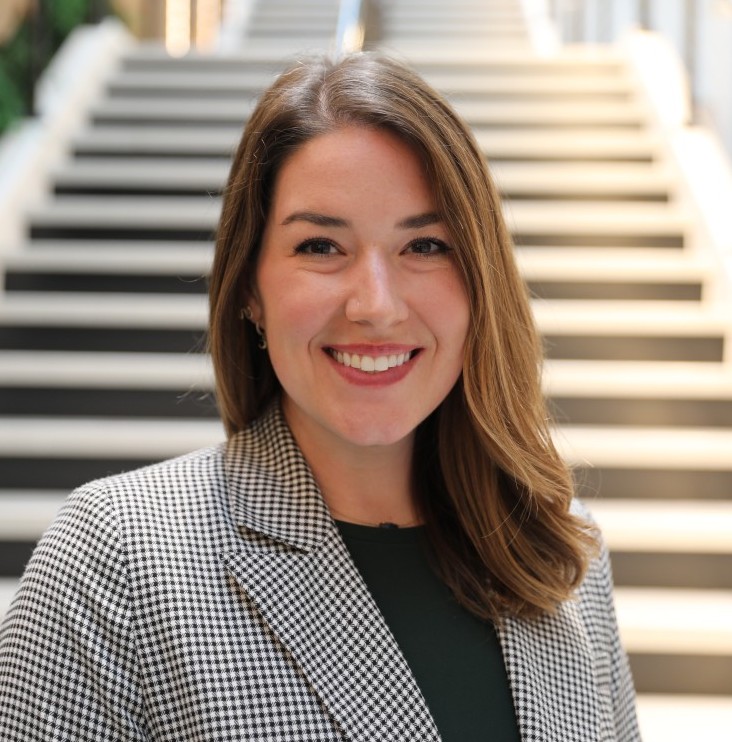
In this episode, ASTHO Senior Analyst for Government Affairs, Catherine Murphy, unpacks the ripple effects of ongoing changes at the Department of Health and Human Services and CDC. Later, ASTHO Chief Medical Officer, Susan Kansagra, zooms out to the state level, where leaders are racing to deploy Rural Health Transformation Program funds.

 Spotify
 Apple Podcasts
 Amazon Music
 From leadership shakeups at the federal level to one of the largest investments in rural health in decades, public health is navigating a moment of uncertainty and opportunity. In this episode, ASTHO Senior Analyst for Government Affairs, Catherine Murphy, unpacks the ripple effects of ongoing changes at the Department of Health and Human Services and CDC. Workforce reductions, leadership turnover, and shifts in advisory bodies like ACIP are reshaping how guidance is developed, how states access expertise, and how much trust clinicians and communities place in public health recommendations. Later, ASTHO Chief Medical Officer, Susan Kansagra, zooms out to the state level, where leaders are racing to deploy Rural Health Transformation Program funds under tight timelines and complex compliance requirements. We’ll hear comments Kansagra made at a recent EY educational webinar titled, “Now, Next, and Beyond: Understanding the Rural Health Transformation Program.”
Recent HHS Leadership Changes That Impact Public Health | ASTHO
Now, Next, and Beyond: Understanding the Rural Health Transformation Program | EY - US
2026 Multi-country Hantavirus Cluster Linked to Cruise Ship | HAN | CDC
Thriving Under Pressure: Building Resilient Dialysis Systems and Teams

JOHN SHEEHAN:
This is Public Health Review Morning Edition for Thursday, May 14, 2026. I'm John Sheehan with news from the Association of State and Territorial Health Officials. From leadership shakeups at the federal level to one of the largest investments in rural health in decades, public health is navigating a moment of uncertainty and opportunity.
Today, ASTHO's Senior Analyst for Government Affairs Catherine Murphy, unpacks the ripple effects of ongoing changes at the Department of Health and Human Services and CDC. Later, ASTHO Chief Medical Officer Dr. Susan Kansagra takes things to the state level, where leaders are racing to deploy Rural Health Transformation Program funds under tight timelines and complex compliance requirements. We'll hear comments Dr. Kansagra made at a recent EY educational webinar titled Now, Next and Beyond, Understanding the Rural Health Transformation Program. First, here's Catherine Murphy. Catherine Murphy, welcome back to the show.
CATHERINE MURPHY:
Thanks so much for having me. It's really great to be here.
SHEEHAN:
So, Catherine, let's talk about the flux, we'll call it, at HHS. There's been leadership turnover, workforce reductions. What has been the impact on CDC?
MURPHY:
Yes. So, in the first year of the Trump administration, the Department of Health and Human Services, which I'll shorten to HHS from now on, underwent considerable changes in the form of proposed reorganization, budget cuts, reductions in force, which I will call RIFs, and changes to leadership within the department's agencies, including CDC. This is as the new administration worked to form the department and its agencies, kind of in the image of Make America Healthy Again, the MAHA movement, and really worked towards their priorities in the public health space.
Within CDC specifically, RIFs have altered the agency's ability to provide public health guidance and technical assistance, as offices that state and territorial public health partners usually contact have lost some or all employees. One example of this is that Milwaukee public schools reached out to CDC's lead poisoning prevention surveillance branch for assistance, and were initially denied because the entire branch had been let go. As career staff, leaders with decades of experience, and others were RIFed from the organization or left via voluntary termination incentives, the organization, CDC, lost a wealth of institutional knowledge, and ongoing changes to leadership, like the CDC director, may slow the agency's output of guidance, approval of ACIP recommendations, and more.
SHEEHAN:
So this variability in CDC leadership has raised concerns. How important is consistent Senate confirmed leadership for maintaining trust in CDC's recommendations?
MURPHY:
Yeah, absolutely. Federal law dictates that Senate-confirmed positions, including the CDC director, can only be filled by an acting director for 210 days. The purpose of a Senate-confirmed appointment is to appropriately vet candidates and ensure that leaders possess appropriate qualifications for the role.
The action serves as a check to presidential power, so the president can't just appoint anyone he or she wants to a role running an agency. The CDC director became a Senate-confirmed position due to a 2022 law, the Consolidated Appropriations Act of 2023, which was the fiscal year 23 appropriations omnibus. The provision to make the director a Senate-confirmed position became effective in 2025, so President Trump's first appointment for CDC Director Susan Monarez, was the first CDC director to require approval by Congress.
In her confirmation hearings, senators asked Dr. Monarez about childhood vaccinations and insurance coverage, ACIP vaccine policy, chronic disease, Make America Healthy Again priorities, cancer screening, and recent measles outbreaks, among other things, demonstrating these as public health priorities for the Senate panel who questioned her, so the Senate Health Committee. The confirmation process provides an opportunity for transparency and creates public knowledge and understanding for the public health community to know more about the priorities of the nominated candidate, ideally, in this case, instilling trust in the knowledge and decision-making capacity of the leader of the nation's foremost public health agency. Some public health thought leaders have commented on changes to CDC's leadership with concerns about the ability of the agency to promote well-researched, evidence-based recommendations for public health.
After this blog was published, President Trump nominated Dr. Erica Schwartz to be the next CDC director, and she will appear before the Senate Health, Education, Labor, and Pensions or Health Committee soon.
SHEEHAN:
Okay, and you mentioned changes to ACIP, which have included dismissal of its members, alteration of the childhood vaccine schedule, and it's all had ripple effects. What challenge does this pose for immunization programs, for clinicians, for state-level implementation?
MURPHY:
CDC's Advisory Committee on Immunization Practices, or ACIP, is a group of independent medical and public health experts who make recommendations on vaccines, which become CDC policy once adopted by the director. The recommendations bear on immunization schedules, the Vaccines for Children program, and clinical decision-making, and have downstream effects on whether insurance providers cover vaccines and the context in which those vaccines can be administered, so in a pharmacy versus in an office visit. In June of 2025, HHS removed all 17 Biden-appointed members of ACIP, and in a press release, the department noted the goal to reestablish public confidence in vaccine science.
In January of 2026, HHS announced an overhaul of the childhood vaccine schedule outside of the ACIP recommendation process. The announcement included changes to recommendations for hepatitis A, rotavirus, influenza vaccines, and more. And in March of 2026, a federal judge placed a stay on all of Secretary Kennedy's appointments to ACIP, the panel's recommendations, and the 2026 schedule change.
The administration's changes to ACIP have garnered bipartisan response from congressional leaders, especially those on the Senate Health Committee, who specifically questioned Secretary Kennedy on his potential revisions to CDC's vaccine recommendations during his confirmation hearing.
SHEEHAN:
And with all these HHS staff departures and continuing restructuring, what is now the relationship between federal agencies and state health departments?
MURPHY:
This loss of expertise bears on the work of CDC in multiple areas, in outbreak response, lab surveillance and capacity, data sharing, and all of the topical public health priorities. So one example is the Laboratory Leadership Service. 16 out of 24 fellows were terminated.
These lab service members are often dispatched to states and territories to help identify what's causing an outbreak. In one example, service members expanded testing for dengue when the mosquito-borne illness hit American Samoa and the U.S. Virgin Islands, and they rebuilt testing capacity in Puerto Rico after hurricanes. They evaluate tests for state health labs and train staff on how to use them.
For public health topics like chronic disease or maternal and child health, or really for any public health topic you can think of, CDC lost a wealth of expertise and the staff who distribute and oversee grants that fund that work at the state level. There's also a loss of ability to provide technical assistance for issue areas with offices impacted by RIFs or staff loss. So like I mentioned above, when Milwaukee public schools reached out to ask for help with lead poisoning prevention, they initially weren't able to get help from CDC.
SHEEHAN:
So as these reforms continue and leadership roles stay open or undetermined, what should public health leaders do and policymakers do to prioritize stabilization while this is shaking out?
MURPHY:
To be clear, public health needs stability. The best outcomes occur when the field is staffed with trusted subject matter experts who know and understand the communities where they work, and decisions are made carefully and with robust evidence-based backing. The field needs consistent and full funding to support the work of the public health system.
So this is a field where funding typically spikes during emergencies and drops during times where the work of the public health system is less visible. So less visibility equals less funding. We're not in a pandemic, so we're funding public health a bit less.
Consistency in what public health does for us in times where we're not in an emergency and also in showing how public health prevents emergencies helps build trust in the work of public health, the research base, and the expertise of our public health leaders, and can also help us advocate for that funding and ensuring that we have strong foundational public health infrastructure. Factors like workforce and data sharing also factor into this. So when public health is consistently funded, we can have a strong workforce and continue to upgrade the methods by which we share data and information.
Consistent funding and consistent efforts to build our public health system ensure that our health departments are resilient, adaptive, and responsive to ongoing and emerging threats to public health.
SHEEHAN:
Catherine Murphy, thanks so much.
MURPHY:
Thank you so much for having me.
SHEEHAN:
Catherine Murphy is a senior analyst for government affairs at ASTHO. Find a link to the blog in the show notes. Now let's hear from ASTHO Chief Medical Officer Dr. Susan Kansagra. She recently spoke at an educational webinar hosted by Ernst & Young's Health Policy Team, Washington Council EY, as part of a series to help educate private sector rural hospitals, providers, medtech, and other rural health ecosystem stakeholders on the realities of the Rural Health Transformation Program grant process. The webinar was titled, Now, Next, and Beyond Understanding the Rural Health Transformation Program.
KIP EBEL:
Dr. Kansagra, I'd like to start this conversation by better understanding your hopes and concerns for the program.
SUSAN KANSAGRA:
Well, thanks so much, Kip, for having me. Really appreciate being on. And yeah, you know, this program has a tremendous opportunity for states, and there's a lot of hope built into the future outcomes that this program can help deliver.
It's one of the largest investments that we have seen in rural health for quite some time. And it's also designed in a way to be really flexible for states. And so there's an opportunity for states, in partnership with their community organizations, their providers, health systems, and public health agencies, to design this in a way that works for the needs of their states.
So there's a lot of opportunity through this program. Of course, the risks of this are that, you know, the timeline is relatively short for the amount of funding that is going out to states to implement the program, particularly in this first year. States have about six months to implement about a year's worth of work in that initial startup phase.
You know, the other important piece of this program is how states can leverage this funding in a way to ensure sustainability. And some of the programs that they are putting in place live beyond the five years of the grant. While it's just kicking off, sustainability is always top of mind, especially when you're not clear of the funding that might come afterwards.
So that's another thing that states will be watching carefully. And lastly, I will say, of course, states want to be able to implement the program in a way that really relies on community feedback, input, and doing so in a way that also watches out for the procurement processes and compliance issues at a state level is also something that they're going to have to balance over the next several years. So again, lots of hope, lots of opportunity through this program.
And of course, lots of things that states will have to prepare and launch carefully as they work through the next several months, especially for the five years throughout.
EBEL:
Dr. Kansagra, a lot's been going on at the state level. Revised budgets were due to CMS by January 30. There's been a lot going on to scope out with budget revisions and ongoing state specific legislative processes to appropriate funding. Can you provide a little more context on what you spoke about before and some of the challenges that state agencies are facing and really getting the money out the door in this first year?
KANSAGRA:
Well, you're right, Kip. There's definitely a lot of work that is happening now, both at the federal level and at the state level to ensure that the money gets out the door to states. And then, of course, states are working hard to think about how they can get the money back out to their communities.
So as I mentioned before, this first year is a pretty compressed timeline. It's looking more like six months by the time states get the funding in their hands. There's been a lot of back and forth, of course, with CMS to make sure that they understand what states are planning through their work plans that they have submitted.
And then as this money comes into the state, thinking about what governance structures and what systems that the state needs to put into place to ensure that this money is being thoughtfully rolled out in a way that gets the input of providers on the ground, gets the input of community organizations and rural communities, of course, and doing that in a thoughtful, strategic way. So states right now are balancing the creation of those systems that they need to fully implement on these funds with all the other things that come with actually implementing the work plan and deliverables within the funding. So a lot's happening right now at a state level.
EBEL:
Dr. Kansagra, what innovative models and partnerships are you seeing across the states to help meet this ambition of the rural health transformation? And what opportunities exist in your view?
KANSAGRA:
Well, we're seeing lots of innovative partnerships being proposed through this funding opportunity. So to give you an example, many states are looking at creating regional partnerships within the state. So giving money to organizations that can bring together providers, healthcare systems, public health agencies, community-based organizations to help provide a comprehensive and thoughtful approach to the funding at a regional geographic level within the state.
So that's certainly one of the things that we're seeing planned through these funds. You know, the other is, of course, as you think about some of the major challenges that rural communities are facing from behavioral health to chronic disease to ensuring maternal and infant health and healthy outcomes, states are proposing program models that help utilize hub-and-spoke models to deliver care more effectively and to make sure that that is integrated in with broader community resources as well.
So we're seeing a few different models. And then certainly even, you know, for some states who have rural populations, also seeing some cross-state collaboration. You know, we know providers and organizations oftentimes serve folks across state lines, particularly if they're a community that lives on the border of a state.
And so we're even seeing some innovative models of collaboration and thinking about what systems they can put in place that really benefit the population of their state, but those benefits might be felt by other states, too, which is great.
EBEL:
Susan, just one last question while we have you. And I'll go back to where we started. If you think about this five-year program and all the great work you did and the outcomes that you achieved in North Carolina and NYC, what do you hope for?
Again, just the hope, what does rural health look like in five years as a result of this great program and great opportunity?
KANSAGRA:
Well, you know, my hope would be that states are able to implement programs and systems that ultimately deliver real outcomes for the communities they serve, including outcomes on behavioral health, reducing, for example, what we're seeing around the opioid epidemic and overdoses, improving maternal and infant health outcomes, having healthy babies, and, of course, supporting health throughout the life course, and preventing chronic disease. We know that's one of the most costly impacts to our health system in the U.S., so being able to prevent those things from happening in the first place is such an opportunity with these funds. And so I hope at the end of the day, these programs, these structures that we implement, support those things.
And then there's some foundational things, too, supporting workforce in rural areas. That is a real specific focus of this opportunity, and I hope that we are able to do more as a country in supporting that workforce pipeline in rural areas so that we can, you know, again, support delivery of these outcomes at the end of the day for the communities that are impacted. So, you know, lots of hope through this program, lots of opportunity, and looking forward to seeing the successes in five years.
SHEEHAN:
Dr. Susan Kansagra is ASTHO chief medical officer. Her comments were recorded as part of the webinar Now, Next, and Beyond Understanding the Rural Health Transformation Program, part of a series hosted by Ernst & Young's health policy team, Washington Council EY. Find a link to the webinar in the show notes.
On Friday, May 8, CDC issued a Health Alert Network health advisory about a new cluster of hantavirus disease cases caused by infection with Andes virus. Hantavirus disease can cause severe illness and can be fatal. Clinicians should be aware of the potential for imported cases, although the risk of broad spread to the United States is considered extremely unlikely at this time.
Read the full advisory when you click the link in the show notes. Join ASTHO for a webinar May 20th to explore how to build resilient dialysis systems and teams. Understanding the structures, processes, and practices that influence patient safety during times of stress is essential to informing priorities and targeting interventions that strengthen resilience.
This one-hour session convenes frontline clinicians, workforce leaders, and public health partners to examine practical, evidence-informed strategies that enhance both system and worker resilience in the outpatient dialysis setting. The link to register is in the show notes.
This has been Public Health Review Morning Edition. I'm John Sheehan for the Association of State and Territorial Health Officials.