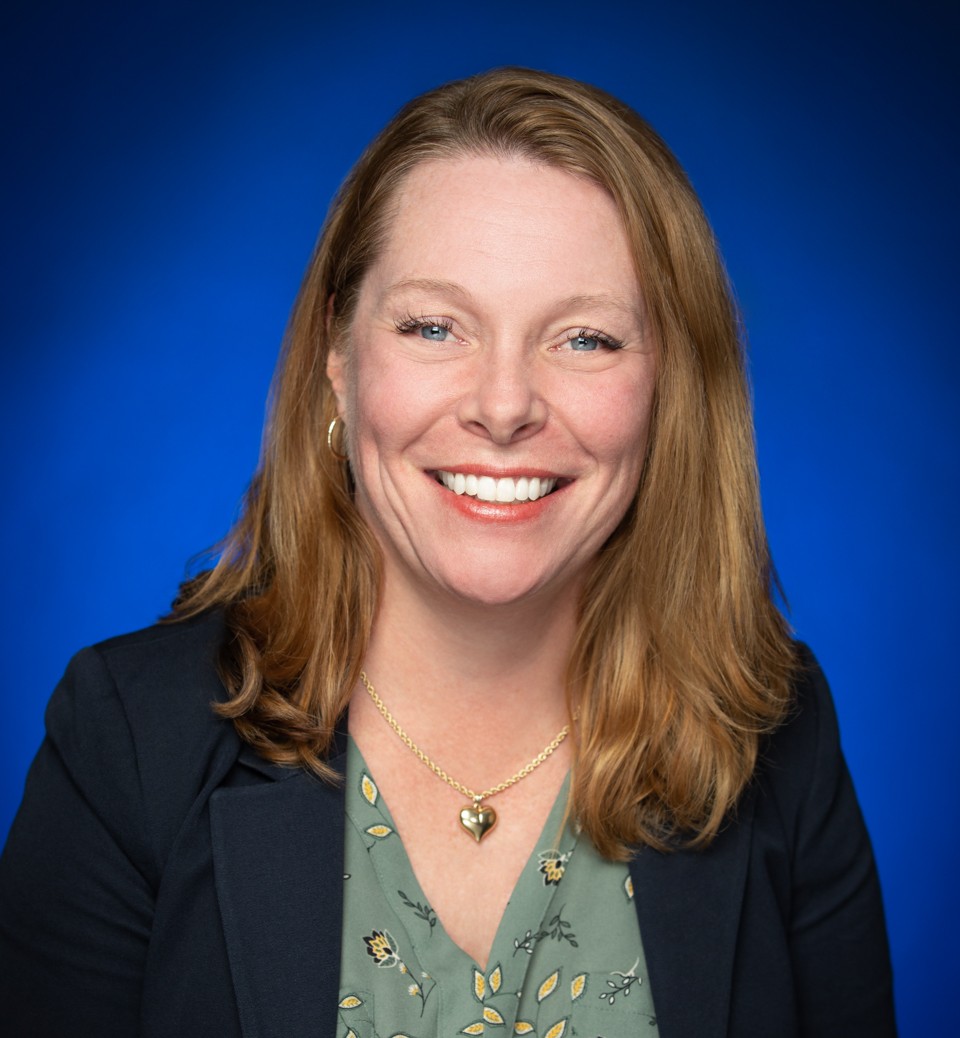
In this episode, Kirsten Aird, from Oregon’s Multnomah County, explores how strategic investments are strengthening workforce capacity, stability, and community impact.

 Spotify
 Apple Podcasts
 Amazon Music
 What does it take to build and sustain a strong public health workforce in uncertain times? In this episode Kirsten Aird, public health director for Oregon’s Multnomah County, explores how strategic investments are strengthening workforce capacity, stability, and community impact. Aird breaks down how PHIG funding is being used to support professional development, create staff-led communities of practice, and tackle long-standing hiring challenges, including restoring leadership continuity after years of vacancies. She also highlights the critical role of “behind-the-scenes” infrastructure like HR, finance, and operations, in enabling frontline public health work.
This work is supported by funds made available from the Centers for Disease Control and Prevention (CDC) of the U.S. Department of Health and Human Services (HHS), National Center for STLT Public Health Infrastructure and Workforce, through OE22-2203: Strengthening U.S. Public Health Infrastructure, Workforce, and Data Systems grant. The contents are those of the author(s) and do not necessarily represent the official views of, nor an endorsement, by CDC/HHS, or the U.S. Government.
Public Health Infrastructure Grant: Resources & Impact - PHIG

JOHN SHEEHAN:
This is Public Health Review Morning Edition for Tuesday, April 28, 2026. I'm John Sheehan with
On today's PHIG Impact Report: building and sustaining a strong public health workforce in uncertain times. Kirsten Aird, public health director for Multnomah County, Oregon, explores how strategic investments are strengthening workforce capacity, stability, and community impact. Aird breaks down how PHIG funding is being used to support professional development, create staff-led communities of practice, and tackle longstanding hiring challenges, including restoring leadership continuity after years of vacancies. She also highlights the critical role of behind-the-scenes infrastructure like HR, finance, and operations in enabling frontline public health work.
Kirsten Aird, welcome to the show.
KIRSTEN AIRD:
Hi, good to be here. Thanks for having me.
SHEEHAN:
So, Kirsten, Multnomah County is using PHIG funding on a variety of strategies. Can you describe some of the ways you're using it to improve workforce?
AIRD:
Yeah, absolutely. So, there's a few ways, starting with using the resources to create a professional development fund. So, really intentionally making investments in our staff in ways that are not just beneficial to our organization, but to them as a profession and a workforce. What are those things they want to do, whether it's seeking certifications in something, whether it's looking for some additional coursework to round out their public health bachelor's or master's, or whether that's just taking in an opportunity to learn a new skill that advances our public health work. So, there's an application process and a way in which they can tap into those resources, but it alleviates the programs that they work for from having to pay for that and really creates a shared investment in our workforce at the department and division level. Another way is the work that we're doing to establish communities of practice, which is something I know my colleagues across the country are very familiar with these kinds of setups, but really letting the staff identify what they're interested in: co-learning with each other. So, we have three communities of practice that the PHIG resources have supported, both with staff support and then, additional resources for materials or learning opportunities, and that is around quality improvement, policy, and community engagement. And again, those are staff-driven, really them identifying what areas they want to focus on first and then getting those resources and supports provided through the PHIG grant and leadership to help them practice areas of improvement that they want in those three topic areas. And then lastly, we worked really, really hard to speed up our public health recruitment process and addressing a number of backlog positions, including mine. The director position here was vacant for two years. I think it's interesting to note that in our last Public Health WINS survey that we did, unique to Multnomah County, not really found anywhere else across the country, part of the things that folks didn't like about working here was unstable leadership. And so, they used PHIG funding to really start to address that backlog of recruitment and work on recruiting high-level, important positions like the one that I'm in, to help stabilize the workforce, and that has been my primary goal since I've come to Multnomah County.
SHEEHAN:
You've also identified opportunities for partnering with academics, specifically a OHSU-PSU School of Public Health. How has that impacted [the] workforce?
AIRD:
Oh, yeah. Well, I will say I was the PI for the PHIG grant at the state when I was at the Oregon Health Authority's Public Health Division, and there during COVID. And one of the things we learned very, very quickly was that in order to address surge needs and staff capacity, we had to work with our academic partners. And so, when I was at the state, we set up surge contracts and opportunities for students to partake in really important core public health work, but not the work that would require years, and years, and years of education, particularly around contact tracing and kind of that door-to-door community outreach. And so, taking that and applying that here at the county, it has been a real priority of mine to set up not just the relationship where there's internship opportunities and research opportunities, but to where we have surge capacity, and that the students that we look to tap into, to bring in to any kind of urgent event, whether that's a heat-related wildfire or something like measles, they have a baseline of who we are and what we do in local public health.
SHEEHAN:
And so, talking about those academic partnerships, does that also mean increasing access to internships or streamlining that process?
AIRD:
Yeah, absolutely. I think, you know, interns, when you think about how they come in, it's not just a student following another staff person. You really have to wrap that up. For it to be successful, you have to really wrap those services up. You want the staff to be ready and prepared to have the time to advise and bring somebody into the actual work. It could be a great opportunity for staff to learn supervisory coaching skills for whatever their professional development is. To do that well, you have to bring this person into also the infrastructure of local government, which requires access to computers, access to buildings, access to the knowledge base to just know what's different around local public health versus state public health versus federal public health and a decentralized system versus a centralized system. And so, one of the things we're working on right now is, what does that core-based curriculum look like so that every student gets a touch point in understanding that? And of those students, some of them are going to enter in to internships. Likewise, what do our staff need to know about the academic environment? What the research topics are? How do they have a baseline understanding so they can draw those connections between what they're learning in the classroom to what they're going to learn here in the field? And so, we're also working on kind of a pathway of learning for staff here so that when the two come together, it's as fruitful as possible.
SHEEHAN:
PHIG funding has also helped out with agile staffing needs, such as rapid response teams. Can you explain how important that's been to serving the community?
AIRD:
Yeah, absolutely. I think one of the things that is hard for folks to understand is how important project management, operations, fiscal, HR, the behind-the-house work is to supporting public health. We talk a lot about the direct services, CD investigations, environmental health responses, all of those critical, but none of that works if the behind-the-house isn't in order and doesn't have some investments in it. And PHIG has been really instrumental, particularly at Multnomah County, in investing in project managers, fiscal folks, HR folks, who can help advance the work of the program folks by doing these behind-the house efforts. And rapid response is one of those. So, two areas: one I mentioned earlier, is how do we get a rapid response team to really do some recruitments after a long delay in recruiting and do that quickly, efficiently, and get high-quality candidates. But another one that I really want to highlight that has been super important in the last year is doing a rapid response to prepare for the unknown decisions that are going to come out of the federal administration, particularly around funding reductions, around policy changes. So, we did something over a year ago where we started to imagine what are the worst case scenarios and how would we respond to those, so that if they were to come to be at any level, we had a better plan in place that we could execute more quickly. And that proved to be really beneficial as, while not our worst, worst, worst-case scenarios came true, elements of them did. And we were more prepared to respond to those, whether it was contract shifts, whether it was shifting resources to protect key community needs. Whatever that was, we had a better plan for it. And PHIG staff really supported us in working through that response process.
SHEEHAN:
Yeah. You can hope for the best, but you'd better plan for the worst.
AIRD:
Always. It's a good public health mantra, though, right?
SHEEHAN:
Yeah, unfortunately. You also mentioned how important PHIG funding is towards retention. In fact, your position was helped out by PHIG funding. Can you talk about how important it is to have that continuity when serving the community?
AIRD:
Yeah. I mean, community doesn't care what your funding source is, where it comes from, right? They care that you show up when they need you the most and usually on some of their worst days. PHIG funding has been helpful, again, in that back-of-the-house stuff that helps us get money out in contracts, that gets invoices paid by CBOs, that helps with recruitment and bringing in and stabilizing leadership. But it also does fund core public health practices and environmental health and communicable disease in data, and epi, and assessment. So, when you think about how important that is to the people who live here, whether it is in one particular case, lead exposure, and being able to fund a person who, in law, you have to check and follow up on lead exposures, and we don't have a lot of funding from the state to do that. And so, PHIG afforded us the opportunity to have a full-time person who could respond to over 41 different cases of lead exposure. And every time you're doing that, not only are you working with a family to reduce lead exposure, which we know is critical in young brain health, you also find an opportunity to refer them to other services and supports. And so, among those 41 families that we worked with and were successful in reducing blood lead levels, half of them were immigrants that came from all over the world, refugees, did not speak English as their first language. And so, we were able to provide them culturally relevant language, you know, specific language supports and services, and referrals to things that help them live their best life. And I think that's what public health does, and that's what PHIG afforded us the opportunity to do for our community.
SHEEHAN:
Yeah, that's amazing. And, you know, that kind of gets to the point of, you know, infrastructure can be a very broad term, and it affords you opportunities. Infrastructure can mean personnel, infrastructure can mean workforce development, infrastructure can mean data systems. It allows you some flexibility.
AIRD:
Absolutely. And we've used it for all of those things, because they're all really important elements of a complete infrastructure for public health.
SHEEHAN:
Kirsten Aird, thanks so much.
AIRD:
Yeah, thanks for having me. It was wonderful to get to share our story with you all.
SHEEHAN:
Kirsten Aird is public health director for Multnomah County, Oregon.
This has been another PHIG Impact Report from Public Health Review Morning Edition. I'm John Sheehan for the Association of State and Territorial Health Officials.