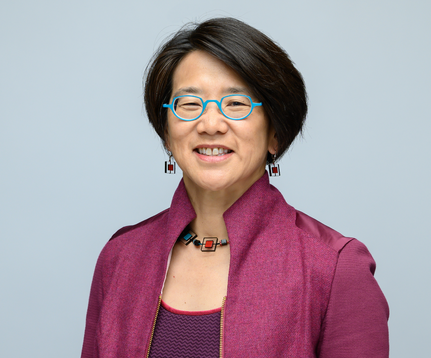
Two very different challenges, and one shared public health reality: systems have to work when it matters most. In this episode, we speak with Dr. Erica Pan, director and state public health officer for the California Department of Public Health, and ASTHO member, about a rare and unprecedented infant botulism outbreak linked to contaminated infant formula. She explains how California’s unique BabyBIG® treatment program, home to the only infant botulism treatment in the world, helped detect a national pattern, how states coordinated with CDC and FDA, and the logistical strain of managing treatment supply, clinician hotlines, and public communication during a fast-moving emergency. Then, Alex Wheatley, senior director of island support at ASTHO, joins us to discuss a different kind of pressure point: helping U.S. Island jurisdictions navigate complex federal grant systems. She outlines a new resource designed to bridge gaps between federal funders and local health agencies, reduce misunderstandings, and build stronger, trust-based partnerships, especially when timelines, administrative processes, and time zones don’t align.






Two very different challenges, and one shared public health reality: systems have to work when it matters most. In this episode, we speak with Dr. Erica Pan, director and state public health officer for the California Department of Public Health, and ASTHO member, about a rare and unprecedented infant botulism outbreak linked to contaminated infant formula. She explains how California’s unique BabyBIG® treatment program, home to the only infant botulism treatment in the world, helped detect a national pattern, how states coordinated with CDC and FDA, and the logistical strain of managing treatment supply, clinician hotlines, and public communication during a fast-moving emergency. Then, Alex Wheatley, senior director of island support at ASTHO, joins us to discuss a different kind of pressure point: helping U.S. Island jurisdictions navigate complex federal grant systems. She outlines a new resource designed to bridge gaps between federal funders and local health agencies, reduce misunderstandings, and build stronger, trust-based partnerships, especially when timelines, administrative processes, and time zones don’t align.
Infant Botulism Treatment and Prevention Program | CDPH
Best Practices for Productive Island Grantor/Grantee Relationships | ASTHO
State Health Agencies’ Role in Implementing Pharmacist-Prescribed Contraception | ASTHO

JOHN SHEEHAN:
This is Public Health Review Morning Edition for Thursday, February 5, 2026. I'm John Sheehan, with news from the Association of State and Territorial Health Officials.
Today, we'll hear about a rare and unprecedented infant botulism outbreak linked to contaminated infant formula from Dr. Erica Pan, director and state public health officer for the California Department of Public Health and ASTHO member. California is home to the only infant botulism treatment in the world. Later, we'll change gears and hear how ASTHO is helping us island jurisdictions navigate complex federal grant systems. Our guest, Alex Wheatley, senior director of island support at ASTHO, joins us to discuss a new resource designed to bridge gaps between federal funders and local health agencies. But let's start with Dr. Erica Pan. I wanted to know how California's Infant Botulism Treatment Prevention Program first detected the most recent increase in cases, and what sparked the investigation.
ERICA PAN:
We have a really unique program here, and the California Department of Public Health, where we have developed this product called BabyBIG, which is the only treatment in the world, actually, much less the country for infant botulism. Specifically, it was developed in the 1990s we actually got FDA approval to produce this drug in 2003 so it's the only source and our clinicians who run this program receive calls from clinicians all over the country with suspect cases, and then, after they determine if it's an actual case or worrisome for a case, they actually send the treatment out and also facilitate making sure the infant gets tested. So because they get that first line call on these suspect cases, they started to notice this pattern of, gosh, it seems like we've heard a few times now that these cases have consumed this particular brand of infant formula. So that's sort of the background of how it evolved and why California specifically started noting a national outbreak. This is the only product we have like this. It's definitely a unique role for a health department to have, and just due to some really amazing scientists and dedicated people who worked on this decades ago.
SHEEHAN:
And Dr. Pan, was there anything unusual about this outbreak?
PAN:
Yes, I think it's important for people to kind of know and recognize that infant botulism in general is typically what we would call a sporadic disease, and we often don't find out what the source is. It's, it's a common spore in the environment. It can be in dust and soil. So most of the time, we actually don't know what an exposure is for infants. So it was really unusual and remarkable that this was the first contamination of infant formula, and the first outbreak like this of a contaminated infant formula.
SHEEHAN:
And what can other states do to coordinate with CDC, with the FDA, if, if they start seeing their own rising cases?
PAN:
Yes, all of these cases are reportable to the CDC, and there's been a lot of great coordination with our department and the CDC and the FDA, that does the investigation of the actual formula manufacturer and producer. And this works like many other reportable infectious diseases or outbreak investigations, so frontline health departments end up hearing about, you know, a rise in cases, or see a pattern, and then there can be a multi state coordination and investigation. So this happens with again, many other large infectious disease outbreaks as well, and that coordination has gone well between the CDC, FDA, our department, and then the other states that have had cases.
SHEEHAN:
It strikes me as kind of incredible that the California Department has such this robust program that it developed BabyBIG, the only treatment for infant botulism. How does that distribution work? How are you able to distribute it nationally?
PAN:
Yeah, we've spent a lot of time, especially recently, with this outbring, making sure we have a sufficient supply. We do have a fee that gets sent for the treatment. And then, you know, that goes into a special fund to help do the production and manufacturing. We've definitely been watching very closely over time, there are lots that are created. And then, you know, projections that have happened historically on how much do we think we you know, need and use, and we were concerned during the peak of this outbreak that we might need to do some other things to make sure there was enough. Thankfully, the outbreak does seem to have subsided. We have once the recall happened of the heart engine formula. We've not seen new cases since December, I believe, so we seem to be on track to have sufficient supply of this baby, big product, but it is something that we were working closely with the FDA and others to make sure we would have enough
SHEEHAN:
That should have been one of my earlier questions is, what is the status of the outbreak? So cases are going down? The worst seems to be behind us.
PAN:
Yes, that's right. There was a total of 51 cases nationally, especially they looked back at, before this year, and there were a few additional infants that had consumed the same ByHeart formula, but 51 cases as of mid-December, and no new cases that we've identified since then.
SHEEHAN:
And another aspect of the response has been a hotline set up to specifically address infant botulism. Can you tell us about it?
PAN:
Sure, and I would just say that this is definitely an area that I have encountered, both in my work at the local level and at the state level. Occasionally, when there is a big public health emergency, there are a lot of important questions from the public, and ideally you set up a way to triage those so that the public can get some of their questions answered, but people who are doing the investigations of highly suspicious cases, or in this case, clinicians, are able to get through as well to get the information and the potential treatment and testing needed. So this evolved because we have a hotline in general for clinicians across the country to call when they have a suspect case, but as the news got out about this outbreak, there were more and more calls. So we tried to offload that first with some of our own staff, and so we actually cross-trained some of our staff within the state health department to help answer some of the calls from the public, or families, or concerned families related to the outbreak. We were also, at the same time, thinking about trying to reactivate a contract that we used during the COVID pandemic when we stood up a public hotline as well. But I will say this is a real challenge in public health in general, where we are often trying to have things on the ready or standby for surges or emergencies, and often have challenges in the administrative processes, or the resources to do that. In the end, thankfully, again, because the outbreak subsided and the calls subsided, we were able to redirect to our sort of normal processes, and we've been able to allow the staff that had been redirected to answer calls go back to their normal work, and we didn't activate this other contract. But I do think it's an ongoing challenge that I would actually love to learn from other health departments as well, if they've been able to figure this out on how to have some sort of standby call center for these kinds of situations, because it very quickly becomes an important issue, and you can get your sort of usual investigators or responders can get flooded when you want to be able to offload that so that you don't delay the investigation, or, in this case, treatment of cases.
SHEEHAN:
And something that goes sort of hand in hand with the hotline is making sure that people know that a hotline exists, or just that there are rising cases and for the public to be aware of it. Can you talk about sort of the challenges of just getting that word out?
PAN:
Sure, I think it's another important role of health departments when you have these outbreaks and you're looking to increase awareness and also increase detection. Sometimes, many of these diseases might start very non-specifically, this particular disease of infant botulism can be quite distinctive once it progresses. So babies are very weak and fluffy. They don't have head control. But really making sure people are alerted quickly to get seen by their health care provider, and doing health alerts and or public information is the other thing that we encourage health departments across the country to do when we were all learning about this multi-state outbreak, because this product was distributed to many states. So that's just another role I think we're always working on together as a public health community to get information out to health providers and also families and the publics that they know to look for certain signs or symptoms and report them so they can get the help they need.
JOHN SHEEHAN:
Dr. Erica Pan is director and state public health officer for the California Department of Public Health and an ASTHO member.
Now let's hear from Alex Wheatley, senior director of island support at ASTHO, who will explain a new resource designed to help Island and territorial public health systems navigate federal grant requirements.
ALEX WHEATLEY:
So, we have a lot of wisdom in our island areas work group, health financing subgroup; these are the folks that get asked difficult questions around grants management all the time. And they said, you know, it'd be great if there was a centralized resource that had all of this. It felt particularly important with all the federal uncertainty right now as funding shifts, or is a little bit unclear, it's more important than ever to have strong relationships between grantors and grantees.
SHEEHAN:
So, what kind of information were they? Were they being asked to share?
WHEATLEY:
A wide variety, so some of the common pain points are around federal grant platforms and processes. Who needs access to what and when. They also got sort of the inverse of that question, grantee/grantor is not understanding what the local processes were. So they said, well, why can't you fix this? And the health agency would say, because that's the Department of Finance's job. So just clarifying some expectations there.
SHEEHAN:
And this sort of gets to this sense of foundational knowledge that gets mentioned a lot in the report. What are some other sort of common misconceptions that both sides were not seeing?
WHEATLEY:
Yeah, I think it's really important for project officers and technical monitors to understand what's happening on the ground, just as important as grantees' understanding the current federal guidance. I think those sorts of details are what prompt effective spend down and actually prompt the impacts that federal grantors and grantees want to see. But those conversations don't always come up at the start of the grant period, and that's what this resource is really trying to prompt.
SHEEHAN:
Can you give us some examples of the kinds of things that are in the resource?
WHEATLEY:
Sure. So, the resource is really built around conversation prompts. It's broken into five different sections of sorts of pain points that we know come up frequently. And then within those, it provides a little bit of background about what grantors need to know and what grantees need to know, and then questions to help a productive conversation at the start of the grant period, to identify some of those pain points, and then avoid them. The Federated States of Micronesia is one of ASTHO's members, their national health agency, I'm going to refer to them as FSM national, before FSM national can spend down funds that CDC has awarded to them, the FSM Congress has to approve those funds and establish an account. Congress meets once a quarter. In addition, where the funds actually get spent is at the local level. For FSM national to pass the funds to local, local legislature also has to meet and set up an account. That whole process can mean six to eight months before any dollars can be spent, and it's important that federal funders understand that.
SHEEHAN:
Gotcha, and because it's relying on two systems that don't necessarily talk to each other or wouldn't have been consulted ahead of this grant, it's important to have some kind of link to explain those differences. Exactly.
WHEATLEY:
Federal funders say, well, we haven't seen the request come through to draw down the funds. And FSM says, of course, you haven't. It's only in stage two of 17, but that's not always clear.
SHEEHAN:
And so, to that point, there are suggested changes within the report, what kinds, what kinds of changes do you suggest, and is it for the grantees or the grantors?
WHEATLEY:
It's for both. I think we really leaned on the wisdom of the health financing subgroup. It is the grants management staff from islands, from federal agencies, from nonprofits, suggesting just some best practices that they've seen work in terms of, how do you monitor your spend down? How do you keep up to date on the most recent federal guidance? How do you troubleshoot when things come up? There are best practices, but they're not easy to find, so this resource, we hope, makes them easy to find.
SHEEHAN:
Yeah, and are there other steps for just improving the overall relationship?
WHEATLEY:
I think it's all about trust, it's all about communication, and it's about setting feasible expectations. And I think those things are hard. There isn't an easy answer, but prompting some conversations to get at some of these issues early, and then sort of making it clear that you're on the same team and you want these funds to be used for these purposes, with these impacts that can go a long way.
SHEEHAN:
You touched on this a little, but could you explain a little bit more how these questions can lead to better understanding?
WHEATLEY:
Absolutely, I think meaningful dialogue early on is what strengthens working relationships, and by fostering mutual understanding, having some of the same vocabulary, and the same understanding of some of the basics, I think that strengthens engagement. It sets the ground for more collaboration, and it just opens lines of communications so that both grantors and grantees set themselves up for successful grant implementation and the positive impacts that everybody wants.
SHEEHAN:
Yeah, and, and also, to your point, we could be talking about conversations between communities half a globe away, I feel like there's a lot of there's a lot of room for miscommunication.
WHEATLEY:
Absolutely, if you send, if you have office hours from 1 to 2 p.m. Eastern, that's the middle of the night in the Pacific. So how do you work around it?
SHEEHAN:
Alex Wheatley is senior director of island support at ASTHO. Earlier, we heard from Dr. Erica Pan, who is director and state public health officer for the California Department of Public Health and an ASTHO member.
State health agencies lay the groundwork for sustainable and equitable contraceptive access. They play a pivotal role in expanding access to contraception by supporting the implementation of pharmacist-prescribed contraception, PPC. The new ASTHO report, "State Health Agencies' role in Implementing Pharmacist-Prescribed Contraception,' walks readers through three major areas for doing so, mechanisms that expand pharmacist roles and contraceptive access, payment for services, and workforce education and consumer awareness. Find a link to the report in the show notes.
Join Manisha Juthani, M.D., commissioner at the Connecticut Department of Public Health and ASTHO president, and John Auerbach, MBA, senior vice president for public health at ICF, for an Insight and Inspiration webinar that examines how clear, purposeful leadership strengthens both internal and external trust through discussion and reflection, we will examine how leaders embody steadiness amid uncertainty, set a sustainable pace and provide calm direction that builds trust and drives performance. This conversation aims to inspire participants to recognize their composure and capacity, not as a personal indulgence, but as a fundamental leadership function that shapes the overall tone, focus, and confidence of their organizations. Join us for this 'Steady Hands, Steady Teams: Leading with Confidence and Composure' session happening February 11 at 4 p.m. Eastern. The link to register is in the show notes.
This has been Public Health Review Morning Edition. I'm John Sheehan for the Association of State and Territorial Health Officials.