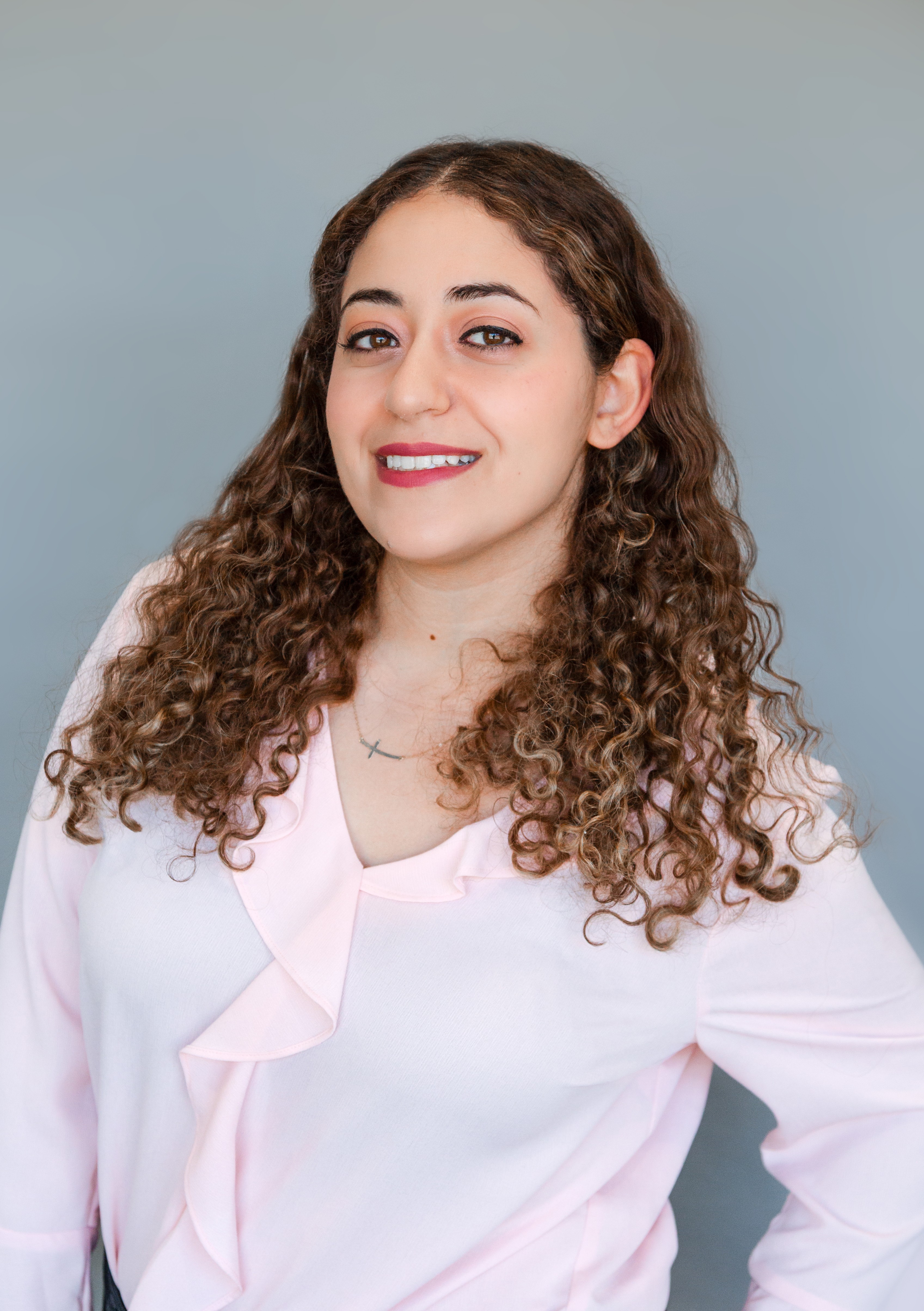
On today's PHIG Impact Report, Veronika Hanna and Mondi Mason from the Denver Department of Public Health and Environment share how creative workforce strategies powered by the Public Health Infrastructure Grant (PHIG) are opening new pathways into the field.

 Spotify
 Apple Podcasts
 Amazon Music
 What if public health recruitment started with a summer camp? In this PHIG impact report, Veronika Hanna and Mondi Mason from the Denver Department of Public Health and Environment share how creative workforce strategies powered by the Public Health Infrastructure Grant (PHIG) are opening new pathways into the field. Veronika Hanna walks through Denver’s innovative three-day public health “summer camp,” where high school and college students step into real-world roles, from testing river water quality to inspecting food trucks and exploring the work of medical examiners. And Mondi Mason expands on how Denver is scaling that vision through deeper partnerships with universities, community colleges, and public schools. From paid internships and long-term placements to co-developing research and securing joint funding, these collaborations are transforming workforce development into a more structured, sustainable system.
This work is supported by funds made available from the Centers for Disease Control and Prevention (CDC) of the U.S. Department of Health and Human Services (HHS), National Center for STLT Public Health Infrastructure and Workforce, through OE22-2203: Strengthening U.S. Public Health Infrastructure, Workforce, and Data Systems grant. The contents are those of the author(s) and do not necessarily represent the official views of, nor an endorsement by CDC/HHS, or the U.S. Government.
Public Health Infrastructure Grant: Resources & Impact - PHIG

JOHN SHEEHAN:
This is Public Health Review Morning Edition for Tuesday, April 14, 2026. I'm John Sheehan for the Association of State and Territorial Health Officials.
On today's PHIG Impact Report, how creative workforce strategies powered by the Public Health Infrastructure Grant, or PHIG, are opening new pathways into the field at the Denver Department of Public Health and Environment. Veronika Hanna, program supervisor for the Community Health Worker Apprentice Program, will tell us about the department's innovative three-day public health summer camp, where high school and college students step into real-world roles. And later, Mondi Mason, workforce manager and principal investigator for PHIG, will expand on how Denver is scaling that vision through deeper partnerships with universities, community colleges, and public schools.
But first, here's Veronika Hanna.
VERONIKA HANNA:
So, here at the Denver Department of Public Health and Environment, we just wanted a new and innovative way to engage with students and teach them about the work that we are doing. We're fortunate enough to have the Public Health Infrastructure Grant, and we're always trying to find new ways to engage public health professionals. We did a three-day summer camp, and it was focused on many, many different aspects of public health within our department. So, we had people within the Office of Medical Examiners. We had a day focused on environmental health, tobacco cessation, air quality, water quality. We had students do testing on the local river in our area. We also had a day where students could be health inspectors. So, we even had a food truck come in, and students were able to look at the food trucks and analyze if they were in good condition. So, it was just a really cool and interesting way to engage students.
SHEEHAN:
What kind of students were you talking about? High school? Middle school?
HANNA:
It was between high school and college-age students.
SHEEHAN:
Gotcha. And 16 kids. That's a pretty tight group. Are you hoping to have more?
HANNA:
Yes. We're hoping this year we can engage more students and really get them to participate.
SHEEHAN:
And you described this a little bit, sort of like the work nature of it. So, it sounds like you're letting students sort of shadow career professionals to just to get the word out and show what kind of career paths are out there, which is pretty cool. And could you tell us a little bit more about how sort of PHIG funding translated to creating the program?
HANNA:
Absolutely. PHIG has been so great for us. It has really allowed us to do so many different things within public health. And thanks to PHIG, we're able to invest time, invest resources in our students and our new future public health professionals, really building that infrastructure and getting students engaged. I mean, this is just a tiny, tiny aspect of what PHIG does for us. It really is such an important piece of our public health department.
SHEEHAN:
I think it's such an interesting and creative use of that flexible funding because, you know, certainly career workshops, that's fine. But summer camps are fun. And so, getting a chance to bring young people into a summer camp situation just sort of naturally, it makes the entire experience a little bit more joyous.
HANNA:
Absolutely. I think that there is a lot of joy to be found in public health and serving others. And what a privilege for us to have this PHIG funding and to utilize it to serve people within the city and county of Denver. We hope to expand more on our workforce work with not just, you know, investing in new public health professionals, but investing in our current public health professionals as well.
SHEEHAN:
Do you have any lessons learned from the program on either running it or student feedback that you could you could share with others?
HANNA:
My biggest lesson is that people really do want to share what the work that they do and they are excited to talk to students. At first, when we started this process, I think we were a little scared. I was a little scared to get it going. I was like, maybe our public health department, like people won't have the capacity or the time. But I think it's a testament on how great our staff is at the Denver Department of Public Health, because they really stepped up. And in order to be successful at these types of projects, you know, to rely on others and to rely on their expertise to come in and talk to students. And we had great feedback. They had the best time. And I think people kind of have a very limited understanding of what public health does. Like they had maybe they understand we do air and water. Oh, maybe, you know, we do investigations. But the truth is, public health touches lives from the time you're born to the time you die. So, we just got to really kind of walk students through all the different things that we do. And some things are a little bit uncomfortable. I mean, the Office of Medical Examiners was a little. So, for some students, it was really like, whoa, that's you know, that's wild. But for others, they were so excited. So, it was just it was great to show them all of that. And I'm just so, so thankful for our Department of Public Health staff for them to step in and be open to showing students all the work that they do.
SHEEHAN:
Yeah. In addition to feedback, were there any students who really took it to heart or you thought were really impacted? Like, are you going to see any of them again?
HANNA:
We hope so. I mean, our hope is that we engage them, whether through internships. I hope that they keep us in mind when they're, when they graduate. And we hope that eventually they become whether some way, somehow they engage with us through staffing, through internships, any way possible. We still want to be engaged with them. We hope to see them in the near future.
SHEEHAN:
Veronika Hanna is program supervisor for the Community Health Worker Apprentice Program at the Denver Department of Public Health and Environment. Now let's hear from her colleague at the department, Mondi Mason, workforce manager and principal investigator for the Public Health Infrastructure Grant.
MONDI MASON:
One way that the PHIG has helped to support these efforts is that we really now have some dedicated staff time focused specifically on workforce development. And a team that does that and we are able to champion multiple workforce development strategies. And one of those strategies is academic health departments. Another way we focus on that is creating these stronger connections with academic institutions, not just local universities or colleges, public health, but with community colleges and also local public schools with Denver public schools.
SHEEHAN:
Gotcha. So, you're actually, you're working with a range of academic institutions.
MASON:
Yes, indeed. We work with the Colorado School of Public Health and other universities in the metro area, as well as community colleges around the state. And really focusing on sharing more about public health and environmental health with high school students.
SHEEHAN:
And what do you see as the benefits of that? Is it helping out the pipeline? Is it sharing the load in terms of workforce development?
MASON:
Yeah, I think it's all of those. So, we strengthen. It's really we've been able to strengthen these partnerships through more formal affiliation agreements. In the past, it's been very ad hoc, one-off. And we have been building more formal agreements where we are holding trainings for staff because of the expertise the faculty and the staff of the university or colleges bring to us. And then we also provide a lot of trainings to students. We host them through internships, practicums and our capstone projects. These are paid opportunities in part because we have the public health infrastructure grant. We train at least 20 students a year. We also had the opportunity to start hosting a summer camp for career exploration. And I believe you spoke to my colleague just recently about that opportunity. And then we have been providing additional training to professionals in the field who might be interested in becoming certified in public health or maybe certified in gray water design and installation or other types of trainings that our Environmental Quality Division offers. So, we, through PHIG funds, are able to support those types of activities.
SHEEHAN:
Got it. So, you're seeing some definite impacts in workforce development, you know, across these institutions. That's pretty huge.
MASON:
It is. It's been a game changer for us, I believe, because we have an internal working group that is made up of staff across all divisions who are very focused on academic health department. And this, having the PHIG as well as a workforce development team now, that supported through PHIG has helped us to become more focused or at least kind of top of mind in championing this idea of an academic health department. And we meet quarterly with faculty and staff from our local school of public health. But we also connect with other, as I've already mentioned, other universities and colleges in the area. For instance, even though we don't have like a three PHIG funding for data modernization, we are through these partnerships really focused on also creating data use agreements, collaborating our research and evaluation that supports health goals and priorities for Denver. So, because of this additional sort of internal focus and interest, we are able to start cultivating this idea of an academic health department. And now staff across the agency are working with partners in various academic institutions in the area. Another one I wanted to mention is just recently we were approached by the University of Denver that now has a new AmeriCorps program for students. And this program provides, sort of, students who are interested in public health or wanting to explore public health or environmental health as a field to work 350 to 400 hours within DDPHE. And we provide a small sum to pay those students, but primarily it's led by the university. And there's been increasing excitement about creating these other career pathways through these academic partnerships, something a lot broader than sort of the student internship focus that we had had previously.
SHEEHAN:
Sure. You're getting the students themselves.
MASON:
Exactly. Yes. And it's a lot longer time. Usually, an internship or practicum is like 120 hours, but this is more than double that or even quadruple that. And so, we are really excited about having students here longer, exposing them to what's happening at the Denver Department of Public Health and Environment, but also just what's happening within our programming across the agency. So we're building more sort of capacity internally among people who supervise students, as well as holding or coordinating sort of like these early career networking meetings for students. So, they not only are exposed to the program they're working with, but they're also exposed to what else is happening around the agency and able to shadow and do some ride-alongs with staff who are doing a lot of very diverse and interesting field work that might be appealing to them.
SHEEHAN:
So Mondi, are there any other academic institution opportunities that you'd like to highlight?
MASON:
Yes. We have been collaborating with the Colorado School of Public Health a lot, and there's increased interest and actually movement on us co-writing grants together, so federal and local grants to support public health practice and research. So, it not only benefits DDPHE and our goals as it relates to surveillance or program development or translating what is learned through research into practice, but it's also beneficial to the faculty we are working with at the School of Public Health and the School of Medicine. In fact, we just submitted an NIH grant that we're really hopeful will be awarded, and there will be staff-funded through that grant, which supports our own internal capacity, but also staff will be co-investigators along with the physician that we are working with. So, we're really excited about continuing to grow these opportunities for partnership and funding and just kind of seeing where this goes, because it has tremendous potential for impacting the health goals and priorities of folks in Denver.
SHEEHAN:
Mondi Mason is workforce manager and principal investigator for the Public Health Infrastructure Grant at the Denver Department of Public Health and Environment. Earlier, we heard from her colleague, Veronika Hanna, program supervisor for the Community Health Worker Apprentice Program.
This has been another PHIG Impact Report, part of the Public Health Review Morning Edition. I'm John Sheehan for the Association of State and Territorial Health Officials.