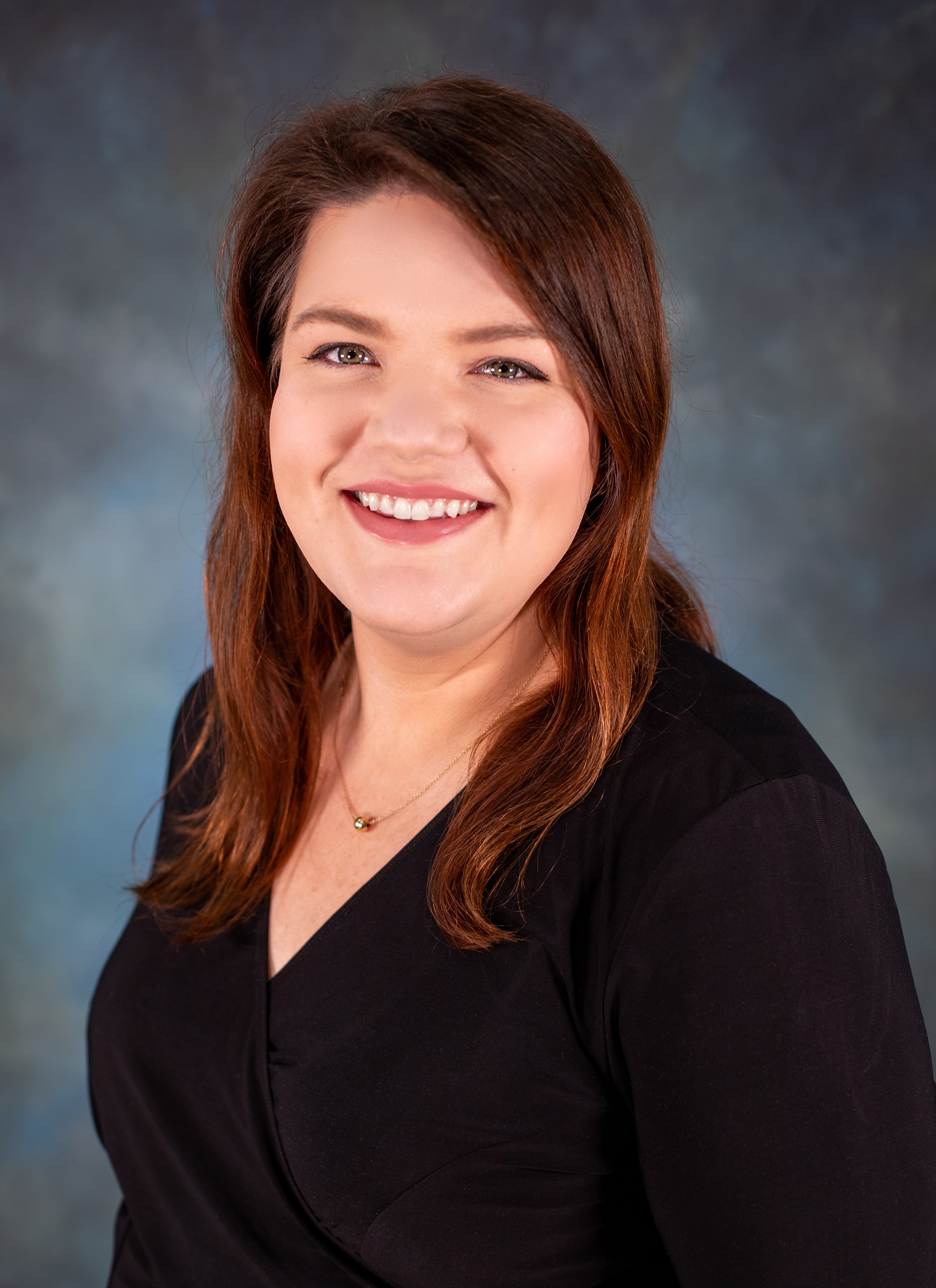
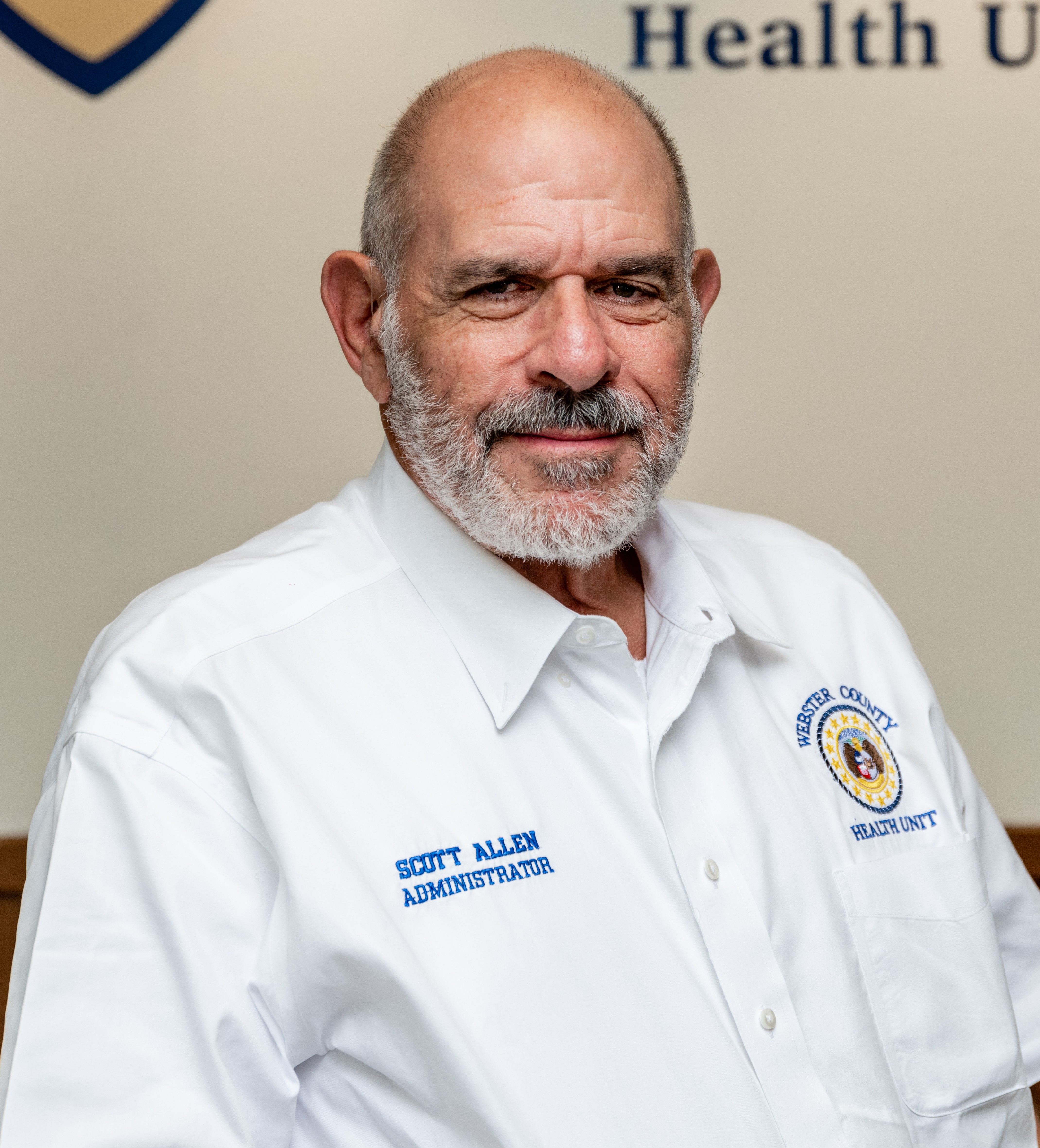
Public health agencies across the country face a growing workforce shortage—but Missouri is tackling the challenge head-on. On today's installment of the PHIG Impact Report, we explore how Missouri internship programs are building a diverse, skilled pipeline of future public health professionals while strengthening partnerships between state and local agencies. Scott Allen, an administrator and health officer of the Webster County Health Unit, shares how hands-on internships are giving students real-world experience in areas like accreditation, emergency preparedness, food safety, and wastewater policy while delivering immediate value to rural communities. We’re also joined by Brenna Davidson, an operational excellence leader with the Missouri Department of Health and Senior Services, who explains how strategic investments through the Public Health Infrastructure Grant funding helped launch and scale the program. She highlights the importance of removing barriers with paid internships, broadening recruitment beyond traditional public health fields, and strengthening leadership development through innovative initiatives like the Leadership Challenge.
This work is supported by funds made available from the Centers for Disease Control and Prevention (CDC) of the U.S. Department of Health and Human Services (HHS), National Center for STLT Public Health Infrastructure and Workforce, through OE22-2203: Strengthening U.S. Public Health Infrastructure, Workforce, and Data Systems grant. The contents are those of the author(s) and do not necessarily represent the official views of, nor an endorsement, by CDC/HHS, or the U.S. Government.

JOHN SHEEHAN:
This is Public Health Review Morning Edition for Tuesday, March 3, 2026. I'm John Sheehan for the Association of State and Territorial Health Officials. With another edition of the PHIG Impact Report today, we explore how Missouri internship programs are building a diverse, skilled pipeline of future public health professionals, while strengthening partnerships between state and local agencies. Scott Allen, an administrator and health officer of the Webster County Health Unit, shares how hands-on internships are giving students real-world experience in areas like accreditation, emergency preparedness, food safety, and wastewater policy, while delivering immediate value to rural communities later. Brenna Davidson, an operational excellence leader with the Missouri Department of Health and Senior Services, will explain how strategic investments through the public health infrastructure grant helped launch and scale their internship program and develop initiatives like the Leadership Challenge. First, here's Scott Allen on the Webster County Missouri internship program.
SCOTT ALLEN:
Our partnership with Missouri State University, and their internship program goes back many years. Actually, interestingly enough, our first Master's in Public Health intern is now in medical school. We're really proud of her. So, the university reached out to us and asked if we would be interested in partnering with them in a master's in public health internship program, and I was very fortunate that our health education supervisor who coordinates that program for us is actually a former nursing professor from Missouri State University, so she was familiar with their program, and it was an easy fit for us. So, we had two interns that started here before the Pathways Program, which is a partnership between the Missouri State Department of Health and Senior Services, local health departments, and the different universities in the state to provide kind of, as the name says, a pathway to a career for these master's in public health students,
SHEEHAN:
And what has the relationship been like between, you touched on this a little bit, but between your internship program and the state level?
ALLEN:
We worked very closely. We actually, the first round of pathway students that we had, I knew it was going to be a lot of work, but I they really wanted to place some students, so I begged and pleaded my case, and our health education supervisor agreed to take on five Pathways students, and it was a lot, but we actually have had those students up to the state capitol with us. It's been a great partnership. They've met with senior leadership of the state health department, and the goal is wanting them to understand that public health is more than sitting in an office doing epidemiology or that kind of thing. We really want them to get a good, rounded experience during their time with us.
SHEEHAN:
And what kind of projects do you have them working on?
ALLEN:
So, a lot of what they've been doing has been working on our, recently, on accreditation, so helping come up with policies, procedures, that sort of thing. Actually, our first intern that I mentioned was before the Pathways Program, and she actually created an emergency preparedness assessment for us. So it's called a PHRAT, public health resource assessment tool, I think. And she found that somewhere back east kind of adopted it for us, and then the state actually picked that up. So, they've created now a MO PHRAT because of the work that one of our interns did, so, we've done, we've had an intern who's done that. We've had an intern who worked on creating a wastewater ordinance for the county. Our intern last semester worked on creating a food safety ordinance. Actually just met with our intern for this semester, and she's going to be working on a part of our Feb or public health emergency preparedness contract that will require us to create a procedure, if you Will, for how we disseminate information between partners and everybody from at a local level, other providers, the coroner, the fire departments, that sort of thing, and then all the way up to the national level, through state, national So CDC and that sort of thing. So she'll be working between now and May to get that together for us.
SHEEHAN:
That's great. And you mentioned your first intern who's now in medical school, and that's great. Do you find that you're staying in contact with past interns, that the program has?
ALLEN:
We do, yeah, yeah. Actually, one of our interns is heading up the PHEP program for New Mexico's Department of Public Health, for the State's Department of Public Health. So, we're very, very proud of them, and they've all done some great things, and we've been fortunate. The talent that we've had through this program that's come through our building has been amazing. Our intern this semester is a pharmacist from India. Last semester, we had a registered nurse from Nepal. We've had physicians from different countries come in, a dentist from India that was an intern with us. So, hopefully, they get a lot out of the program, but we also get a lot out of them spending that time with us.
SHEEHAN:
That's great. Are there any other successes you would like to point to and give a shout-out?
ALLEN:
It's really creating a job pipeline for both the international students and the students here. And the other thing is kind of shout-out-wise. One of the things that we're really proud of is when one of our students comes here and learns about public health, learns about and very rural public health here in Webster County, and then is able to take that information back to their hometown, their home state or their home country, and put that, that information and what they learned here into effect, and we know that they're out making their world a better place because of the time they spent with us here.
SHEEHAN:
Scott Allen is an administrator and health officer of the Webster County, Missouri Health Unit.
Now, let's hear from Brenna Davidson, an operational excellence leader with the Missouri Department of Health and Senior Services, about Missouri's Pathways Internship Program.
BRENNA DAVIDSON:
The Pathways Internship Program is such a net positive for public health in Missouri, we've seen more than 700 folks apply to be an intern when we really thought we'd be lucky to get like 50 people interested. So far, over five semesters, 86 interns have completed the program, and feedback has been very positive from both the intern and the host agencies. The application process is kind of like a dating app, so folks apply to host an intern and apply to be an intern, and then we match them based on their interests and their locations. Any of our 115 local public health agencies in our or our state team members can apply to host an intern, and that's by design. We wanted to offer the option to work in any environment the intern is interested in. Missouri is kind of a microcosm of the nation. We have very urban and very rural areas, and those areas have very different challenges for public health agencies, so it's important to match those interns with the best setting for them and their career interests. The real beauty of the Pathways Program is that it's available to more than just public health students, too. We welcome communication, accounting, computer science, and even graduate students to apply, because we know that public health is a very broad scope of practice, right? And folks like me tend to fall into public health and fall in love with the work. So, this is the kind of diverse skills and mindsets we want to build for Missouri's workforce.
SHEEHAN:
That's great. What has been the role of PHIG funding in the program?
DAVIDSON:
PHIG is the direct funding support we needed to get Pathways off the ground. So, these kinds of pipeline programs are proven to boost our workforce, and we've always faced a shortage of public health professionals in Missouri. So, as soon as the funding was available, we knew we had to maximize its impact. PHIG gives us the ability to provide competitive stipends to interns. That's going to remove a lot of barriers for folks that normally would not be able to gain this kind of valuable experience, and then local public health agencies like Webster County may not have funds on hand to hire and pay interns like this, so we're all about removing barriers for our local partners, and it was a no brainer to use fig to pave the way, especially when our locals are as supportive and enthusiastic as our friends in Webster County.
SHEEHAN:
And another program that you've been that you've had success with is the Leadership Challenge. What is this, and what is the purpose?
DAVIDSON:
Yeah, the Leadership Challenge is a really refreshing approach to leadership development that our friends at iLead facilitate in Missouri. This program combines more of that traditional leadership development curriculum with some hands-on and personalized coaching, and then 360 feedback from your peers, too. So, leaders at both the state and local public health agencies get to participate in this program side by side, and that was a very intentional part of our program design. We want to always continually strengthen the relationship between the state and the locals, giving those folks opportunities to like, get to know each other, to relate to each other, to realize that we're all part of the public health system here in Missouri, and the leadership challenge is structured in a cohort style arrangement that really creates that connection between participants. The number of times I've heard people like yell, oh, I know that guy, he was in my leadership challenge cohort in the hallways is enough to tell me that it is building those relationships. But of course, you know, it wouldn't be good performance management if we didn't report on some real numbers. So over 12 sessions, we've trained 225 leaders with three more cohorts planned in '26, and when it comes to quality metrics, we've heard our overall experience rating is consistently over 90%, and then 100% of participants have committed to applying the lessons learned in their day-to-day work. And I don't know. Last time, I got 100% of people to agree to anything, and we've had people with more than 30 years of public health experience tell us this was the best leadership program they've ever participated in. So that's the fuel we need to keep this momentum up.
SHEEHAN:
That's amazing. And you know, you've just listed a lot of successes and a lot of big positives for the programs. As you look back on the successes of both are there things that you're most proud of?
DAVIDSON:
For sure, PHIG, in general, has been such an impactful resource for us in Missouri, because it's given us the ability to think big and pursue systems-level improvements. We knew this was a rare opportunity to inject significant funds where we needed the most following the pandemic. We also knew something like PHIG wouldn't be around forever. So, we've invested in long-term strategies that are going to systematically increase public health funding, build a stronger workforce, diversify our data modernization support, and then increase the number of accredited public health agencies in Missouri. So, if I had to pick one topic I'm most proud of, it's got to be our work to support locals on their journeys to become accredited. This is almost a non-answer, though, because accreditation is so wide-ranging, but we know that improving operations at the individual agency level through the accreditation framework is going to have impacts at the macro level. So, we're going to have agencies that are focused on quality improvement, that have the right policies in place, and have invested energy into performance management to really help build that armor of sustainability for our local agencies, that's going to help them weather any storm, and that is what PHIG is all about.
SHEEHAN:
Brenna Davidson is an operational excellence leader with the Missouri Department of Health and Senior Services. Earlier, we heard from Scott Allen, an administrator and health officer of the Webster County, Missouri Health Unit.
This has been another PHIG Impact Report from the Public Health Review Morning Edition. I'm John Sheehan for the Association of State and Territorial Health Officials.