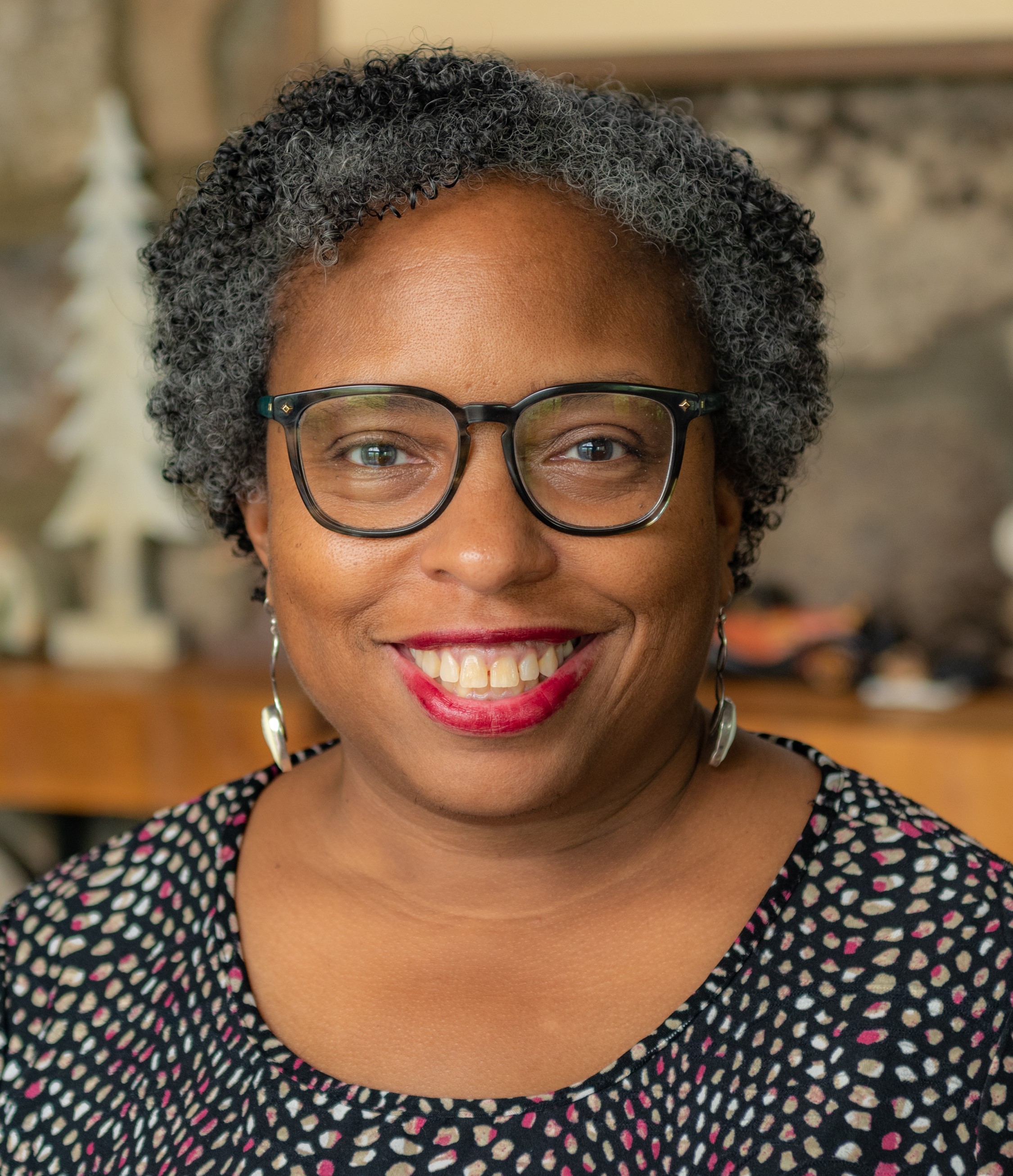




Public health is everywhere, but too often, people don’t see it. In this episode, we explore how the field can build a stronger future by investing in the next generation of professionals and improving how it communicates its value to the public. Dr. Kimberlee Wyche Etheridge, senior vice president of health initiatives at ASTHO discusses why workforce pathway programs, mentorship, and hands-on partnerships between universities and health departments are critical as experienced leaders retire and workforce gaps grow. She shares why more students are choosing public health, how practical experience helps bridge the gap between theory and real-world practice, and why retaining early-career professionals requires rethinking workplace culture. From creative funding strategies to proactive pipeline development, she makes the case that investing in people today is essential for protecting community health tomorrow. Then, Brian Castrucci, president and CEO of the de Beaumont Foundation, explains why, in a recent article, he argued public health must do a better job communicating its impact. He explores how partnerships across sectors, from business and education to faith communities, can strengthen support, and why consistency, speed, and alignment in messaging are more important than ever. We also discuss how digital creators and influencers are reshaping trust, why public health should meet audiences where they already are, and what it will take to build a clear, unified value proposition for the field.
Public Health Pathways: Preparing the Next Generation of Public Health Leaders | JPHMP Article
What A Turbulent Year Revealed About The Future Of Public Health | Forbes Articles

JOHN SHEEHAN:
This is Public Health Review Morning Edition for Tuesday, February 24th, 2026. I'm John
Sheehan with news from the Association of State and Territorial Health Officials.
Today, we explore how the field can build a stronger future by investing in the next generation of
professionals and improving how it communicates its value to the public. Dr. Kimberly Weitsch-Etheridge, Senior Vice President of Health Initiatives at ASTHO, discusses why workforce pathway programs, mentorship, and hands-on partnerships between universities and health departments are critical as experienced leaders retire and workforce gaps grow. Then, Brian Castrucci, President and CEO of the de Beaumont Foundation, explains why, in a recent article, he argued public health must do a better job communicating its impact. He explores how partnerships across sectors, from business and
education to faith communities, can strengthen support and why consistency, speed, and
alignment in messaging are more important than ever.
But first, here's Dr. Kimberly Wyche Etheridge on the next generation's pathways toward
public health careers.
[Dr. Kimberly Wyche Etheridge]
Well, I think it's always important to remember that there are going to be people after us.
And we always say that it is a comfort level knowing that you can hand the baton to well-
trained individuals that can keep the work going. So making sure that we're focusing on and
training the next generation of public health leaders is really essential for public health to
continue.
SHEEHAN:
Yeah. And what would be an outcome that you're hoping to achieve with this?
[Dr. Kimberly Wyche Etheridge]
Well, we know that a lot of our public health, more senior public health officials, are retiring
or leaving, especially governmental public health. And replacing them is extremely difficult
because there aren't the people that have that same level of experience. So by identifying
students who are interested and then helping to train them and give them the practical
experiences they need to fill in some of those positions or to work towards some of those
positions is really going to help state and local health departments as we move forward.
SHEEHAN:
Yeah. You note that there are more people pursuing degrees in public health than ever
before. That's heartening.
And before we get into sort of like the opportunity that presents, why do you think now
young people are pursuing these degrees?
[Dr. Kimberly Wyche Etheridge]
I think there's been a lot in the news around public health and the importance of what it has
done in the lives of especially some of the young people. They've grown up being
immunized. They have lived through COVID and the response and seeing what happens when public health responds appropriately to things like pandemics or emerging illnesses
and things like that. And it's a really an exciting field. The idea that there are things that you can do that can affect the entire population's health is a very powerful career. And if you're someone who is really, really interested in the health and maximizing the health of the population or of all
the communities, then public health is, it's a great career. For those of us who went into medicine, we know that we have the opportunity to really help one person at a time. Public health is able to help communities at a time. And so the two working together is just imperative. So we're going to always need our public health officials.
SHEEHAN:
And one of the partnerships you call out specifically is local universities and their health
departments. Can you talk more about that and why those relationships are so important?
[Dr. Kimberly Wyche Etheridge]
Yes. So like in most academic institutions, it's a lot of our important kind of core book
knowledge. But when you actually partner with health departments and real life experience,
then you get more into the, I call it the art. So schools provide the science, but practice provides the art of being able to do public health. And so marrying those two together puts students in a wonderful really position to be able to start their careers. They know the science, they understand the basics of public health, but they also have seen how it translates into action at the state health department.
SHEEHAN:
In addition, and sort of hand in hand, I think with that is this notion of mentorships in
addition to sort of opportunities, having a course load or having a way into an organization
is one thing, but having a mentor who's there that can actually show you the ropes and
paint a picture of a long career is another one of those sort of like really necessary elements.
[Dr. Kimberly Wyche Etheridge]
Definitely. You grow up believing that you pull somebody up behind you and you share
those experiences with them so that they may not have to learn the lesson the hard way,
we'll say. So if you think of kind of like a pyramid or so, we take what someone has
experienced and learned, pass it on to the next generation, they're able to start one step up
and so on and so on and so on. So mentorship not only gives a practical experience of what would you do in this situation, but also just the opportunity to observe the unspoken rules of, we'll say, of public health is important for success also. So you can't put a price on mentorship. It's important in public health. It's really important in any career to have that mentorship. But as we said, as people start retiring and some of the most seasoned people start leaving the field of public health, making sure that their knowledge and their experience is passed on to that next generation
is most effective through kind of organized mentorship.
SHEEHAN:
Yeah, for sure. Speaking of more seasoned career officials sort of moving on, you call out in
your article a pretty significant deficit of employees to the tune of 80,000 career officials
who are not in the workforce anymore. And you say that this presents a problem not just of
hiring, but you've got to retain people as well. Talk about that tension.
[Dr. Kimberly Wyche Etheridge]
Yes, people are always going to retire. We've been in a, we'll say, in a public health world
right now where those numbers tend to be a little bit higher than they have been in the
past. And so when that group leaves, then of course we have that deficit. But as people who are joining in are finding the careers that are meaningful, that they feel like they are making a difference, and it's an environment that's conducive to really kind of the kind of job that you want, then they're willing to stay a little bit longer. We have a generation coming up that's got a little bit less of a tolerance, we'll say, for workplace unhappiness. So looking to see what is it that needs to be done to make sure that younger employees are continuing to learn, that they got that mentorship, and that they're respected really. And a lot of the work that's being done in workforce development helps that. But making sure that we're able to retain those that we train, those that we put the energy in to make sure that they're ready to do their job, is essential. Because every time you lose that, then that's that much more experience, and really that much more training and funds that have been put and not utilized. So workforce development, but also workplace development is key. And as we know, us, we'll call ourselves either the late boomers or the early whatever comes after that, grew up in a different time. So we have a different truth as far as what it means to work than the current generation. And there's so much that each can learn from each other, but we have to be willing to listen, and to build on the strengths that may be a little bit different than those who have been in the field for a long period of time.
SHEEHAN:
I think you made a very compelling case for these kinds of pathway programs. And of
course, unfortunately, there's always that counter argument, which is, how are you going to
pay for it?
[Dr. Kimberly Wyche Etheridge]
Yes, and funding is always going to be kind of one of the Roger Sumner rate limiting steps.
But we have to remember that you really have to invest in things that are important or
paramount for survival or for the good of the, we'll say, either the organization or the field. So figuring out how to be creative with funding in order to be able to make sure that
pipelining programs or programs that fill the gaps are able to be sustained is important.
And those pathway programs can be done relatively inexpensively, if there is creativity that
is done. And even in many cases, the experience of being able to internship or work in a
public health department is sometimes the best value, meaning that it can be done
sometimes with very little or very small budgets. Again, it takes some creativity, and maybe
some braiding and layering of funds to be able to get it done.
SHEEHAN:
Dr. Kimberly Wyche Etheridge is Senior Vice President of Health Initiatives at ASTHO.
Now, let's hear from Brian Castrucci, President and CEO of the de Beaumont Foundation. In a
recent article in Forbes, he argued public health must do a better job communicating its
impact.
[Brian Castrucci]
Public health is embedded in the systems people encounter every day in our schools, our
workplaces, transportation, our food systems, even the media. Whether or not people
realize it, these systems help shape who stays healthy and who bears the most risk of
negative outcomes. So part of our responsibility as public health leaders is to help people
make those connections.
Using examples to make them tangible is a really important strategy. COVID is the most
salient example for a lot of our audiences. That experience drove home for many people the
way that health outcomes are interconnected, how they're dependent on systems and often
subject to forces beyond individual control. But it's not the only example, and we all know that. We have to look at this unpleasant memory and find other ways to contextualize public health.
SHEEHAN:
And one of the systems, one of the pillars that sort of supports public health, especially
these days, is partnerships, whether that's cross-sector, interstate, across the system. Can
you talk about the importance of partnerships and how agencies have and should be
utilizing them?
[Brian Castrucci]
Public health partnerships are incredibly important. This has to be a team sport. It has to be
an us, not an I. No matter what we think we can do in public health, we're going to need someone to help us. Public health is the perpetual turtle on a fence post. You don't quite know how it got
there, but you know it needed some help. And so we need partners. We need the business community. We need the schools. We need education. We need faith. We don't have the resources or the political will or any of the things that we need to be, for us to actually achieve our goals.
SHEEHAN:
I think it seems like you're saying the case hadn't been made.
[Brian Castrucci]
The case was made. It wasn't communicated. And if I can, if a listener of this podcast leaves
with anything, we don't need more research. We don't need more examples. We've got to communicate the research we have. We have to share the examples so that people understand that public health is there. I'll give you a great example. A friend of my daughter once asked her, what is the difference between your dad and a pediatrician? I'm not clinical. I have a DRPH. And my daughter looked at her and said, well, a pediatrician helps one person at a time. My dad helps everybody all the time. That's what we need people saying about public health. Because you wouldn't cut something that's helping everybody all the time. But it's easy to cut public health given how those detractors would communicate about public health. So the case is there. It's the communication that needs to be better.
SHEEHAN:
And perhaps related to your daughter's explanation, you point to sort of this new
generation of digital or maybe grassroots communicators who are making, who are
communicating effectively. What can public health professionals learn from these kinds of
next generation communicators?
[Brian Castrucci]
So I heard a really interesting presentation just yesterday at a conference that the Yale
School of Public Health put on. That it's not that doctors and scientists have lost trust. It's
just that other people, other lay people are now as trusted as those scientists.
So it's almost like the monopoly on trust has been broken. And so I don't know if there's as much to learn from them as it is we need to partner with them. It's not the death of
expertise. It's an evolution of expertise. I am 51 years old. And for me, expertise is a degree on the wall or a white coat. But for my kids who are 14 and 16, for them, it's the number of followers that that person might have, right? They can tell me everything that Dr. Mike has said on YouTube. And
that's, we have to learn and partner better. We have to think about information differently. I've spent my whole career trying to bring
people to my website, go to the CDC website to learn about, go to the state health
department's website to learn about. No one wants to go to those websites, right?
They're not entertaining. They're not interesting. So how do I work with influencers? Because I actually go to the influencers' websites already. I go to their TikTok because I like
their banana bread recipe, or I want to know how to bedazzle my briefcase. And that's what
they show me. And then how do we work in messages, health messages, where people already are so that we're not trying to pull you to us. We're trying to push us to you.
SHEEHAN:
Right. And as you say, the conditions aren't new to the next generation. Things like food
safety and drug oversight, environmental concerns.
These are all things that are on their minds as well. It's just not being, public health's role is
not being communicated to them in the places where they are. Are there ways that officials
could tap into that, those very important concerns?
[Brian Castrucci]
When I've talked to influencers, they just say, send us a DM. They're looking for
collaboration. And so we have to get uncomfortable and we have to start working with
people who aren't from Harvard and Yale and have MDs and PhDs.
And that's something we're going to have to get used to. That our degrees mean that we
have knowledge, but we might not be the best to communicate that knowledge to a broad
audience. And ultimately, for public health, one of our biggest challenges is that we aren't
aligned. Alignment is where we lose. And so we can treat a lot of the symptoms of that problem. The
problem is we aren't aligned. And I'll just give you a quick example. If I went to APHA, right, I will go to the annual conference and I set up a booth and I ask a thousand people what public health is. I think there's a fair bet that I would get a thousand different definitions. Some of them would be 10, 20 minutes long. But what are the, like, here's the key. Public health is this, right? McDonald's is always Golden Arches. What is our equivalent of Golden Arches in public health? I don't think we have it and we aren't aligned. So you work with the HIV folk and they're like, well, you know, we care about public health if we center HIV. You try to think for mortality folks. Well, we care about public health if you center for mortality. We have to center public health and let the public know this is what we do for you. This is our value proposition. And we need to communicate it consistently and correctly for many different audiences.
SHEEHAN:
You also write that public health communicators can't wait for ideal or calm
conditions. That's not the world we live in anymore. Do you have advice for communicating
in uncertain times and sort of in uncertain terms?
[Brian Castrucci]
I think that's something that our public health communications collaborative, which you can
find at publichealthcollaborative.org, is really trying to wrestle with. Getting us the fast
messaging. I mean, that's one of the lagging places is speed.
So we have to right now as public health leaders start to stand up and give people
alternatives that go beyond strongly worded letters. We need the action that follows. And
that's one of the reasons I love the public health communication collaborative and I get to
work with amazing partners at Trust for America's Health, CDC Foundation, Kresge, Roger
Wood Johnson Foundation and de Beaumont because it's really trying to get us to a point
where we have some solutions, ways to talk to people, how to use plain language.
But this is going to take us really getting disciplined with our messaging. And all 3,000 local
health departments can't have their own messaging campaign. That doesn't breed trust
either. We need consistency and that gets back to the idea of alignment.
SHEEHAN:
Brian Castrucci, President and CEO of the de Beaumont Foundation. Earlier, we heard from
Dr. Kimberly Weich-Etheridge, Senior Vice President of Health Initiatives at ASTHO.
ASTHO newsletter subscription options feature updates, analysis, resources, and events on pressing
issues in state and territorial public health. Subscribe to receive legislative alerts, news releases, public health weekly, events, and PHIG Connections.
This has been Public Health Review Morning Edition. I'm John Sheehan for the
Association of State and Territorial Health Officials.