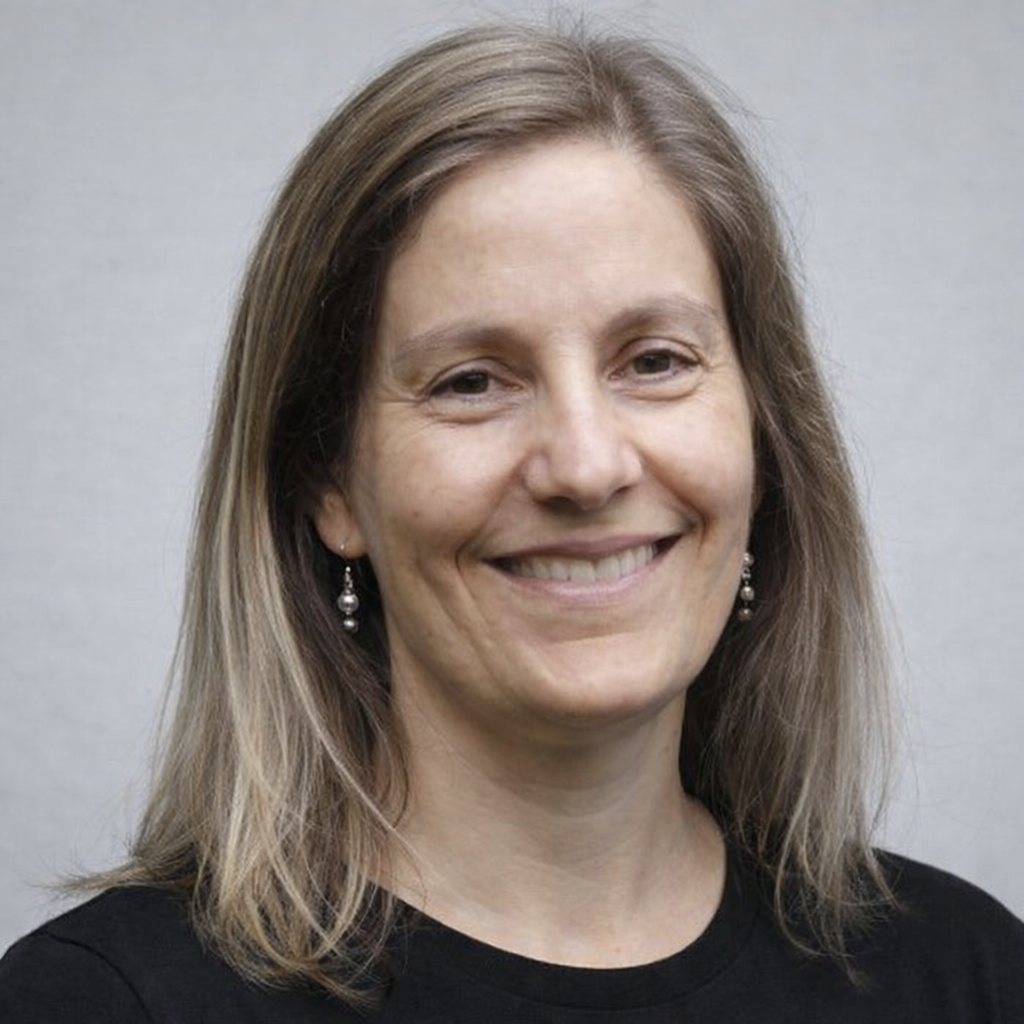
Wildfire smoke is no longer a rare emergency; it’s a predictable, climate-driven public health threat. In this episode, Gabriela Goldfarb, environmental public health section manager for the Oregon Health Authority's Public Health Division, tells us why health agencies must begin outreach and coordination long before wildfire season starts. Goldfarb walks through Oregon’s collaborative wildfire smoke response protocol, explaining how state, federal, tribal, and local partners translate complex data into timely public health advisories.






Wildfire smoke is no longer a rare emergency; it’s a predictable, climate-driven public health threat. In this episode, Gabriela Goldfarb, environmental public health section manager for the Oregon Health Authority's Public Health Division, tells us why health agencies must begin outreach and coordination long before wildfire season starts. Goldfarb walks through Oregon’s collaborative wildfire smoke response protocol, explaining how state, federal, tribal, and local partners translate complex data into timely public health advisories. The conversation explores the growing health risks of repeated smoke exposure, the added challenges of prescribed fires, and how transparent, empathetic communication builds trust. Listeners also learn how Oregon is investing in long-term resilience—through preparedness calls, harm reduction strategies like air filtration support, and broader climate adaptation efforts—to protect communities, as smoke, heat, and other climate hazards accelerate.
Communicating the Health Risks of Wildland Fire Smoke | ASTHO

JOHN SHEEHAN:
This is Public Health Review Morning Edition for Wednesday, February 4, 2026. I'm John Sheehan for the Association of State and Territorial Health Officials.
Today: preparing for wildfires, a predictable, climate-driven public health threat. Our guest is Gabriela Goldfarb, environmental public health section manager for the Oregon Health Authority Public Health Division. She'll walk us through Oregon's collaborative wildfire smoke response protocol and explain how state, federal, tribal, and local partners translate complex data into timely public health advisories. She began by explaining why health agencies have to begin outreach and coordination long before wild season starts.
GABRIELA GOLDFARB:
So, we unfortunately have a lot of practice having to respond to increasing wildfire and wildfire smoke impacts in our state in the past decades. That's being driven by climate change, just as the predictions were made, the reality is meeting them. And so we built, over time, a system we have, an Oregon wildfire response protocol for severe smoke episodes that started out as more informal collaborations, because it really takes a big team to pull together all the information to forecast what smoke is coming, what direction is it going, how severe is it going to be. And so we found that establishing the relationships and roles and documenting those, and then every year we have kickoff calls in advance of wildfire season, and then post-wildfire season calls among all the folks. And so we're talking about the meteorologists and that from our Department of Forestry and our National Weather Service and our forest service air resource specialists, and our Department of Environmental Quality, who we co-chair this group, and we bring the health risk information, we bring monitoring that we're doing of people walking to emergency departments, and we translate that information for our local public health partners at county-level and tribes as well. And we found that, you know, I think, as in all human endeavors, it's relationships that matter, so making those connections ahead of time, and that's, you know, also basic right to our, our preparedness and emergency response colleagues. That's what that's all about. And you know, in Oregon, we and our agency, is, interestingly, you know, one of agencies that uses the Incident Command System, along with the Department of Forestry, for example, and our State Fire Marshal, and it's, that's we use these kinds of structures and practices to build, those relationships ahead of time, figure out who the right people are, and have information at the ready. Like we know year after year the important things to communicate and the languages we need to communicate in to reach the populations that are most at risk.
SHEEHAN:
And when, when you're sort of creating these, these guidelines and sort of protocols, there's a lot of communication going between in-state officials and national officials. How do you, how do you sort of take that national guidance and fit it into Oregon's specific circumstances? Given, you know, a diverse set of communities.
GOLDFARB:
Yeah, we really rely on the, Oregon: we are mighty but small, and so, we really need to rely on national expertise for us, from the CDC, EPA; within CDC, from the Agency for Toxic Substances and Disease Registry, to make sure that our guidance is based on science. So when we're seeing smoke levels, we are looking at EPA Integrated Science Assessment for particulate matter, for example. And as we are learning more and more about what's in smoke besides particulates, we have a lot of questions from the public about the toxicity of smoke. When those used to be just once in a while events, it was one thing, but now there are real questions about communities that are hit by smoke year after year after year for many months, what else is in the smoke, and what are the health impacts? And so we need partnerships with our federal partners and other state partners to bring the best science to bear and giving advice to community.
SHEEHAN:
And can you talk us through the process of you know when you're sort of in the midst of it, and you're gathering this data and you're getting information on where the fires are, what could be, what could be in them? How does that translate into a public health alert or into a, you know, a recommendation for, hey, you know, this community, you've got to go do this.
GOLDFARB:
Yeah, in our state, the issuer of an air quality advisory is our Department of Environmental Quality. But again, that decision, their decision is really made in partnership with all those parties I talked about earlier. And in fact, the, you know, Oregon Health Authority and Department of Environmental Quality co-chair, they are the conveners of the group, and those happen as needed the night before or a day before. People know which way the are getting updates on, on fire activity and determine we need to have a smoke call, and it'll be first thing in the morning. And we hear from all the different geographic regions across the state, including our federal partners, who are divided up. We may hear from the Northern California, Southern Oregon, Forest Service, Air Resource advisor, for example, the National Weather Service, based out of Boise, whoever's closest to the fire, and everybody reports out on what they know. And then there's a discussion about what it what sounds, yeah, what sounds reasonable? How long? What should the geographic extent be? How long should it last? When shall we check in again about extending it or lifting it? And so it's a very collaborative process, but very nimble again, during, well, wildfire season, we are all monitoring our emails and on, you know, a few hours notice, are convening to, to come together and bring our best thoughts together and answer questions. And here in, you know, in those calls, we also have our local public health council, public health, and tribal help folks, and they're giving us very localized input on what they're seeing. So it's, it's putting that all together, and everybody's a really trusted voice at that point.
SHEEHAN:
Yeah, and as you're describing, it's such a, I mean, collaborations feels like too small a word. There are so many parties involved, state, national, tribal. How does that come together in practice? And how do you, how do you sort of, like, strengthen those connections ahead of time? How do you like, lay the groundwork? Because it's so complicated.
GOLDFARB:
Yeah, so again, it's a lot of communication. As I mentioned, we have, specifically, for the team that participates in this protocol implementation, we have pre- and post-wildfire season, but Oregon Health Authority, we specifically, with a focus on public health, convene a summer hazards call that is really come one, come all, to listen to subject matter experts, get your questions answered, and that, and, yeah, that can be wildfire smoke. More and more, we are looking at increasing the pace and scale of prescribed fire in the state to try to reduce the risk of massive conflagrations over time. And that means more smoke in community, more of the year. But it's smoke that people can prepare for. And so, you know, these are the, our summer hazards extend to other things, harmful algae blooms, extreme heat, of course, which is, you know, a huge issue and growing issue. And then not only heat separate from smoke, but heat and smoke at the same time, we are really focusing a lot on that as looking at the health impacts around that combination. So we are, you know, here, as a resource for our local partners when they're trying to communicate locally, and we're providing empathetic messaging that's science-based, and we follow you know, the mantra for us is, here's what we know, here's what we don't know, here's what we're doing about it. We applied that across the board in environmental public health, but certainly in this context, and that is good guidance. When you tell people what you don't know, they tend to trust what more what you say you do know.
SHEEHAN:
And in the case of prescribed fires, I imagine that's adding a layer of complexity, because you've got a practice that's completely it's designed to prevent future wildfires. At the same time, you're sort of adding environmental hazards, and you know, no one wants that, but also no one wants them to be uncontrolled. You know, you're sort of adding a level of danger to to a safe practice.
GOLDFARB:
Yeah, it is. You know, in terms of, there has been a lot of conservatism and a lot of concerns to make sure as much as possible that you, when this prescribed burns happen, and this is our, you know, the responsibility of our, of our natural resource agency, land manager partners, but that they the risk of it going astray is is minimized. It's really about the smoke impacts that we're putting in. And it was a hard, you know, it was a decision that Oregon Health Authority as an agency, smoke is smoke. It's bad for health. There's no good smoke. But looking at the science, it's been shown that doing treating forests, restoring forest health and restoring the natural cycles of fire in our forests over time will mean that we don't have massive wild fire that blankets huge parts of the state, or even in 2020 the entire state is blanketed with hazardous levels of smoke. And that was really eye-opening for a lot of people. We are experiential learners, and that that we had a nine month period we had, you know, massive fires that destroyed 4,000 homes. The next most damaging fire in 2015 destroyed 50 homes like, we, it was, it was really a huge impact. And again, parts of the state that don't regulate rarely or never experience smoke experienced such extreme smoke it was followed a few months later by a severe ice storm, and then a few months later, in June of 2021 by our heat dome that killed, you know, well over 100 people in the state. And those events really brought to everybody's consciousness the realities of what climate change-driven hazards are posing in terms of a risk to health. So with all that, we still need to work with the community to make sure that we're doing everything we can to protect them with communication, above all, so people can take steps to protect themselves before the prescribed fire and also during the prescribed fire, so they know what's going on. And for some populations, and to the extent we have resources, direct interventions like providing air filtration devices to adult foster homes, for example, or to our Medicaid population. So those are all things that we can do ahead of prescribed fire that also help with wildfire, frankly, smoke resilience. We have a Healthy Homes Grant Program that the legislature directed us to stand up, and a big focus of that is weatherization and heat pump installation to help get people HVAC systems, but protect them from heat and smoke, for example. So we're working on a lot of broad fronts to try to protect people from these risks.
SHEEHAN:
Yeah, as, unfortunately, these, these kinds of climate-related environmental hazards sort of keep accelerating, right?
GOLDFARB:
Yeah, we're seeing it in other contexts. We believe likely that harmful algae blooms are expanding in their, increasing in their frequency. For example, as another one, I would say at the top of our list are smoke and heat. Those are the ones that are the things that we are most supporting through investments in public health modernization, we are resourcing local county public health, and tribes, and community-based organizations to develop, identify populations at risk from these climate threats, develop plans, strategies, partnerships to address those risks. It's hard for them to keep going with those investments and actions at the same time that other basic core public health infrastructure is feeling a lot of pressure and losses, but, but we continue to provide that support, provide technical support, and set those expectations that as much as possible, we need to try to continue to build the resilience of communities to these threats.
SHEEHAN:
Gabriela Goldfarb is environmental public health section manager for the Oregon Health Authority Public Health Division. This has been Public Health Review Morning Edition. I'm John Sheehan for the Association of State and Territorial Health Officials.