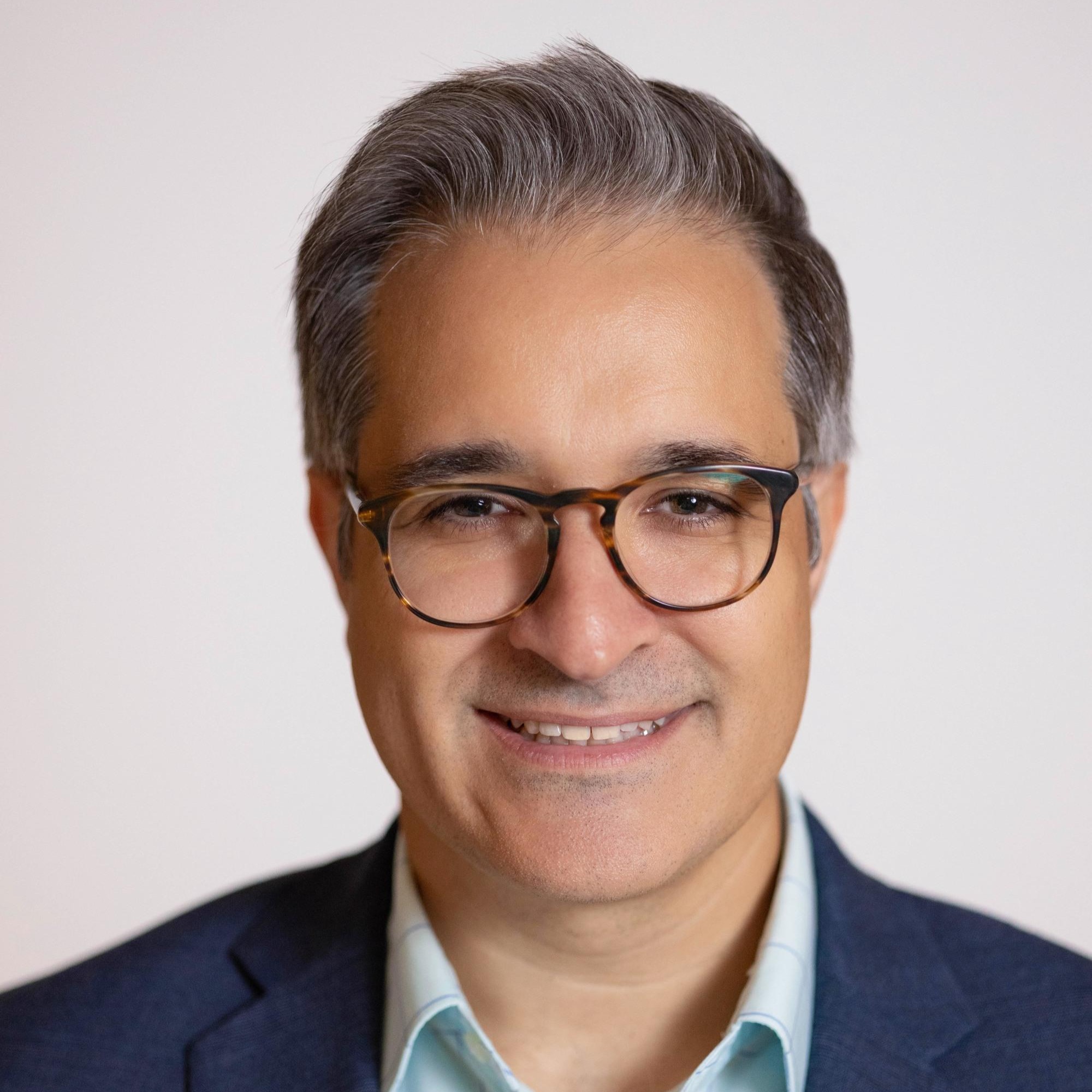
What does the public health workforce need to stay engaged, supported, and committed, and how can leaders act on those insights? Heather Krasna, associate dean of career and professional development at Columbia University Mailman School of Public Health, joins us to break down new research on what younger public health workers value most at work. She explains why flexible schedules, remote or hybrid options, professional development, student loan repayment, and family-friendly benefits are increasingly important for retention, and how agencies can think creatively when salary increases aren’t always possible. Then, Omar Khalid, director of workforce at ASTHO, walks through key findings from the 2024 Public Health Workforce Interests and Needs Survey (PH WINS), the only nationally representative survey of the governmental public health workforce.






What does the public health workforce need to stay engaged, supported, and committed, and how can leaders act on those insights? Heather Krasna, associate dean of career and professional development at Columbia University Mailman School of Public Health, joins us to break down new research on what younger public health workers value most at work. She explains why flexible schedules, remote or hybrid options, professional development, student loan repayment, and family-friendly benefits are increasingly important for retention, and how agencies can think creatively when salary increases aren’t always possible. Then, Omar Khalid, director of workforce at ASTHO, walks through key findings from the 2024 Public Health Workforce Interests and Needs Survey (PH WINS), the only nationally representative survey of the governmental public health workforce. He discusses why high turnover, burnout, and loss of institutional knowledge remain urgent concerns, alongside encouraging signs of improved supervisor relationships and workforce commitment.
Climate and Health Resources | ASTHO

JOHN SHEEHAN:
This is Public Health Review Morning Edition for Thursday, January 22, 2026. I'm John Sheehan for the Association of State and Territorial Health Officials.
Today, we take a look at the public health workforce and ask what these professionals need to stay engaged, supported, and committed, and how leaders can act on those insights. Heather Krasna, associate dean of career and professional development at Columbia University Mailman School of Public Health, joins us to break down new research on what younger public health workers value most at work and later. ASTHO's Director of Workforce, Omar Khalid, will walk us through key findings from the 2024 Public Health Workforce Interests and Needs Survey, or PH WINS, the only nationally representative survey of the governmental public health workforce. He'll discuss why high turnover, burnout, and loss of institutional knowledge remain urgent concerns, along with encouraging signs of improved supervisor relationships and workforce commitment. But first, here's Heather Krasna discussing a recent study from the Mailman School of Public Health showing that younger workers prefer non-traditional work benefits to a degree, more than older workers. Things like flexible schedules, remote work, and more training. I wanted to know how public health agencies should interpret these responses.
HEATHER KRASNA
Many local, and state, tribal, and territorial health departments have had trouble keeping younger employees at the organization, and there is the opportunity to try to improve retention by offering some of these less traditional benefits. Our study shows that younger workers value these, sort of, non-traditional benefits. So, as an example, if the organization has the option to offer remote work, from time to time, at least, or hybrid options, that could be a way of helping retain some of the younger workers, it's also shown that they appreciate flex time, if that's another option. Some people have workplaces where they might work four days a week, a few, a few extra hours, or extra hour each day, and then have that maybe the Friday off. One of the other things that we saw in our study was that certain benefits that have to do with childcare, lactation facilities, things like that, are also really attractive to younger workers. And one reason, possibly, is, is that, as probably many people know, overall, the public health workforce does tend to skew more towards female workers. So, because of that, those particular benefits might be a bit more attractive to this group. And the other thing that we noticed is that supporting lifelong learning, professional development, or student loan repayment or forgiveness programs are very, very important for the younger workers, and this also is common sense that people who are younger most likely have finished their degrees more recently, and they also, unfortunately, are more likely to have debt. And so options where there might be public service loan forgiveness or some of the other health care-related loan repayment programs through the National Health Service Corps, those types of options can be really beneficial, especially to younger workers.
SHEEHAN:
Yeah, and it strikes me that's sort of the story of the broader workforce across the country, that younger workers have gotten used to non-traditional benefits, flex time, remote work. It also strikes me that in health care that's particularly challenging. It sounds like you're sort of prescribing a combination of, you know, of flex time, but also other other benefits that they, they want as much, such as, such as training, such as, as more maneuverability, and debt repayment.
KRASNA
And it's true that not every single job can offer these types of flexibilities. Not every health department has that option to allow hybrid work. Certain jobs just can't be done remotely. If you imagine the health inspector, for instance, environmental health specialist, for instance, they may not be able to do that work remotely, but there could be days where they're doing reporting and paperwork. Maybe those days can be done remotely. These are things just to be creative and think about if the job can be structured a certain way. One thing I have to say that is really important to say out loud is that the most beneficial thing is, oftentimes to increase the salaries, if that's possible, but knowing how hard that is, that's where we would suggest to think outside the box a little bit. And if you can't increase someone's salary, what could you do that might make the job easier for them to stay and if that includes helping them get student loans forgiven or repaid, or offering those flexibilities or training benefits. That's something that's a little easier to do for many organizations than to increase the salaries.
SHEEHAN:
Absolutely, and all of the solutions that you're talking about, you know, there are long-term implications there. It's, it sounds like a much bigger culture shift across, across all workforces, but particularly in public health, a shift that kind of has to happen, and has been happening no matter what.
KRASNA
Exactly, you know, I would say some people make a big deal about how there are different generations of people in the workforce, and that's somewhat a case. There's something to be said for that. There may be Gen X, and the millennials, and so forth, and they might have different values at work. But there's also the fact that people are in different phases of their life, and if someone is younger, maybe they're starting a family, they may have certain needs or things that you can do to support them with their life, in that, take in that phase of their life, or if it's a younger person, and they just want to get as much experience as possible, and they want to have the opportunity to learn more things or take on new responsibilities, if there's the opportunity to allow that, that's something that can be really beneficial. So when people are starting out their career, which is also what happens when people are younger, what can a supervisor do to be not just a regular supervisor, but possibly a mentor, or to help the person identify other people that could be a support or a mentor.
SHEEHAN:
And Heather, could I ask you to maybe expand on that a little more for, say, maybe an agency head who's staring down these cultural shifts and is resistant to change, but sees this small but growing cohort of their workforce, you know, asking over and over again for these kinds of accommodations. What's your advice there? What's, what's, what are some baby steps to getting some changes in place?
KRASNA
Great question. I think that the very first thing is to listen to people. There are lots of ways you can do a, what they call a climate survey or some other way to gather anonymous feedback from people in the workforce. There's also plenty of data now from the public health workforce interests and needs survey, pH wins. And if you are a supervisor of people and you need to justify why you need to make a change in the workplace, that data will probably support that decision. And the other thing, which I always will say out loud is that turnover is really expensive, and it's not just expensive because your community is now going to be missing someone whose job is is to support the community's health, whether that person is inspecting restaurants or dealing with the vital statistics and birth certificates and so forth, or an epidemiologist that's tracking some outbreaks, the community's health could suffer if you don't have sufficient workers and they're engaged in their job, doing that work that is a really huge challenge, and so putting dollars on that lack of workforce is something that health department leaders can try to do and to, you know, tie it back to things that have an impact on the community. What is the economic impact if you suddenly have more cases of an infectious disease. How is that impacting all the employers in the region where their workforce is having to call out sick or something? And then the piece about turnover itself is that's also very expensive. If somebody leaves now you have a vacancy, and you have to fill that vacancy, and it's not just the maybe the cost of trying to advertise the job or something, but you could end up taking up so much staff time to hire a new person, to train that new person, to onboard them. So it's not just harming the community, it's also expensive to the taxpayer. If there's a lot of turnover in a health department, these are all just different arguments. People can try to make the case for why public health is so important, and why the people doing that hard work who are on the front lines in public health, their work really matters, and supporting them is essential.
SHEEHAN:
Heather Krasna is associate dean of career and professional development at Columbia University's Mailman School of Public Health.
The results of the 2024 Public Health Workforce Interests and Needs Survey, or PH WINS, were recently released, and it's the only nationally representative survey of the governmental public health workforce. Here's ASTHO's Director of Workforce, Omar Khalid, to talk more about the results; specifically that a significant portion of the workforce is considering leaving the field.
OMAR KHALID:
Of course, it's a snapshot in time. There was a window in the second half of 2024 but we know there were some really big changes after the pandemic, right? Maybe that was a little more gradual as things returned closer to normal, although things were never quite the same again. Haven't been since 2020 but we also know that the workforce was struggling and letting us know important needs of theirs even before the pandemic. But we did see that even in the 2024 data, that there was what is really troubling data about the kind of the conditions of some individuals in terms of burnout and looking to leave the profession. So we know this is an urgent message in the data. We also know that things have not gotten easier in 2025 and then, you know the weeks really, that followed the completion of the fielding of the 2024 survey. There's still need for support. There's still need for enhancing training around certain topics, so that people feel more supported in their day to day work in public health agencies. So I think that's one of the main takeaways of these findings in 2024 is that we still have some work to do, even if things had stayed at an even keel from the time of fielding and all the difficulties that we've seen since then, including, you know, reductions in force, losses of funding, some confusion around future directions, with maybe the absence of some guidance and how to plan for the continuation of some of these programs, has just been an additional challenge that we know we have to meet as well.
SHEEHAN:
Yeah, and perhaps a complimentary takeaway from the most recent report shows that there are a lot of new workforce members. About half have been at their agencies for five years or less. So, how does that add difficulty to the situation? How does that sort of color the results?
KHALID:
Well, it's great. I think we do always want to welcome new ideas and new perspectives represented from these new people coming to the workforce. That's a great thing. Recruiting and advertising. How great public health is as a career is something we want to see, even though it is always hard to replace the institutional knowledge and the experience of the people who have left. So of course, there's kind of two sides to that coin. The first one is, we have a great opportunity to have a fresh perspective in public health, maybe new voices, maybe people who weren't previously represented in health agencies are being able to see a few more of those perspectives, but at the same time, realistically, coming to terms with the fact that, especially in a relatively short amount of time losing a lot of those longer tenured employees from our agencies, and thinking about, how do we address that loss, first and foremost, and then also, how do we plan for doing it better? How do we plan for those separations affecting agencies and critically, the work that we provide to keep communities healthy without interruption going forward. And I think it's a great reminder that that's something you have to design a system for which we're so great at doing in public health, you know, how do we design a system to mitigate the damage from loss of institutional knowledge, whether it's succession planning? And you know, that doesn't just mean, you know, how are you going to replace someone in a position and say, okay, great, that's not a vacancy anymore really. Succession planning is how are you planning for that transfer of the most important knowledge? How do you keep some of these initiatives on track despite key personnel leaving? And that's really something you have to be intentional about and plan for. And I think the last few years have really highlighted the need for that. And we're hearing a lot of ways that people are taking that more seriously and being more intentional about doing it to have it be a net positive that we're getting a lot of new staff, and of course, people are choosing to end their careers, hopefully at a time of their choosing, without affecting the work of public health too greatly.
SHEEHAN:
Yeah, and the report calls for investments, serious investments, in a permanent workforce moving away from those temporary roles. And you know that costs money. How does that happen? And who needs to be convinced to make those investments?
KHALID:
Well, we're currently operating under the historic investment in public health infrastructure, including workforce, through the CDC Public Health Infrastructure Grant that has really allowed a lot of, really, all of the state public health agencies and as well as state and territorial and pretty associated states and some big city local health departments and city health departments to make those hires, to hire people that are committed to doing the work of workforce right thinking about infrastructure full time and how to support the workforce. And I think that the successes and the examples of all of those jurisdictions, you know midway, through roughly that investment show that this can work, and investment in public health workforce does really have an impact. Of course, nothing is permanent in government, and especially in public health funding, we're used to a sort of grant cycle, and that does have a natural ebb and flow to it, but our hope is that we'll be able to tout the success of investments like the public health infrastructure grant and others that focus on infrastructure to really improve how health agencies operate, so that they can do the best job they can do to keep our communities safe.
SHEEHAN:
And the report isn't all bad news. 2024 showed improvements in workforce commitment and supervisor satisfaction and a reduction in burnout. So do we know, or can we pinpoint any policies or shifts that contributed to that?
KHALID:
Well, I'll first give a caveat that it is difficult to provide you know, with certainty and point to something and saying, you know, this had this effect, especially when you're talking about things that you know, maybe they're a little fuzzy. They're talking about how people feel, and you know what's behind their complex decisions to stay or to leave or around morale, but we still know that it's real, even if we can't draw a crystal clear line between interventions that we do in a workplace and why people want to stay. We can listen to what people are saying they want and what is working. We can start by asking them and communicating with them. But one of my favorite pieces of data from the 2024 PH WINS is that people have increased support, and they enjoy their relationships with their direct supervisor, and that is often the number one retention tool that any agency has. You know, there's the adage that people don't quit their jobs, they quit their supervisors. And luckily, we're seeing that more people are satisfied with that relationship and public health agencies, but at the same time, the people who are reporting the highest levels of burnout are those same supervisors. So you've got something that's working. You've got something, despite all the difficulties that face us in the field, you've got something that's working. How do we pinpoint that piece of supporting supervisors, and that means giving them training to be effective. You know, people are put into supervisor roles usually because of the job, how good of a job they do, right? Not always because they have vast experience they can point to of what a great job they do supervising through no fault of their own. So how do we support them with training, with examples, and also supporting them, you know, in other more logistical ways, right? Like, what is your work day like? Do you have flexibility? Do you have an unrealistic workload? You can be the best supervisor in the world, but if you've got more work to do than hours of the day, or more reports than you have time to meet with in a meaningful way, then you're not going to be successful.
SHEEHAN:
Taking that into account, is there a big takeaway of the report, or is there something that maybe should be prioritized for the year going forward?
KHALID:
I think that one thing that we know that there is a need for is better communication, and that's a big term, and it can show up in a lot of different ways in a health agency, whether it's executive leadership talking through and acknowledging uncertainty and the difficulty in the field right now, or trying to make sense of things where there's not always a lot of information, but it does take some very brave leadership to come out and say to an entire organization, we're together. We may not have all the answers, and there may be some tough times ahead, but we're committed to standing with you. And the other side of that is even communication all the way down to the team level. You know. How are supervisors trained to, you know, filter down some of that information and give people the information that they need to know, while also getting information they need from their supervisors. So how are we able to communicate those things? What tools are we giving to everyone and our staff, the entire public health workforce to be better communicators. It's such an important part of our job, and not asking anybody to be perfect, but making that attempt and recognizing it as a priority is the first step.
SHEEHAN:
Omar Khalid is ASTHO's director of workforce. Earlier, we heard from Heather Krasna, associate dean of career and professional development at the Columbia University Mailman School of Public Health.
Strong public health starts with strong communication getting the right information to the right people at the right time can build trust, counter misinformation and shape healthier communities. That's why ASTHO is highlighting practical resources to help health departments strengthen their communications infrastructure, from media templates and risk communication strategies to tools for talking with legislators about public health funding and impact. Explore our training opportunities toolkits from the de Beaumont Foundation, field-tested messaging strategies, and expert insights on crisis communication and public trust, and learn how Public Health Infrastructure Grant funding can support this foundational capability. You can find links in the show notes.
The ongoing effects of climate change impact every part of our lives, including our individual and community-level health. From rising temperatures, increased occurrence and magnitude of natural disasters, expanded vector-borne disease patterns, to increased transmission of water-borne diseases, the changing natural environment in which we live will affect our health. These issues have led to significant negative health effects on both individuals and populations, particularly high-risk communities. As such, public health departments must address how best to respond to this ongoing crisis, and ASTHO has compiled resources to help. You can find a link in the show notes.
This has been Public Health Review Morning Edition. I'm John Sheehan for the Association of State and Territorial Health Officials.