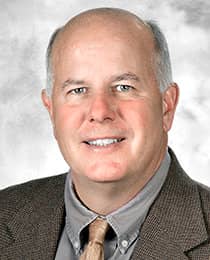
As behavioral health and overdose crises continue to strain health systems, states are rethinking how and where care is delivered. In this episode, Dr. Jerome Larkin, the director of the Rhode Island Department of Health and an ASTHO member, explains how youth-focused mobile response and stabilization services provide rapid, in-home crisis care and keep children out of emergency departments and reduce the need for hospitalization. The conversation explores why Rhode Island moved to require insurance coverage for these services and how states can sustain them amid funding uncertainty. Later, ASTHO Senior Director of Overdose Prevention, Richa Ranade, discusses the evolving policy landscape around naloxone, including efforts to expand access in schools, libraries, and other public spaces to prevent overdose deaths.


As behavioral health and overdose crises continue to strain health systems, states are rethinking how and where care is delivered. In this episode, Dr. Jerome Larkin, the director of the Rhode Island Department of Health and an ASTHO member, explains how youth-focused mobile response and stabilization services provide rapid, in-home crisis care and keep children out of emergency departments and reduce the need for hospitalization. The conversation explores why Rhode Island moved to require insurance coverage for these services and how states can sustain them amid funding uncertainty. Later, ASTHO Senior Director of Overdose Prevention, Richa Ranade, discusses the evolving policy landscape around naloxone, including efforts to expand access in schools, libraries, and other public spaces to prevent overdose deaths. Together, the guests highlight how prevention-focused, community-based approaches can save lives and strengthen public health systems.
Policy Trends Shaping Behavioral Health in 2026 | ASTHO
State of Rhode Island General Assembly
Data Modernization Primer and Tactical Guides | ASTHO

JOHN SHEEHAN:
This is Public Health Review Morning Edition for Tuesday, January 13, 2026. I'm John Sheehan, with news from the Association of State and Territorial Health Officials.
Today, as we continue our Legislative Prospectus Series, which highlights the public health policy trends set to shape 2026, we'll hear how youth-focused, mobile response and stabilization services are providing rapid in-home crisis care and keeping children out of emergency departments. Later, we'll discuss the evolving policy landscape around naloxone, including efforts to expand access in schools, libraries, and other public spaces to prevent overdose deaths. But let's begin with Dr. Jerry [Jerome] Larkin, ASTHO member and the director of the Rhode Island Department of Health.
Dr. Jerry [Jerome] Larkin, welcome to the show.
JEROME LARKIN:
Thank you.
SHEEHAN:
Dr. Larkin, what are mobile response and stabilization services?
LARKIN:
So, this is a youth-focused mobile crisis model, and the goal is to have a quick and nimble response for stabilization services, and it's to provide immediate, appropriate in-person care and follow-up to children and families in crisis, so that we can prevent as many children as possible from needing to seek hospital and out-of-home levels of care. And there are really a few key service components of this mobile response. The first is that referrals are accepted, 24 hours a day, seven days a week, 365 days a year. They are always available. The family defines the crisis: this is what's going on with them, this is what they need help with. And the service response teams include at least two people. One of them has to be at least a master's level clinician, and the second is a paraprofessional, someone who's actually going to help them with support and stabilization. And what they're looking to do is create follow-up interventions, and coordination, and case management for up to 30 days after the initial assessment. So they go in, they really assess the situation. They try and provide service right there. But then it's also a follow on, you know, not just one time do we go in and fix the problem, we actually understand the full parameters of the problem and try and address a comprehensive plan, or build a comprehensive plan for the family and the youth.
SHEEHAN:
So, as opposed to requiring families to come into a, to a site, they're meeting them where they are, right?
LARKIN:
So, so let me gloss a little bit how this has been handled traditionally, which is that it's been handled by the only real resources that's always readily available, which is an emergency department. Well, that's probably the worst place for someone to go if they're having a behavioral health crisis. Clearly, the team that will goes in and sees that there's a medical issue, will call 911, and have the person transported to the most appropriate place for them to receive care for their medical issue, but it's very rare that a person who's dealing with a behavioral health issue that that's going to be improved by showing up in an emergency room, which can be a very chaotic place, and a place that is not necessarily well-suited to trying to address their needs. They do everything they can, and there's actually, oftentimes a lot of resources and support there, but the idea is to take this out of the emergency department, take this out of acute hospitalization, and meet the patient, quite literally, where they are.
SHEEHAN:
And Rhode Island is going to require insurance coverage for these services. What's the idea behind that, and what's the benefit?
LARKIN:
Well, we recognize that there was a gap in our system related to youth mobile crisis services, coupled with an increase in acuity levels and behavioral health challenges that youth were facing. So, we had this pilot program. We're actually able to evolve this model that was very effective, and we've actually been able to as well ship some of this to certified community behavioral health centers, beginning in 2024. But the step to making sure that it was covered by third-party payers, including Medicaid, was to make the service sustainable. So, in the most recent legislative session in Rhode Island, the legislature mandated that Rhode Island Medicaid seek authority to provide this service, and that commercial insurers to cover mobile response and stabilization services.
SHEEHAN:
And what was the impetus for the original program? What was the, what was, sort of, the crisis that spurred it?
LARKIN:
Well, I think seeing that, that gap in services, where children would, you know, be brought to the emergency department and require acute hospitalization on a medical ward, awaiting a bed or a service to be provided to them? Also, we had, you know, a large number of children who wound up having to be admitted to facilities out of state because we just. Have the sufficient capacity within Rhode Island itself.
SHEEHAN:
With the context of, sort of, uncertainty around federal funding, what can states do and what can health agencies do to, sort of, continue sustaining programs like the mobile services?
LARKIN:
Every state, every jurisdiction, every health department, is facing a lot of challenges right now in terms of funding, particularly around cuts to Medicaid and Medicare and the subsidies for insurance, so that there'll be more uninsured people. And right now, we're trying to solve this one last piece of the puzzle of how do we fund services for children who don't have commercial insurance or some other type of insurance to pay for these services. I think the way you sustain it, at least during this short-term, what I hope will be a short-term instability, is that you recognize the cost-savings, and you make sure that the public, the legislature, the third-party payers, the federal government, really recognizes the savings that are here. Not unlike, if you will, vaccines, if you calculate the economic savings from vaccines, if you calculate the number of lives and years of productive life that are saved by vaccines. The numbers are astronomical. There actually is no medical intervention that does better. But this is also true of this model of behavioral health intervention, where, again, you're meeting the patient or the client, where they are, you know, that's a, that's a truism in medicine, is you know, you meet the patient where they are. And that's always been something of a metaphor in that you try and figure out what is the status of the patient in order to take care of them. This is quite literally meeting the patient where they are, at home, not in an emergency department, not on a medical board in the hospital, or even worse, not at some later crisis that evolves into a medical emergency, because the behavioral health issues were not addressed and and I think in realizing that, I think you can build support, not just within the states, but even within the federal government, to continue to support these really cost-saving interventions. The other place you go with this, and again, it's a huge cost-savings is, but that's not why we do it. We do it because this is the most appropriate way to help people in their crisis, is that you look at the entire family. It's rare that there's only a single person in a family who is affected by a behavioral health issue that affects everyone in the family. And that's actually the really strong component of our certified community behavioral health centers, is that they can respond not just to the person who has the most acute or the most obvious behavioral health issue, but they can actually respond to the whole family. They can respond to the sibling. They can respond to the parent or the custodial adult, whoever it is that is being affected by this issue. The other important thing is that the mobile crisis stabilization model allows us to really actualize the idea of 'no wrong door.' So, if someone has a problem that they need help with, the way the system is oftentimes organized is they have to know what door to knock on. You know, if I have a broken bone, I have to go to the emergency department. The 'no wrong door' concept means that it doesn't matter what the point of access for a person in crisis is, the point at which they access. You know, the person they meet at that point of access should understand that it's now their duty to guide that person to the most appropriate service for them, and certified community behavioral health centers are a huge improvement in that idea as and as are these mobile response units, because they're, you know, the patient doesn't need to know what door to go to anymore. The door, in a way, is coming to them.
SHEEHAN:
Dr. Jerry Larkin is the director of the Rhode Island Department of Health and an ASTHO member.
Now let's change gears and discuss another topic related to overdose prevention naloxone. Here's Richa Ranade, ASTHO senior director of overdose prevention.
RICHA RANADE:
So, naloxone is an opioid overdose reversal medication which is designed to rapidly reverse an opioid overdose. So, because of the way that it works, it's one of the most effective life-saving tools that we have to prevent overdose deaths. And because naloxone is so effective, state public health leaders across the country have been working to make sure that people understand the life-saving potential of naloxone, know where to access it, and can feel confident using it if they witness an overdose. So earlier on, we saw that many states pass laws to make naloxone easier for both first responders and the general public to obtain. They also enacted protections that shield lay people from civil or criminal liability if they administer naloxone in an emergency. And so, what we saw was that those policy changes really helped naloxone become more widely accessible through places like community distribution programs, local health departments, and public health organizations. And then, since the FDA approved naloxone nasal spray for over-the-counter sale in 2023, it's now available in many pharmacies as well.
SHEEHAN:
So, with the 2026 Prospectus in mind, what is on the horizon for increasing or expanding naloxone?
RANADE:
What we're seeing now is states taking the next step by placing naloxone in schools, libraries, community centers, and other public spaces. For example, Colorado recently passed a law to support youth overdose prevention by clarifying naloxone access in shared school areas, including buses, and giving the State Board of Health authority to determine which organizations can receive naloxone for distribution, and we know that at least eight states have considered similar legislation to expand naloxone access for youth. So again, the focus is really on policies that help the people most likely to experience, witness, or respond to an overdose and make sure that those folks have access to naloxone.
SHEEHAN:
Richa Ranade is ASTHO senior director of overdose prevention. Earlier, we heard from Dr. Jerry [Jerome] Larkin, the director of the Rhode Island Department of Health and an ASTHO member. They joined us today as part of our Legislative Prospectus Series, examining he policy trends set to shape public health in 2026.
Public health data modernization is a collective effort by federal, state, local, and tribal organizations to strengthen public health data and surveillance systems. The ultimate goal is to move from siloed public health data systems to a connected, resilient, adaptable, and sustainable, response-ready data ecosystem. ASTHO's Data Modernization Primer provides state and territorial health officials with a high-level understanding of the objective and significance of data modernization as well as the roles that they play in a successful data modernization initiative. The five tactical guides detail key strategies and tactics for implementing and maintaining data modernization initiatives within public health agencies. Find a link in the show notes.
Public health data is evolving and interoperability is the next frontier. Join us, Thursday, January 22, for a webinar titled 'The Next Frontier of Public Health Interoperability: TEFCA, HDUs, and What Comes Next.' Experts from state and local public health, health information exchanges, and data networks will explore how intermediaries like HIEs and health data utilities are making real-world data exchange possible, and what it means for public health action.
This has been Public Health Review Morning Edition. I'm John Sheehan for the Association of State and Territorial Health Officials.