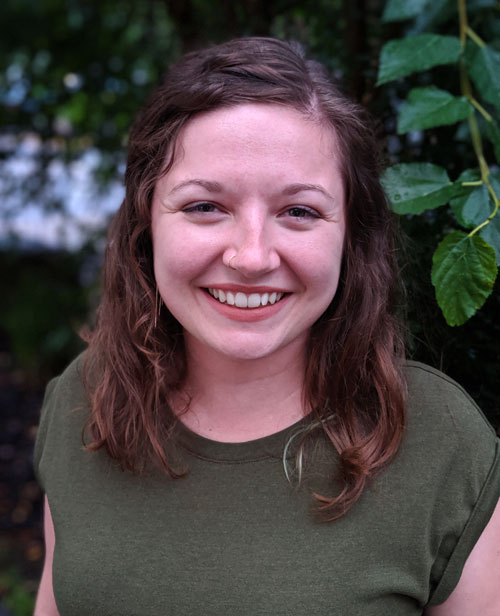
In this episode and as part of our PHIG Impact Report series, Amy Perkins of the Wisconsin Department of Health Services talks about how the state is rethinking public health infrastructure funding to make life easier for local and tribal health departments.


In this episode and as part of our PHIG Impact Report series, Amy Perkins of the Wisconsin Department of Health Services talks about how the state is rethinking public health infrastructure funding to make life easier for local and tribal health departments. Amy explains how Wisconsin is using the Public Health Infrastructure Grant (PHIG) to reduce administrative burden, decentralize funding management, and prioritize flexibility over red tape. Amy discusses practical strategies like housing PHIG within a partnership-focused office, streamlining grant processes, supporting accreditation by directly covering PHAB fees, and quickly moving funds through regional service and resource-sharing grants. Amy also shares what she’s hearing from the field: how flexible funding is helping health departments sustain staff, invest in professional development, strengthen foundational capabilities, and better respond to community needs.
This work is supported by funds made available from the Centers for Disease Control and Prevention (CDC) of the U.S. Department of Health and Human Services (HHS), National Center for STLT Public Health Infrastructure and Workforce, through OE22-2203: Strengthening U.S. Public Health Infrastructure, Workforce, and Data Systems grant. The contents are those of the author(s) and do not necessarily represent the official views of, nor an endorsement, by CDC/HHS, or the U.S. Government.
About the PHIG National Partners - Public Health Infrastructure Grant

JOHN SHEEHAN:
This is Public Health Review Morning Edition for Tuesday, January 6, 2026. I'm John Sheehan, with news from the Association of State and Territorial Health Officials.
Today, another episode of the PHIG Impact Report, with Amy Perkins, Public Health Infrastructure Grant manager in the Division of Public Health for the Wisconsin Department of Health Services. Amy talks about how the state is using Public Health infrastructure Grant funds to rethink public health infrastructure and shift administrative burdens off of local and tribal health departments.
AMY PERKINS:
Yeah, so in Wisconsin, we took the requirement of reducing administrative burden to heart right away through the Public Health Infrastructure Grant. The first step was really taken by our state health officer, who chose to house the grant in our internal office that's responsible for the relationships and partnerships with the other, sort of, primary players in our governmental public health system, our SACCHO, and then our local and tribal health departments. Beyond the obvious components of granting that you can, sort of, tug on to reduce administrative burden, we've also done other things strategically, with communications with our subrecipients and contractors, really deepening our understanding as a grant management team, of administrative burden, and of course, our approach to procurement and purchasing authority decisions. We've really tried to prioritize our intended impact and determine how we can achieve those impacts without adding burden whenever possible, our office and our grant management team really follow the mantra of 'Harder for Us, Easier for Them.' So, making sure that we are requiring as little as possible from the folks that we're trying to support.
SHEEHAN:
And part of that has involved decentralizing management of PHIG funds. Can you tell us more about that and what exactly that means?
PERKINS:
Yeah, most of the funding in our Division of Public Health is both managed and utilized within the same bureau and office. So, aside from a couple offices, most bureaus and offices directly manage the majority of the funding that also supports their work. So, with the nature of PHIG funds, requiring that we consider what foundational work we want to do to support our statewide governmental public health system as a whole, It really precludes the opportunity to say, this is the money within this office, and it supports just this office. So, while the program itself, where I sit, is in our Office of Policy and Practice Alignment, which we lovingly refer to as OPPA, we have leadership and strategic advisors from across our Division of Public Health, and we financially support positions and initiatives in other bureaus and offices. So, we're able to support a wide variety of initiatives through one funding source by empowering colleagues in other bureaus and offices to work with us in whatever way makes the most sense based on their capacity and skill sets. So, sometimes we're relatively hand- hands-off with a given program or initiative. We just provide funding strings. We monitor spending, whereas other times, if there's a program or initiative that doesn't have that, you know, internal capacity or expertise, we're really hands-on. We help with everything from procurement or purchasing authority to scope of work, development, and negotiation, all the way through progress reporting and monitoring.
SHEEHAN:
And you've also taken steps to make accreditation easier, using PHIG funds.
PERKINS:
Yeah, so supporting accreditation and accreditation readiness is something that Wisconsin has done for our local and tribal health departments for quite a while. So, it wasn't something new with the start of PHIG, but we wanted to support accreditation in a more active way, rather than just passively, by making it an allowable expense for our local and tribal health departments. So, in year two, late 2023, we prioritized providing a more direct type of accreditation support and included a dedicated line item in our budget. The initial idea was to pay for fees on behalf of health departments. It took us a while to figure out exactly, operationally, how to implement that. Sort of the initial idea, the status quo approach, is to grant funding through existing agreements. So, we have our pass-through agreements with our local and tribal health departments. Sort of the- the cleanest, clearest idea that we got as a recommendation internally was to tack the funding onto those agreements. However, in doing that, we would have had to modify. We have- now we have 95 local and tribal health departments in Wisconsin, we would have had to modify the agreements. So, that's multiplying everything by 95 to do that. So, we really tried to push and find a new way to do it, and a way that was prioritizing the impact on the local and tribal health departments less so than just getting the dollars out the door. So eventually, we were able to actually pull together a focus group of local health department leaders with the help of our SACCHO, and we asked them for their input. And so, having that conversation really helped us understand not just why they- they agreed with us that they didn't want to have to go through that granting process, but they also gave us helpful context and real experience for then arguing for a different approach. So, what we ended up doing was developing and getting a sole-source waiver approved so we could establish a direct financial contracting relationship with PHAB. So, we have a sole-source waiver. We have a dedicated scope of work and contract with PHAB, the Public Health Accreditation Board, and we're able to pay fees on behalf of our local and tribal health departments.
SHEEHAN:
You've also learned some lessons around getting money out the door quickly. The regional granting program was able to move $2 million with a streamlined selection process. So, how did PHIG's goals, kind of, help help establish that?
PERKINS:
Yeah, so the the granting program you're referencing is a regional service and resource sharing granting program. So, that's one of an- one of three initiatives that we funded through a participatory budgeting-like process that we implemented early in 2025. So, we surveyed governmental public health staff for ideas on ways to strengthen public health infrastructure, and developed a budget based on that information. So, some form of service and resource-sharing was the most common idea submitted in that process. We knew we wanted to resource that idea in some way, and then by structuring it as a regional granting program, we knew we'd be able to move relatively quickly to get those funds out the door and start making an impact sooner. So, we use what's called a minimal selection process in our state, and we've used that a couple times, before in the infrastructure grant. So, we're familiar with the process, the requirements, the documentation. The five recipients of this granting program, who we would call 'fiscal hosts,' are required to work within the regions to develop work plans that target two areas of opportunity within the foundational public health services framework. So, we've identified those areas through our statewide infrastructure assessment, and beyond the efficient allocation of funding, like you said, key benefits to this approach were, I would say the first one was piloting collaborations that we can use to inform and maybe answer or start to answer broader system design questions and opportunities in our state. So, what are ways that we can build infrastructure, not just within the scope of the infrastructure grant, but broadly? How can we strengthen our system approach, the way that we fund the work that we do, the way that we implement the work in better, more efficient ways, more cost-,effective ways, things like that. So it's sort of a pilot opportunity. It's also an opportunity to empower the health departments who are intended to be affected, their service populations that are intended to be affected by this program, to make the decisions about what exactly they do. So, we have a relatively broad scope of work that says this is the work that you need to do. Here are sort of the big, big picture parameters, the requirements of the actual agency receiving the funds, and from there, they have to work collaboratively within their regions to develop a project. So, we don't have details yet as to what each project will include, but we're expecting five relatively unique projects across the state that are all focused on these, sort of, areas of opportunity within the FPHS framework.
SHEEHAN:
Finally, Amy, what have you been seeing at the local level, at the department level, through, sort of, rolling out these- these changes?
PERKINS:
Yeah, I would say the overly categorical nature of public health funding means that health departments often lack the funding that they need to support foundational work that they'd like to do, but they don't have sources that can accommodate that flexibility. So, because PHIG is focused on foundational capability work, we mainly hear appreciation for our efforts to be transparent and accessible, the flexibility, of course, in terms of allowable expenses, and the flexibility to be able to adjust work plans depending on unique needs and priorities of a local health department. So, we hear things about appreciation for being able to hire new staff, but also support and sustain existing staff, provide professional development opportunities, provide opportunities for staff to engage with community members directly, to participate in coalitions, to participate in strategic planning efforts, things like that. So, all of those are, sort of, ways that the infrastructure grant funding supports the operational needs in order to let the health department staff focus on those community impacts, things that are more foundational area[s] or programmatic in nature, while PHIG supports the foundational capabilities.
SHEEHAN:
Amy Perkins is the Public Health Infrastructure Grant manager in the Division of Public Health for the Wisconsin Department of Health Services.
This has been another PHIG Impact Report from Public Health Review Morning Edition.
I'm John Sheehan for the Association of State and Territorial Health Officials.