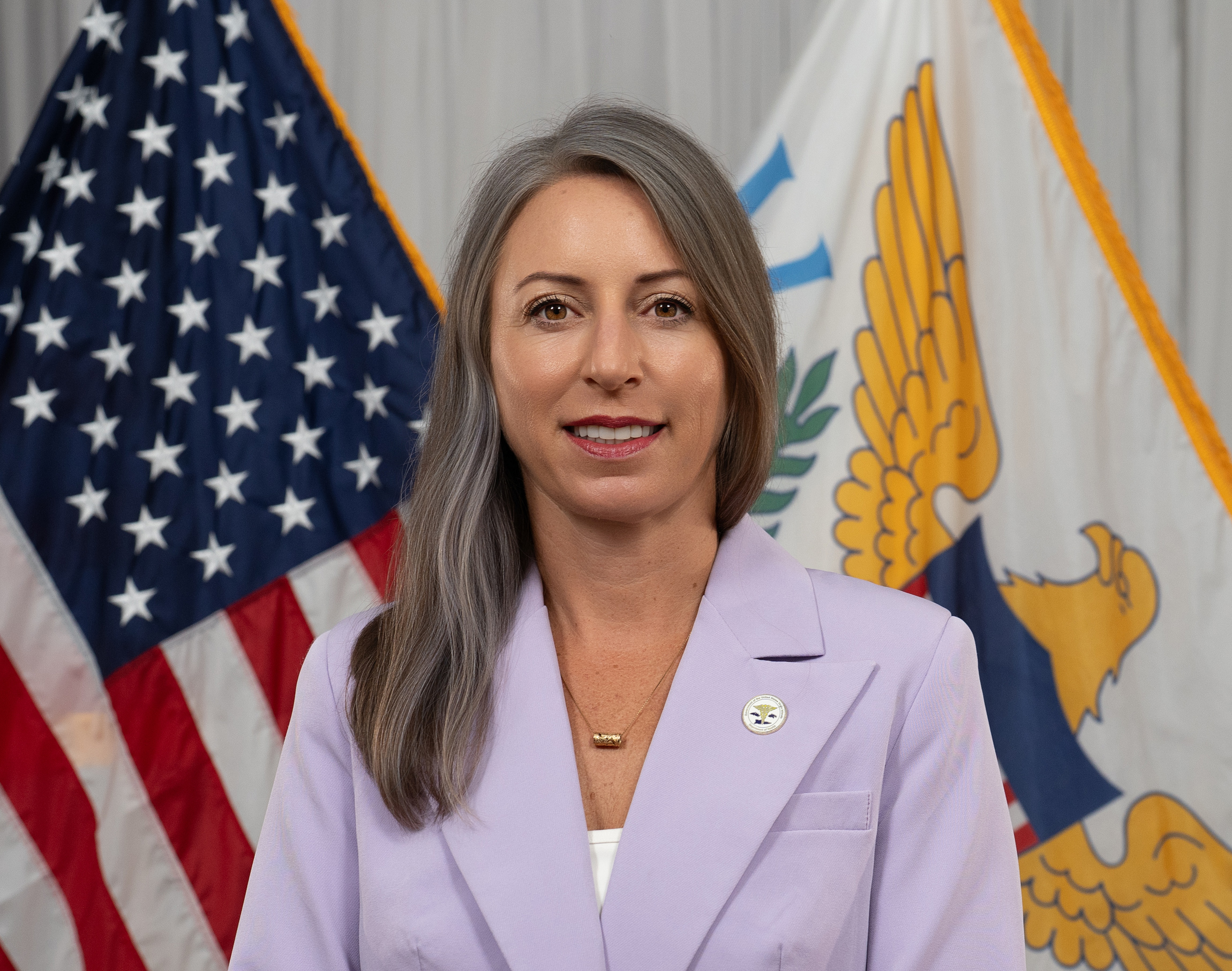
What does public health modernization look like when you’re serving four islands, a geographically isolated population, and a community still shaped by the aftermath of major hurricanes? In today's PHIG Impact Report, Esther Ellis, territorial epidemiologist for the U.S. Virgin Islands Department of Health, shares how PHIG (Public Health Infrastructure Grant) funding is transforming the territory’s health data systems, and why that matters far beyond technology.


What does public health modernization look like when you’re serving four islands, a geographically isolated population, and a community still shaped by the aftermath of major hurricanes? In today's PHIG Impact Report, Esther Ellis, territorial epidemiologist for the U.S. Virgin Islands Department of Health, shares how PHIG (Public Health Infrastructure Grant) funding is transforming the territory’s health data systems, and why that matters far beyond technology. From launching a cloud-based immunization information system that replaced records lost after Hurricanes Irma and Maria, to implementing an electronic case reporting portal for notifiable diseases, the Virgin Islands is building a more connected, real-time public health infrastructure. Ellis explains how these systems improve vaccine tracking, outbreak response, provider reporting, and access to care, especially in a region where travel between islands requires flights or ferries and 25% of residents are uninsured.
**UPDATE: The hurricanes mentioned in this episode occurred in 2017.

JOHN SHEEHAN:
This is Public Health Review Morning Edition for Tuesday, February 17th, 2026. I'm John
Sheehan with news from the Association of State and Territorial Health Officials. Today, on
this PHIG-MPAC report, we hear what public health modernization looks like when you're
serving four islands, a geographically isolated population, and a community still shaped by
the aftermath of major hurricanes. Our guest, Esther Ellis, Territorial Epidemiologist for the U.S. Virgin Islands Department of Health, shares how PHIG funding is transforming the territory's health data systems and why that matters far beyond technology.
ESTHER ELLIS:
We've utilized PHIG funding most recently to support our data modernization efforts, and
that's been really valuable. We actually received PHIG funding in December of 2022, and
we've made data modernization efforts a priority since the beginning. We leverage CDC
funds, such as the Public Health Infrastructure Grant, but also we use CDC Epidemiology and
Laboratory Capacity, or ELC, funds to support additional data modernization efforts.
SHEEHAN:
And one of those efforts has been the Electronic Immunization Database. Can you describe
this, and what have you done?
ELLIS:
That's correct. So the Electronic Immunization Database, it's an immunization database or
immunization information system. A lot of people on immunization call that IIS, and it's a
system that records all vaccination doses administered by participating providers to
residents within a specific geographical area. That means for us in the Virgin Islands, our IIS system keeps track of vaccination doses to everyone within the Virgin Islands.
SHEEHAN:
Have you seen any early benefits from the system?
ELLIS:
Definitely. Many of the people listening to this that are aware with the Virgin Islands know
that we experienced two Cat 5 hurricanes in 2015, Hurricanes Irma and Maria. And during
that time, we lost the manual immunization database. And so the immunization program wanted to move towards a cloud-based system, which was established in 2020. And this system was able to consolidate all of our vaccination records from various providers into a single secure record, ensuring patients remain up-to-date and protected against vaccine-preventable diseases. And we are shifting that electronic system into an even more modernized system. And that means really having an electronic immunization database positions our program here in the Virgin Islands Department of Health in a space that includes vaccination as a crucial component and overall access to health care. It allows patients to access their vaccination data regardless of what provider they might have gone to to get vaccinated. And
it also allows us to work towards PHIGuring out who might not be getting vaccinated so that
we can do targeted education to vulnerable populations. And it also has allowed us to determine an accurate vaccination rate. Some of the other benefits or improvements we're seeing from having this electronic immunization database in place is consumer access. This system will benefit patients and families with centralized records. Convenience, it helps to identify when a patient is due for a dose or booster and prevents over-vaccination. And interoperability with other IIS systems in several U.S. states. And this really benefits health care providers and allows physicians to quickly assess if a patient is
complete because in their vaccination history. Because it consolidates the vaccination history into one place and can talk to other states as well. So, you know, somebody here in the Virgin Islands might have had some of their vaccinations done here but then moves out of the territory to a state and that data will be complete in the system. Also, data access in real time when conducting community outreach efforts. For example, the data can assist us as epidemiologists with outbreak response. It allows us
to identify gaps in coverage in certain populations.
SHEEHAN:
Can you tell us a little bit about the electronic cases reporting portal? Is this related to what
you were talking about?
ELLIS:
So, we have been able to use PHIG funding to implement an electronic case reporting web
portal for all notifiable diseases. That's been really valuable. We've been able to work with a
company called Hummingbird Health and the system is called Beacon. And the impact has been really wonderful for our providers as well as for us epidemiologists and laboratories who are collecting the data. It's been really critical because it makes it easier for providers to submit reportable disease data. And that improves our data completeness and accuracy. Also improves timeliness because they're able to get it in really quickly through the portal. And additionally, if providers need help getting a sample tested for an infectious disease, they can request the testing on the portal. So, it really has gone both ways as far as making it really easy for the providers as well as for the laboratory if they're receiving a sample. And then from the epi side, getting all the data.
SHEEHAN:
And Esther, it strikes me that you mentioned the hurricanes in 2015 being one geographic challenge of the area. And it kind of knocked out your infrastructure there for a little bit. And I can absolutely see how these efforts are really necessary just to keep track of everybody. What other challenges do you deal with in the islands? I mean, the structure of them is so different than stateside.
ELLIS:
Yeah, a lot of challenges. You know, we're geographically isolated. It consists of four islands,
St. Croix, St. Thomas, St. John, and Water Island. And those islands cover approximately 133 square miles of combined land area. So, that's about twice the area of the District of Columbia. We're about 40 miles east of Puerto Rico. Everybody always knows where Puerto Rico is. And compared to, you know, if we look at our census data, our population is about 87,000 residents. But a lot of our challenges, not only are we geographically separated from the U.S. mainland, but we are geographically separated from each other to get from St. Croix to St. Thomas requires a flight or a two-hour ferry. And then St. Thomas to St. John is about a 20 to 40-minute ferry. Water Island is about a five-minute boat ride from St. Thomas. But that creates a lot of challenges as far as access to care. We also have a very vulnerable population when you look at insurance. So, of our population here, according to the 2020 census, the number of individuals without insurance was 20,825. So, that's 25% of our population does not have insurance. And that's actually three times the National average. And that just kind of tells you how much of a vulnerable population we have here. When you look at education as well, about
38% of our residents have at least a high school diploma, while only 22% have a bachelor's
degree or higher. So, again, our education is lower when you compare it to national averages. And it really just means we need to do more work here and work a little harder when it comes to educating
our population about the importance of vaccines, the importance of prevention of infectious disease, surveillance efforts, and all that. The good thing with our community is that the Virgin Islands Department of Health is a trusted source of health information. So, that's really great. We've worked hard to achieve that. And we do do a lot of outreach, whether it's Facebook or radio or newspaper or government access channel to reach our population. And epidemiology, we still go door to door sometimes and just check on, you know, how, like, just when we were doing the census, it was door to door. When we're doing, like, let's say a disaster response, like after the hurricanes, we were going door to door to find out, you know, how people were doing mental health wise, how people were doing as far as repairing their homes, access to food and water and all those things, especially after the hurricanes because a lot of people didn't have power. So, they didn't have power, didn't have internet. It took a lot longer here being geographically isolated to get those things back up and running again.
SHEEHAN:
Absolutely. And even just going from house to house is challenging. I mean, the infrastructure itself, there's a lot of, you know, space between plots. And the roads themselves have a lot of Mountainous features involved. That's a tough job for anyone in public service.
ELLIS:
Yes, definitely. But it's a rewarding job because you see a direct impact on your community
because we are a small community. So, you know, I'll run into someone at the grocery store
that was here during Zika and was pregnant, and we came to their house to do mosquito
control, and they didn't get Zika while they were pregnant. And they're like, thank you so much. So, it's really rewarding to actually see the impact of our work here when we look at some of the great public health work that we do do. And, you know, bringing it back to modernization, we can definitely see a direct impact on the community when it comes to modernization because we can see that more people are getting tested for infectious diseases that previously weren't because of the access to free testing, access to the portal. So, if it's easier for providers who are very busy here, then it's more likely that they're going to participate and submit a sample for testing.
SHEEHAN:
Do you have plans for future growth of the system?
ELLIS:
Yes, always plans to grow. Funding is a major challenge for us because if you think of the
health information systems and you look at the expense, a lot of times the cost is the same
for a small population versus a large population because it's the cost for the system. And it's
not necessarily how many things are going into the system, the volume, but it's really the
system that is the cost. So, really the PHIG funding has made it possible to make a lot of long-term progress because it was received as a five-year award. And that was really a success of the program to be a five-year cooperative agreement so that it gave jurisdictions, territories, states, and territories time to assess what needed to be done, to determine this is what we're going to do, to get a contract in place, to pay the vendors, and then to get the work done. And right now we're in the getting the work done, and I'm excited to continue this work.
SHEEHAN:
Esther Ellis is Territorial Epidemiologist for the U.S. Virgin Islands Department of Health. This
has been Public Health Review Morning Edition. I'm John Sheehan for the Association of
State and Territorial Health Officials.