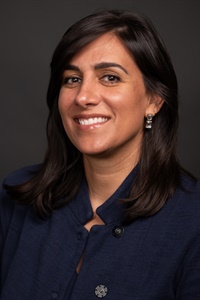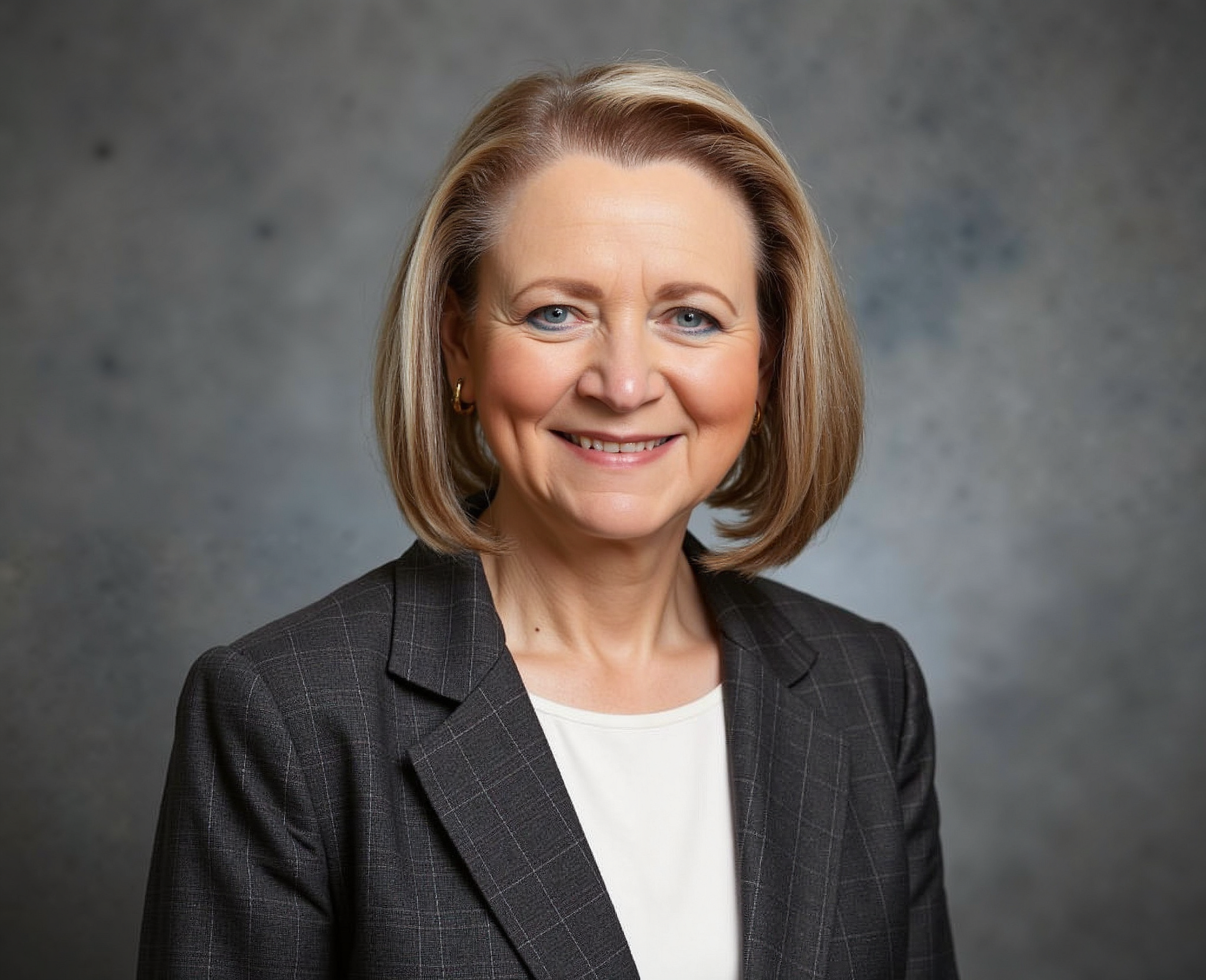


Behind every public health response are two make-or-break factors: the people doing the work and the systems that help them work together. First, Shirley Orr, Executive Director of the Association of Public Health Nurses,, discusses the Public Health Nursing Workforce Learning Lab Series Session 5 with insights from PH WINS, the nation’s only survey of the state and local public health workforce, which reached nearly 50,000 professionals. The data paints a detailed picture of who makes up today’s workforce, including an influx of younger staff, persistent leadership diversity gaps, and ongoing concerns about burnout and morale. Later, Dr. Lisa Villarroel, Chief Medical Officer for Public Health of the Arizona Department of Health Services, shows us what happens when that workforce is connected in real time. Arizona’s Statewide Healthcare Collaborative Forum, a simple monthly virtual call during respiratory season, brings EMS, hospitals, post-acute care, and public health leaders together to review virus trends, hospital capacity, ED diversion, and emerging challenges. Born from pandemic lessons, the forum has led to tangible results: resolving EMS transport delays, sparking regional hospital alliances, rethinking masking policies, and aligning state data with frontline reality.

JOHN SHEEHAN:
This is Public Health Review Morning Edition for Friday, February 13th, 2026. I'm John Sheehan
But let's start with Shirley Orr, with what the upcoming Public Health Nursing Workforce Learning Lab Series Session will cover.
SHIRLEY ORR:
To give a little bit of background, PH WINS is the only survey that looks at the educational needs, as well as the demographics and trends in the public health workforce. The WINS survey, the most recent one, reached about 50,000 workers in local and state health departments. And it gives a good set of comprehensive data for us to use as we think about the needs of our workforce, in our case, public health nurses specifically. The data includes areas like age. It's important for us to be aware of the age of our workforce, obviously, to look at are we bringing in enough younger, newer professionals, as well as are we preparing for those leaving the field due to retirement? It looks at gender distribution.
We know, of course, that within nursing, it's largely female-dominated, and also we certainly
wanna try to diversify the field, so it gives us some good guidance to base that action on. It also
looks at some really important things like what is staff engagement look like? What about
morale? What about burnout in the workforce? You know, we saw a lot of exodus during COVID and
after that time period. I think things have become better, but I think it's really important for us
to continue to be conscious of burnout in the workforce and look at strategies that we can implement to help to promote recruitment and retention. We know that nurses that come to public health come here, not for the salary. You can certainly earn a higher salary in a clinical care setting, but they come because they're really committed to the mission, and we wanna try to do everything we can to encourage them to continue to stay and practice in the field.
SHEEHAN:
Yeah, absolutely, and it sounds like the survey is pretty comprehensive. It has both qualitative
and quantitative demographic information, as well as that drill-down information on what is the
workforce looking for? What are they experiencing? Are they burned out?
ORR:
Yeah, that's true. Hopefully, people will keep in mind that it is indeed a survey. Therefore, it's
based on a representative sample. Probably also a very good idea for individual organizations to do a little bit of a deeper dive on their own workforce and perhaps do some qualitative follow-up, maybe some focus groups with individuals who are staff in their agencies to help them understand a little bit more about the uniquenesses. We know that there's a lot of commonality across the workforce, but there are also some uniquenesses. So there is the opportunity to do that at the individual
organizational level.
SHEEHAN:
Sure, and you touched on this a little bit, noting that by and large, the workforce skews female.
Can you talk a little bit more about sort of the demographic makeup of the current workforce?
ORR:
Yeah, sure. Some of the things that we know about the workforce, we're getting better in terms
of younger people coming into the field. I think right now, around 25% of the workforce is
under age 35. The majority of them are new in the past five years, which that does represent a change from what we've seen in previous years. People tended to come in and stay quite a long time. Therefore, the workforce skewed a lot older. We do still have a number of individuals in that older segment of the workforce that we're pleased to see that we're bringing in new people to the field. Another major issue that we continue to face, and this has been an issue for many years, is to work toward a workforce that
better represents our population, the workforce that looks like the people we serve so that we have public health nurses along with other public health workers who come from diverse backgrounds. And I mean diverse in every way, both racially and ethnically, in terms of age, geographically representative.
So really working on that is important. One thing that I might point out is that historically, nurses that rise to leadership roles in that group underrepresented minorities are even more underrepresented. So creating career pathways to provide a means for those people to move forward in their public health careers and assume leadership roles is a really important focus for the future.
SHEEHAN:
Another goal of the survey is to provide direction and data towards training, what the workforce needs in terms of training and how agencies can improve. Can you talk a little bit more about how the survey can be used in that capacity?
ORR:
Yeah, sure. So understanding education and training needs of the workforce helps us in a number of ways. For one thing, in recent years, we have a relatively new process for public health agency accreditation. And one of the important components of that accreditation is does the organization have a clearly defined process for recruitment, retention, and education of the workforce? So having some data that enables agencies to look at that, to plan quality improvement efforts, look at how they allocate their budgets for training, that's really important to that, certainly. Another important aspect, along with accreditation, we've seen new frameworks for public health practice come online, including foundational public health services. So it's really important for us to look at our workforce, their educational needs, particularly to assure that we have the ability to meet those foundational services and to provide those for our populations.
SHEEHAN:
And hand in hand with that, can you talk a little bit about how leadership could use the survey
in tandem with, or as opposed to sort of an annual review process that looks only at their own
agency? The survey can bring in sort of a whole picture look.
ORR:
Yeah, WINS gives us the ability to have a broader database so we can benchmark our workforce
at local and state levels to the national workforce. And I believe very importantly, it gives
leaders the knowledge and data to be able to advocate to policymakers for investments in
public health, particularly in terms of the workforce. What are the needs? How can we be prepared for emerging issues and trends in public health? Do we have enough individuals who serve in various roles? And if not, how can we begin to plan strategies to help both improve the workforce we have through targeted training and education, but also recruitment efforts?
SHEEHAN:
And lastly, Shirley, you've already sort of made some great cases for how the survey can be used as a tool for advancing training recommendations, for setting benchmarks, as you mentioned. Can you make the case why someone should tune in to this webinar and listen to sort of the PHWINS overview?
ORR:
Yeah, sure. So as I mentioned, this is one of the PHN recruitment and retention focused sessions in the Public Health Nursing Learning Lab. We know recruitment and retention is a very major issue, and certainly this is an important part of that. Public Health WINS is a great tool and resource, and sometimes I think it may be not well enough understood across our workforce widely. There've been many changes in PHWINS over the years. It has a lot more functionality than it did even just a few years ago. One of the new additions this year is something called Insights to Action that contains
somewhere around 40 practical tools and resources for workforce development that can be
used within local agencies. And then importantly, we'll have Maddie Popalis, who is with the
Beaumont Foundation, with us to talk about WINS. She is the WINS expert. Her professional role is 100% dedicated to WINS. So leaders can certainly find out current information from the national expert in Public Health WINS.
SHEEHAN:
Shirley Orr is Executive Director of the Association of Public Health Nurses. You can learn more
about the upcoming Public Health Nursing Workforce Learning Lab Series, Session Five, at the
link in the show notes.
Now let's hear from Dr. Lisa Villarroel, Chief Medical Officer for Public Health of the Arizona Department of Health Services about Arizona's Statewide Healthcare Collaborative Forum.
LISA VILLARROEL:
So for the past four years, the Arizona Department of Health Services has hosted this Statewide
Healthcare Collaborative Forum. And it's a virtual statewide meeting that invites everyone along
the spectrum of healthcare. So we're thinking, you know, EMS, hospital, post-acute care setting
brings everyone together once a month for an hour during the respiratory season.
This season, we started in November and we're gonna end either in February or March. The
way these meetings usually work is we start with a data review from Public Health on
circulating respiratory viruses, on any new regulatory updates, any new epi updates. And then
we move into a presentation from a local partner on a particular topic around surge or around
infection control. And then we end with a full partner report out. And sometimes we're done in 35 minutes and sometimes we're racing the clock at 59 minutes.
SHEEHAN:
Yeah, that makes sense. Because you've got everyone in the virtual room, from the on-the-
ground practitioners to the folks up making the policy and seeing where all of it sort of shakes out.
VILLARROEL:
Yeah, that's right. It's like the one place where you have on one call, EMS, we have AZ-REACH,
which is our statewide inter-hospital transfer system. We have almost every acute care hospital
represented and the post-acute care agencies and entities represented. It's like the one place where the full spectrum is all there at once.
SHEEHAN:
What was the sort of impetus for it? And why was the seasonal strain just hitting so much that
you were like, we need to figure this out?
VILLARROEL:
Honestly, I think this came out of COVID. We were used at that point for everyone coming
together and meeting in one place. And I think one of the lessons we learned from the
pandemic was the disproportionate impact just bringing everyone together can have.
So it's a very simple concept to have one virtual phone call with everyone. We all hear the same
information. If people have a particular concern, it comes up.
But we've been doing it for four years now and we have incredible attendance still.
SHEEHAN:
What sorts of things have come up during these meetings that you're like, oh, this is incredible.
We would have never otherwise seen this.
VILLARROEL:
Yeah, so there's four main objectives of this work group. One is to share situational awareness.
One is to share EPI or regulatory updates. One is to present any kind of regional best practices going on. And the last one is for the health department to support any collaborative effort that all the entities want to embark upon. And so in the course of working with those four objectives, interesting things come up. Recently, one of our healthcare systems presented on their universal masking policy. One time
an Arizona hospital presented on a regional alliance they have with other hospitals where the
smaller hospitals support each other with consultations and diversion. One time a hospital
leader brought up the low flu vaccination rates that they were seeing in their staff. So all these little pings really inspire further conversations. And so a hospital will think, well, does our hospital need a universal masking policy? Like, should our hospital be part of an alliance? Like, what is our staff vaccination rate? I can tell you on the vaccination rate part when that hospital brought it up, it prompted the health department to go back and look at our own annual flu vaccination rate data year over year to see if we were tracking with what that particular hospital had been seeing.
SHEEHAN:
Oh, wow. So already getting these tangible results from just sharing stories.
VILLARROEL:
Yeah. Another big example was when an EMS agency brought up the fact that a new prior
authorization protocol was holding up their transport. We had not heard of this at the health
department. And so we ended up helping connect those EMS agencies with the right person at the payer. It felt tangible. It felt like there was a result. And I guess the question is, where else should this have been brought up? Like, where else do you have everyone along the process of healthcare and patient throughput all together on one call? I mean, in this particular circumstance, you have two of the three components of the healthcare system involved. You have the facilities and you have EMS. And in this call, they're all together.
SHEEHAN:
One of the big goals of the program is collaboration through data. Can you talk a little bit more
about the kinds of data that you're getting, that you're collecting, maybe that you didn't know
that you needed?
VILLARROEL:
Yeah, data is always how we open every meeting, is to talk about the data that we have. And I
think it is critical for the state health department to be able to trust its own data. And so every
meeting, we show the data that we have. Yes, we show the epi data on the respiratory viruses that are circulating, but we will always show the bed capacity data that we have. We will show the EV, you know, diversion that we have and so on. And we ask specifically, does this match with what you all are seeing on the ground?
SHEEHAN:
Before we started, you made clear that you want this to be known, at its heart, it's a phone call.
It's getting everyone to talk to each other. Is that how you would approach other systems that
are trying to think about like, well, how do we just get everyone in a room to understand? Make a phone call?
VILLARROEL:
No, thanks. That's exactly the point that I'd like to make about the Statewide Healthcare
Collaborative Forum is that health departments could implement this next week if they wanted. You don't need tech. You don't need slides. We'll send you our slides if that would be helpful, but you don't need a room. You don't need written materials. You need an hour once a month during the respiratory season for a virtual meeting. And I think, you know, we keep our program really standard. We tweak it a little bit, you know, year over year. One year, I remember we tried to highlight the major published articles on surge that were coming out. This year, for example, we had to add a section on measles because that's something that we're experiencing here in Arizona. Honestly, the opening content can change, but the invitees and the concept of inviting everyone to the table for folks to come, you know,
that is what doesn't change. And this is our fourth year running this and attendance remains high. Nearly every acute care hospital is represented, all EMS agencies, several local health departments, and then the agencies representing post-acute care as well. And I just think it's a wonderful baseline
structure to have. And I remember one year there were conversations internally like, should we reconvene this group before our next meeting because things are escalating with hospital surges? And we didn't at the time, but that's a lever that can be pulled at any time. This is a known entity. This is a known work group. And it's so nice to have that.
SHEEHAN:
Dr. Lisa Villarroel is Chief Medical Officer for Public Health of the Arizona Department of Health Services. Earlier, we heard from Shirley Orr, Executive Director of the Association of Public Health Nurses.
Leading Change is a new ASTHO workshop designed for professionals in clinical and non-clinical public health roles. The workshop equips participants with strategies and skills to navigate change and uncertainty as individuals, team members, and organization-wide leaders. Emphasizing actionable
instruction and resources, it enables leaders to create and implement real-world initiatives in their agencies for 2026 and beyond. Participants will gain tools to design targeted initiatives and foster tangible organizational change. This experience prepares them to drive meaningful impact in their workplaces. Find more at the link in the show notes.
This has been Public Health Review Morning Edition. I'm John Sheehan for the Association of State and Territorial Health Officials.