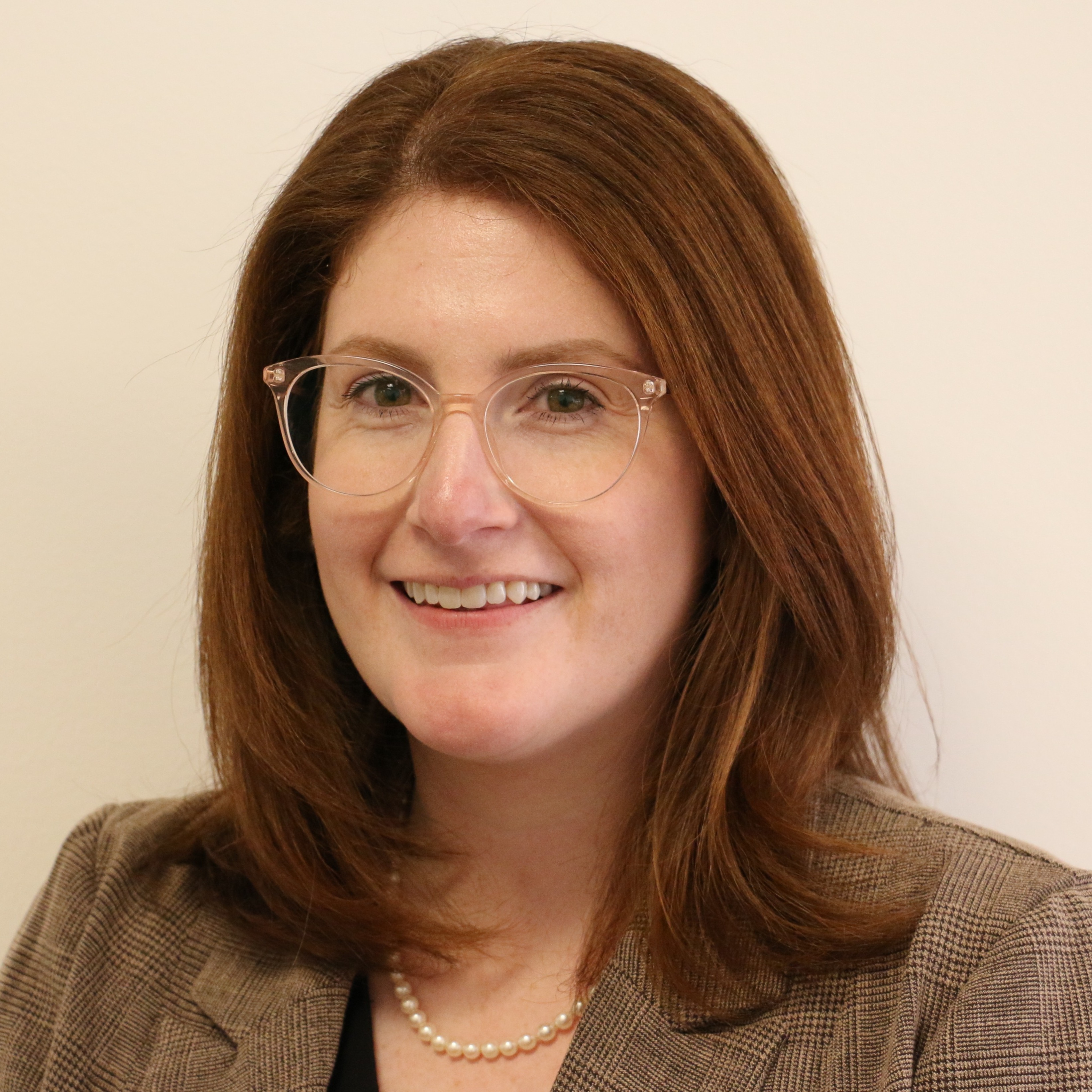
What does the future of public health look like when cutting-edge technology collides with persistent, preventable disease threats? Senior Vice President of Health at ICF and ASTHO alum John Auerbach joins us to break down how artificial intelligence can be responsibly and realistically introduced into public health workflows. He outlines five practical, low-cost steps agencies of any size can take to start using AI today, explains the leadership mindset needed to build staff confidence, and explores how AI can both spread and counter misinformation when used thoughtfully. Later, Jessica Baggett, senior advisor for public health strategy and response at ASTHO, unpacks why measles elimination status is back in the spotlight after the worst year for measles cases in more than 30 years.


What does the future of public health look like when cutting-edge technology collides with persistent, preventable disease threats? Senior Vice President of Health at ICF and ASTHO alum John Auerbach joins us to break down how artificial intelligence can be responsibly and realistically introduced into public health workflows. He outlines five practical, low-cost steps agencies of any size can take to start using AI today, explains the leadership mindset needed to build staff confidence, and explores how AI can both spread and counter misinformation when used thoughtfully. Later, Jessica Baggett, senior advisor for public health strategy and response at ASTHO, unpacks why measles elimination status is back in the spotlight after the worst year for measles cases in more than 30 years. She explains what “elimination” really means, why it doesn’t mean zero cases, what’s driving recent outbreaks, and why vaccination remains the most effective public health tool.
Leveraging Public Health Assets in Medicaid Managed Care | ASTHO
Artificial Intelligence and the Public Health Workforce—Preparing for Our Future | JPHMP
Understanding Current U.S. Measles Outbreaks and Elimination Status | ASTHO

JOHN SHEEHAN:
This is Public Health Review Morning Edition for Tuesday, January 27, 2026. I'm John Sheehan, with news from the Association of State and Territorial Health Officials.
Today, what does the future of public health look like when cutting-edge technology collides with persistent, preventable disease threats? We discuss how artificial intelligence can be responsibly and realistically introduced into public health workflows with John Auerbach, senior vice president of health at ICF. Later, Jessica Baggett, senior advisor for public health strategy and response at ASTHO, will unpack why measles elimination status is back in the spotlight after the worst year for measles cases in more than 30 years.
But let's start with John Auerbach. I asked him about the first steps public health agencies should consider when introducing AI into their workflows.
JOHN AUERBACH:
There's still a lot of public health agencies that are not fully prepared to embrace AI or to understand how it can help their work. In order to simplify this, I would say there are five action steps that any health department can take, regardless of size, regardless of budget, and I would recommend these five as guides for the next year, for the agencies that haven't begun yet. The first one, I'd say, is talk to your key audiences, and that, by that, I mean your staff, the community that you serve, and policymakers. Gathering that information can be very helpful, just, you want a sort of environmental understanding. The second step, I would say, is to review and identify the guidance and principles to undergird the work that you're doing. And that may sound like a lot, but those guidances exist and are readily available. There's one, for instance, in the Kansas Public Health Institute that's terrific. And there are other ones as well. You can just get one of those. And what they do is they give you core information. And just as you're thinking about AI to deal with the issues that people are concerned about, privacy, security, equity, procurement, etc. The third point is offer training to everyone, not just your IT people, everyone. There's free training available on the website. You could go to YouTube and get it, making that available to every single person establishes a sort of comfort level and understanding that's widespread. Fourth point, key one, is having done one through three. Pick one pilot, something to start, start small, but ideally start with something that addresses the challenges, a challenge or a problem that people would recognize. You don't want to do something that's going to test the limits. You want to have something contained. Maybe it's translating materials. Maybe it's summarizing long guidance from a document that you're looking at. There are a variety of first steps available for any size health department, and then the fifth one is just paying attention to what happens, so that at the end of the year, you can reflect on what was the impact. Were there lessons that you learned? Did it help? So those five things, again, no budget required. Everyone can do those. It's the way to start, and it's, we're at a point now where every health department needs to be embracing AI, so I'd recommend that for just about any size health department.
SHEEHAN:
You also discuss the importance of leadership and having a leadership mindset. What can leaders do to socialize AI and sort of allay the concerns of their staff?
AUERBACH:
Well, I think a little bit, they need to understand their own concerns and, and there too, I believe, gaining some clarity about what are they most worried about and how, how can they prevent their worst case scenario? So their concerns, because you want your leadership to be secure enough and comfortable enough with the issue that the leadership is able to have the staff feel like this is something that's beneficial. And thinking about those five points that I've mentioned, I think is a good place for them to begin.
SHEEHAN:
And you mentioned sort of starting small with maybe a specific app, picking one basic AI tool. Can you expand on that and sort of describe a set of skills, sort of a basic skill set necessary to start with for the health care workforce to sort of get their hands around AI?
AUERBACH:
Sure, you know what, what I'd say? Let me start by saying things you don't start with. People are most worried about personal or private information being somehow more vulnerable. So, starting there is probably not the best place if you haven't worked in AI, starting in places where the risks are lower makes sense. So, I'll give an example or two. One example would be using it to translate educational materials that you have into multiple languages or customized to specific populations, maybe low literacy populations. When I was at CDC, for example, we, we didn't have, you would think CDC had, would have enormous capacity to print materials or have materials available, and scores of languages, we didn't, and that meant when we were doing COVID work and other work, we couldn't reach all the audiences quickly that we needed to. AI will really help with that. It's also helpful in terms of drafting letters. You can say, you know, here's someone we want to write about a particular policy to, maybe it's a constituent or someone in the community, you can write a prompt to say, I want a one-page letter that talks on the following points. Here's an attachment or two from the work that we do that I'd like reference. AI will print that out, a solid draft of that letter within seconds. So, those are some of the early steps, I think, start there, get some comfort level with understanding the way that it works, and then you can move over time to the more complicated uses of AI.
SHEEHAN:
And I think one of the big concerns about AI in general is that it has the potential to help spread misinformation. But you say that actually AI has the potential to counter misinformation. Can you tell us about that?
AUERBACH:
Sure. The thing about AI is, it aims to please. If you're asking it a question, it wants to give you with the information that looks correct. It's drawing information from multiple locations in most instances, and so, if there's false information that is in the media or in journals, it won't know that's necessarily false. So, it may summarize that data as if it's helpful and accurate. So, there's this notion of, how do you train AI so that it's pulling information from the most accurate sources, and there's increasing work on that to try to exclude false or biased information as much as possible. But you can also use AI to identify emerging trends of inaccurate information. The public health communication collaborative, for example, has a contract where they contract with an organization that screens using AI, screens social media for concerning misinformation that is beginning to spread. And if you capture that early using AI, you can begin to combat that information before it becomes as widespread as it might become.
SHEEHAN:
Yeah, that's a nice counter-narrative to maybe some of the more alarmist, maybe more panicky stories of 'AI run amok.'
AUERBACH:
No, and I'll tell you what I do in, you know, it's very important that you have an accurate prompt or instructions you're developing. So, what I will now do very often when I want to make sure it's giving me accurate information, is I will say, as you're answering the questions that I'm, that I'm asking of you or the project that I'm asking you to do, I want you to verify that all information you're giving me has been confirmed by a respectable, responsible source, and I want you to tell me that source, and that I can verify that it's accurate.
SHEEHAN:
And lastly, and this is a big question, if there were to be sort of a national framework adopted by public health writ large, what would that look like, and maybe what would be one of the most important first priorities to get right?
AUERBACH:
Well, the first thing I would say is it's important to determine who should be at the table to develop that I don't believe it would be optimal to simply have, say, a federal agency doing that even under the best of times and the best of administrations. I think you'd want to make sure that in developing that kind of centralized, that kind of uniform approach, you have public health leaders from the state, local, tribal, and territorial municipalities, and others who really know how this plays itself out at those different levels, so that it becomes something that's accurate and useful in the real world of public health, so setting the table with the right people, identifying the key questions that would need to be identified, and then understanding that all you would be doing, would, would be offering recommendations or suggested guidance, because it does not appear there's going to be a one size fits all or any authority that's going. Be able to say, everyone needs to do it in a particular way, rather something like this would just be perhaps suggested best practices.
SHEEHAN:
John Auerbach is senior vice president of health at ICF.
Measles is back in the spotlight after the worst year for measles cases in more than 30 years, and after the disease was declared eliminated in 2016. Here's Jessica Baggett, senior advisor for public health strategy and response at ASTHO, to explain what happened.
JESSICA BAGGETT:
So, measles has really been in the spotlight, because in 2025 we saw the highest number of measles cases in the United States in over 30 years, and this has largely been driven by outbreaks among under-vaccinated and unvaccinated people. Also on the table right now is the official determination of measles elimination status for the United States, which is the Pan American Health Organization, or PAHO's designation, and they announced recently that they'll be discussing this with the United States at an upcoming meeting in April. So what does measles elimination status actually mean? Elimination status means that measles isn't spreading continuously within a country or a particular region for at least 12 months. And I think it's important to mention that it doesn't mean zero cases. It means that outbreaks are not occurring as frequently, and cases are imported rather than spread through local transmission. Elimination status really reflects strong public health surveillance, rapid outbreak response, and population-level immunity. So, it's really a marker that the prevention systems are working right.
SHEEHAN:
Elimination, I think, probably to the rest of the population means, hey, we did it. It's gone. That's not the case, correct? So what is the importance of that elimination status? What does that mean more broadly in a public health perspective.
BAGGETT:
So, from a public health perspective, elimination is more than just a label. It reflects the protective immunity within a population and really the capacity of the public health system to prevent sustained outbreaks. So, when measles elimination status holds, we see that transmission is less likely, our health care systems avoid that unnecessary strain from preventable care utilization and public health systems circumvent the toll of managing large outbreaks. And something that we pointed out in the blog is that managing measles cases is really expensive. One study estimated that it costs nearly $60,000 per case for public health to manage. So, it's really more than a label. It's a reflection of protective immunity within a population.
SHEEHAN:
And you touched on this a little bit, but what are some of the factors driving the new outbreaks?
BAGGETT:
Well, obviously, the vast majority of cases are among people who aren't vaccinated. So, falling vaccination rates is fueled by a combination of access gaps, vaccine hesitancy, and misinformation that have really created pockets where measles can spread more rapidly.
SHEEHAN:
Right. And I think to just, to make it explicit, not getting vaccinated has a correlation to these rising cases.
BAGGETT:
Correct, the most effective step is getting an MMR: measles, mumps, rubella vaccination. That is the most effective public health intervention. There is information on the CDC's website that you get a 93% protection after one dose and 97% protection after two doses of an MMR vaccine. So, vaccination is a highly safe and effective strategy.
SHEEHAN:
And from a practitioner's point of view, this must be pretty frustrating to sort of have this answer of, what do we do? Well, you get vaccinated. It must be frustrating to sort of have that answer, to have the solution and have it not being accepted. What can we do about it?
BAGGETT:
You know, I think that there's a lot that public health departments across the country are doing to build trust within communities, work with local leaders, establish trusted messengers to help build some of that confidence. You know, we have the science, we have the evidence, and sometimes it's, it's finding the right people to carry that message. Another thing that we're doing in public health is we're, we're working with the clinical community to make sure that they have the latest, up to date information and resources, and so that they're prepared to recognize, test, and report measles cases, because a lot of people go to their health care providers, of course, when they're sick or seeking care. So, public health supports the clinical community by providing information and resources as well.
SHEEHAN:
Jessica Baggett is a Doctor of Public Health and a Master of Public Health, and is a senior advisor at ASTHO. She received her doctorate from the University of Nebraska Medical Center College of Public Health. Earlier, we heard from John Auerbach, senior vice president of health at ICF.
It's vital that state and territorial health agencies partner with Medicaid agencies to maximize investments and, in-turn, improve health outcomes for those enrolled in Medicaid and the Children's Health Insurance Program. However, the two agency types differ in terminology, tools, and procurement of services, which can pose challenges to effective collaboration. The ASTHO report, 'Leveraging public health assets in Medicaid managed care,' helps to break these barriers by providing key information and resources relevant to Medicaid agencies and their managed care health plans. Find the link to the report in the show notes.
Join Manisha Juthani, M.D., commissioner at the Connecticut Department of Public Health and ASTHO president, and John Auerbach, M.B.A., senior vice president for public health at ICF, for an Insight and Inspiration webinar that examines how clear, purposeful leadership strengthens both internal and external trust. Through discussion and reflection, we will examine how leaders embody steadiness amid uncertainty, set a sustainable pace, and provide calm direction that builds trust and drives performance. This conversation aims to inspire participants to recognize their composure and capacity, not as a personal indulgence, but as a fundamental leadership function that shapes the overall tone, focus, and confidence of their organizations. Join us for this 'Steady Hands, Steady Teams: Leading with Confidence and Composure' session happening February 11 at 4 p.m. Eastern. The link to register is in the show notes.
This has been Public Health Review Morning Edition. I'm John Sheehan for the Association of State and Territorial Health Officials.